
PPI Cools, Markets Reprice: Could This Be the Push for a 50bp Fed Cut?

August’s surprise drop in producer prices materially reduced near-term upside risk to consumer inflation and pushed markets to price earlier Fed easing.
While a 25-bp cut in September remains the base case, the PPI miss — combined with large payroll revisions and a softer jobs backdrop — has reopened a credible path to a 50-bp move if tomorrow’s CPI and subsequent labor reads confirm the weakness.
What happened — numbers, market moves, and Key Points
The Bureau of Labor Statistics reported August PPI Y/Y 2.6% (consensus 3.3%); July was revised from 3.3% to 3.1%. Monthly PPI was -0.1% (consensus +0.3%); July’s monthly gain was revised from +0.9% to +0.7%. Markets reacted instantly.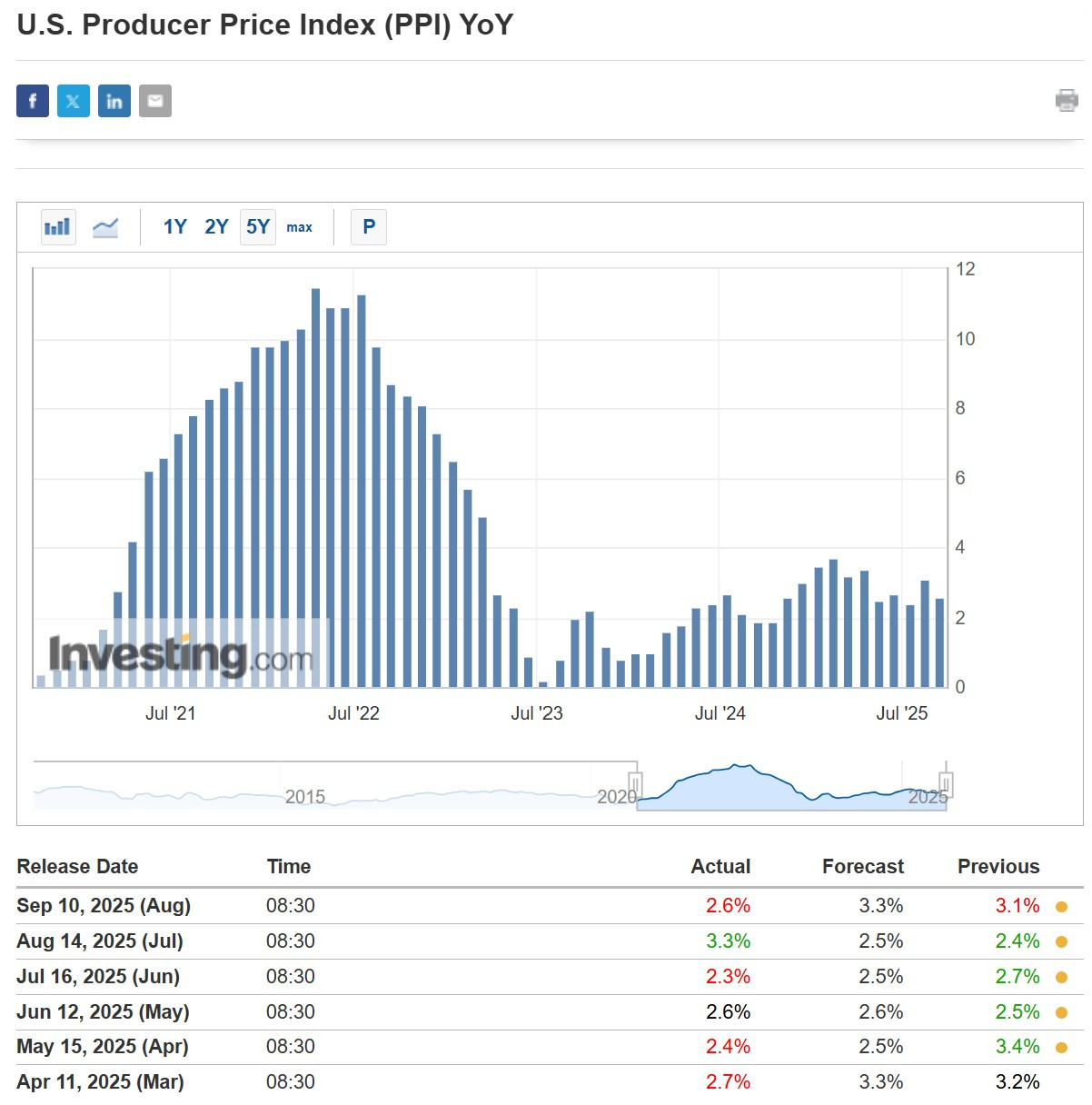
Key Points :
- PPI Y/Y 2.6% vs expected 3.3%; month -0.1% vs expected +0.3%.
- Dollar slid ~26 points to 97.6; EUR/USD hit 1.1729; USD/JPY down to 147.11.
- Spot gold jumped roughly $8 intraday; S&P 500 futures rose ~0.44%.
- Treasury yields: 10yr 4.068% (-0.6 bps), 2yr 3.531% (-1.1 bps), 30yr 4.722% (+0.5 bps).
- Large employment benchmark revision: ~911,000 fewer jobs in the 12-month revision through March.
- Analysts flag that some PPI components flow into PCE, so wholesale softness can affect the Fed’s preferred inflation gauge.
Why this PPI print matters — is the inflation pipeline closing?
Producer prices are an early warning of costs firms face before consumers see higher prices. The August PPI decline suggests firms, despite tariff-driven cost pressure, largely avoided broad price pass-through last month. That reduces the short-term risk of an immediate surge in CPI and therefore lowers near-term upside risk to the Fed’s PCE measure.
Several PPI subcomponents feed into PCE. If wholesale weakness persists, it can mechanically translate into softer PCE readings in coming months, giving the Fed room to ease sooner or more aggressively than markets previously priced.
Markets’ reaction and the revived 50-bp debate
Rate markets quickly repriced to reflect more easing. Short-term futures and swap curves shifted, the dollar weakened, equities edged higher and option markets signaled modest near-term calm.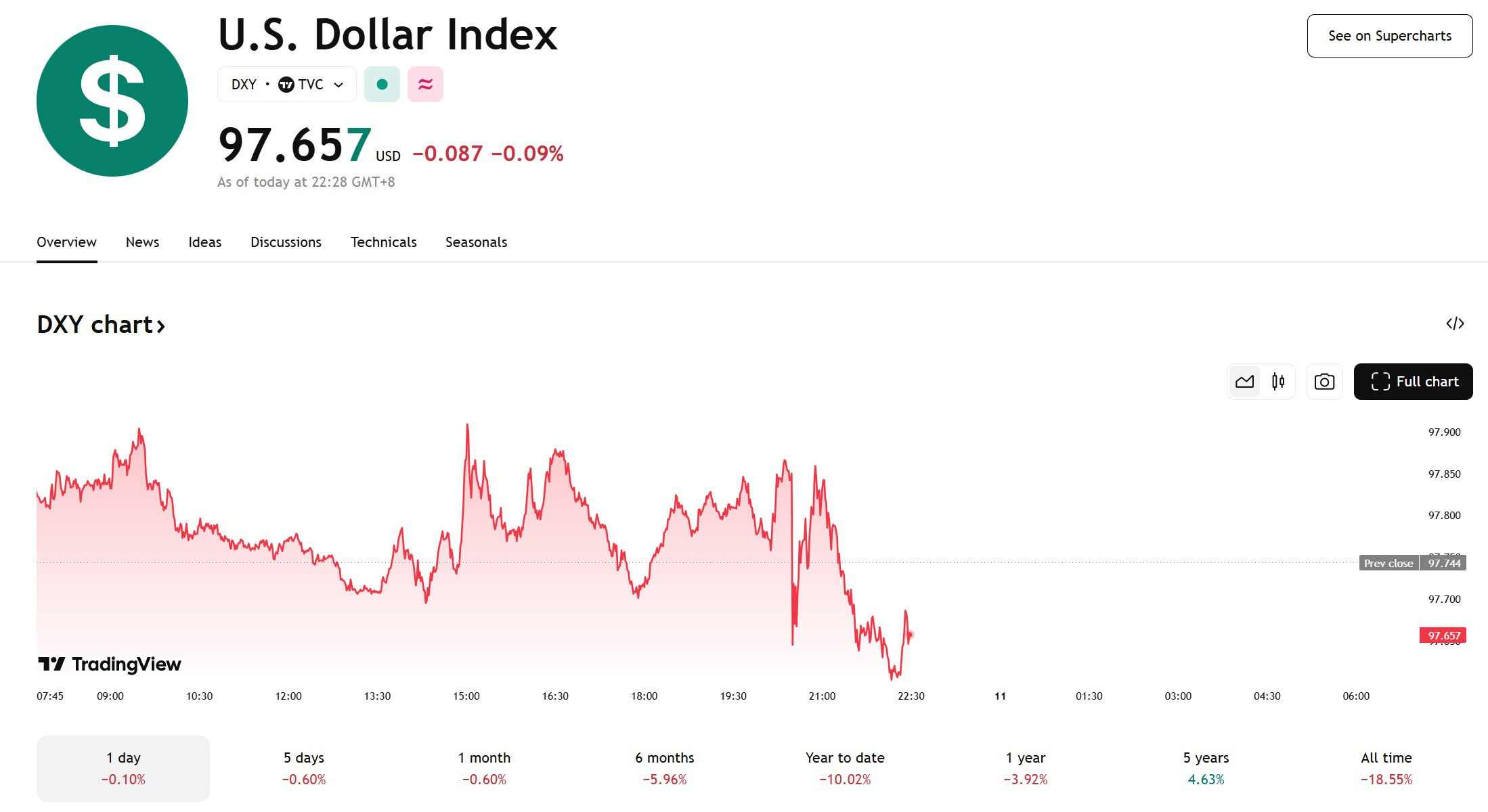
While a 25-bp cut remains the market consensus for September, the PPI surprise increased the conditional probability of a 50-bp move — particularly if CPI undershoots or employment prints remain weak.
Some analysts, including InvestingLive’s Adam Button, note the PPI read is a strong signal that CPI could come in below expectations. If that happens, the case for a larger initial cut strengthens materially.
CPI tomorrow and labor: which will steer the Fed?
The policy path now depends on a two-legged test: (1) whether CPI echoes the PPI cooldown and (2) whether labor data confirm sustained softening beyond the benchmark revision. Markets are watching core CPI closely — consensus expects modestly warm prints, but an undershoot would amplify calls for a bigger cut.
Crucially, many on Wall Street regard employment as the decisive variable. The substantial downward payroll benchmark (about 911,000 jobs revised away) and softer recent jobs prints suggest the labor market may be weaker than previously thought. If that weakness persists, it could prompt faster and larger easing.
Politics, personnel and the Fed’s communication trap
External pressure has intensified. Treasury voices and public political commentary have urged faster easing following the revision and weak prints.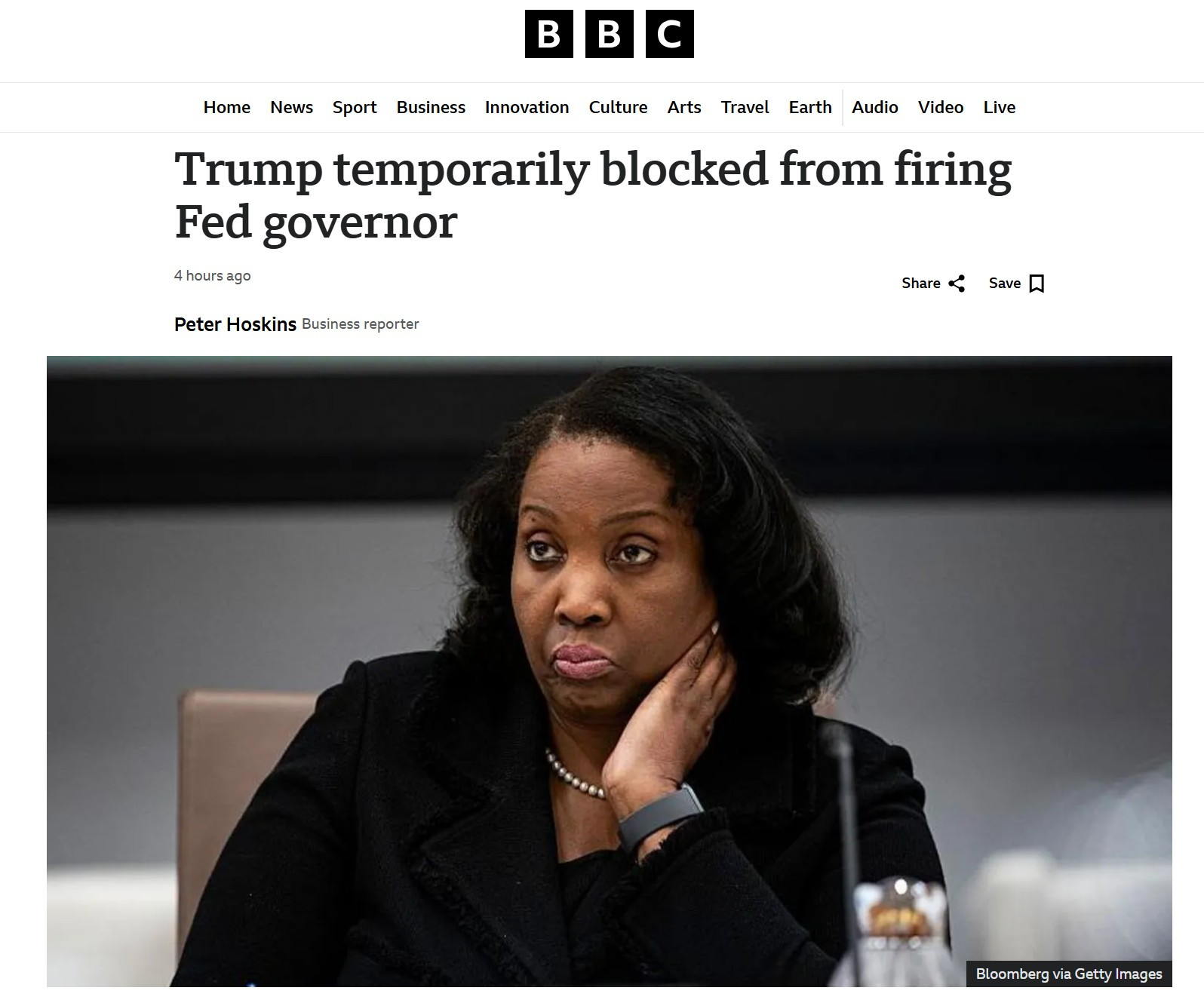
Meanwhile, Fed board composition and recent tensions can affect optics, though the Fed will publicly stress data dependence.
Politics and personnel don’t change the data — but they shape communications. The Fed must balance acting decisively if warranted while preserving its independence and credibility. Any unusually large cut would likely be framed as data-contingent and carefully explained.
Scenarios and what to watch next
If CPI undershoots and employment softens, the Fed faces a credible argument for 50 bps in September to arrest downside risk and support growth. If CPI proves stickier and jobs hold up, the likely outcome is a 25-bp cut or a more cautious approach.
Watch these near-term indicators: CPI headline and core prints; the tone of the Fed statement and Chair Powell’s press remarks; upcoming payrolls and unemployment dynamics; signs of tariff pass-through into consumer prices; and option-implied volatility for markets’ conviction about cuts.
Bottom line — odds shifted, not certainty
August’s PPI print meaningfully raised the odds of a steeper easing path by showing wholesale pressure easing. Paired with the large employment benchmark revision and softer payrolls, the probability of a 50-bp September cut has increased — but it is not guaranteed. CPI and fresh labor data will determine whether markets’ repricing sticks.
Quick Answers
Certainty of a 50-basis-point cut
Not certain. The August PPI raises the probability of a larger move, but CPI and upcoming labor data will be decisive for any 50-bp action.
Political pressure on Fed policy
Political pressure heightens scrutiny and public debate, but the Fed will emphasize data- and risk-based reasoning when making and communicating policy decisions.
Market reaction to a CPI surprise
Immediate market moves will show up in option-implied rates and equity volatility; the Fed’s subsequent guidance will determine the medium-term direction.