
Oracle’s RPO Shock: Is This the AI Breakthrough Investors Have Been Waiting For?

$ORCL stunned markets with a blowout post-quarter reaction after reporting an unprecedented jump in backlog and an aggressively bullish cloud outlook. The headline: remaining performance obligations (RPO) surged to $455 billion, up $317 billion in the quarter and roughly +359% year-over-year.
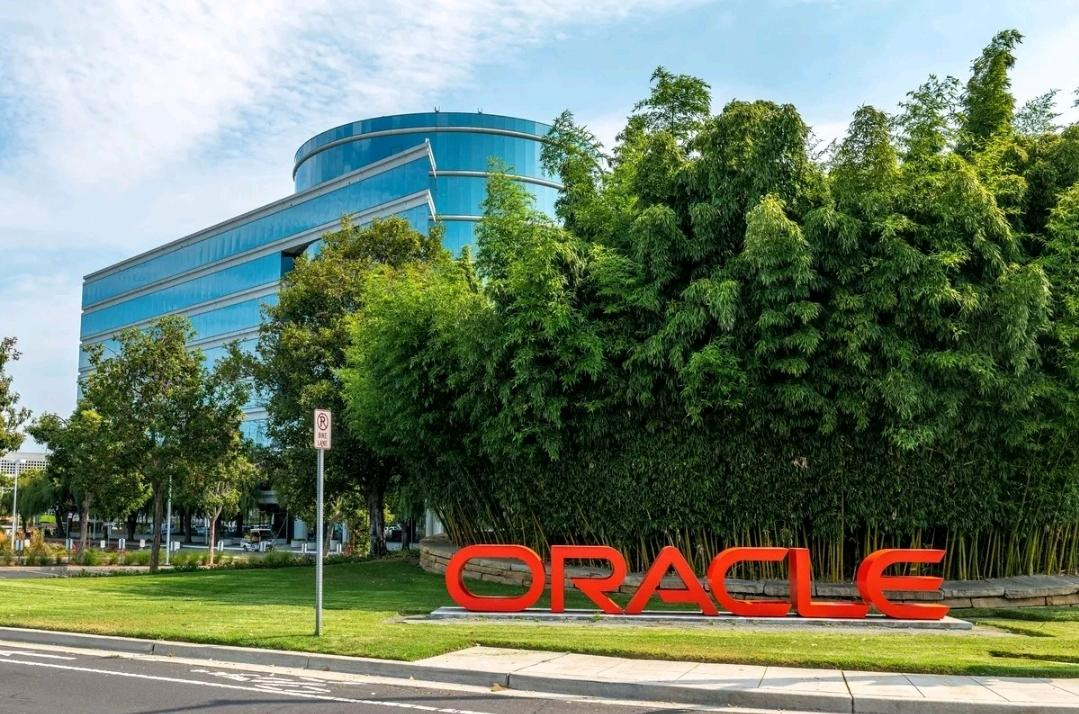
Management says AI customers — including OpenAI, xAI and $META — are driving the demand, and $ORCL raised long-range targets for its cloud infrastructure business while guiding capital spending far higher to build capacity.
Investors rushed in; the stock ripped, valuations re-rated, and a debate opened: can $ORCL convert this gargantuan backlog into durable revenue and profit, or has the market priced in too much optimism?
Key Points
- Q1 FY2026 revenue $14.93B and non-GAAP EPS $1.47, slightly below consensus.
- RPO surged to $455B, up $317B QoQ and +359% YoY; driven by multi-billion deals with OpenAI, xAI and Meta.
- OCI growth outlook raised to +77% this year (~$18B) with long-term targets expanding to $144B.
- CapEx guidance increased to ~$35B, mostly for GPUs and data-center equipment.
- Introduced “AI database” strategy to vectorize enterprise data and enable secure multi-LLM inference.
- Market reaction: sharp stock rally and valuation reset, but risks remain around customer concentration, CapEx pressure and execution.
What happened and why it matters
$ORCL ’s quarterly top line and EPS were broadly in line with expectations, but the market moved on future potential rather than current accounting. Management disclosed an RPO figure that dwarfs most cloud peers: $455B of contracted, not-yet-recognized revenue.
That backlog implies multi-year demand and represents the clearest evidence yet that hyperscale AI customers are locking large blocks of capacity.
Why this matters: RPO is a forward-looking signal. If even a material fraction of that backlog converts into revenue, Oracle’s cloud business could grow far faster than most investors had modeled — and the company would pivot from legacy software margins toward a capital-intensive but much larger infrastructure operator.
The market’s enthusiastic response reflects a re-pricing of Oracle from a mature software player into a central AI infrastructure provider.
Who’s signing the checks?
Management confirmed agreements with several marquee AI customers — publicly named: OpenAI, xAI and $META — and said multiple “tens-of-billions” deals were added in the quarter.
Press reporting and analyst discussion point to a heavy role for OpenAI in the surge; some reports suggest a long-duration relationship that could be worth roughly $30 billion per year in capacity, which would translate into hundreds of billions over a decade and help explain the RPO spike.
$ORCL also stressed that its multi-cloud database footprint and specialized data-center architecture attracted deal flow. The company emphasized that its approach — an integrated stack of high-speed networking, GPU infrastructure and database services — appeals to customers that want both scale and control.

Can Oracle actually turn $455B of backlog into revenue?
That’s the $455-billion question.
$ORCL offered a conversion thesis: many contracts are large, multi-year commitments tied to capacity that will be turned on as $ORCL deploys hardware.
Management highlighted quick handoff/acceptance capabilities — one large customer reportedly began paying within a week of equipment delivery — and argued that most CapEx is “revenue-generating equipment,” not land or buildings.
Yet conversion is not automatic. Historical practice across cloud providers shows only a portion of backlog becomes recognized revenue in the near term.
For context, $ORCL ’s peers report backlog multiples that are typically within a few quarters or a year of revenue realization; Oracle’s RPO now dwarfs comparable figures: $MSFT , $AMZN and $GOOGL have reported much lower RPO balances (company filings show materially smaller backlog totals).
If $ORCL follows a plausible conversion pathway — even capturing a fraction of RPO over the next two to four years — the revenue upside is enormous. But if conversion lags or customers revise needs, the promised growth could underdeliver.
What’s new in Oracle’s product play: AI database and inference ambition
Larry Ellison framed a two-market thesis: AI training is huge, but inference (running models in production, across millions of use cases) is even larger.

$ORCL ’s strategic response is the AI database: a way to vectorize and secure enterprise data so it can be combined with public knowledge via multiple LLMs (ChatGPT, Gemini, Grok, Llama) for high-value enterprise reasoning.
$ORCL positions this as a differentiated moat: tens of millions of enterprise database instances, deep security controls, and integrated model access inside Oracle Cloud. The proposition is simple — enterprises want private data leveraged safely by top LLMs; Oracle claims it can uniquely deliver that combination at scale.
The capital and margin tradeoff
To meet demand, Oracle guided CapEx to about $35 billion this year (management emphasized equipment, not real estate).
That rapid investment accelerates capacity buildout but also exerts near-term pressure on cash flow and margins: infrastructure revenue typically carries lower gross margins than legacy software licensing, especially during heavy scale-up phases.
Oracle argues that its network and engineering advantages deliver cost per unit benefits (faster data movement, better GPU utilization), which should support attractive economics once scale is achieved.
Nevertheless, investors must accept a phase of elevated spending and potentially compressed margins before scale-efficiencies hit.
Market reaction and valuation implications
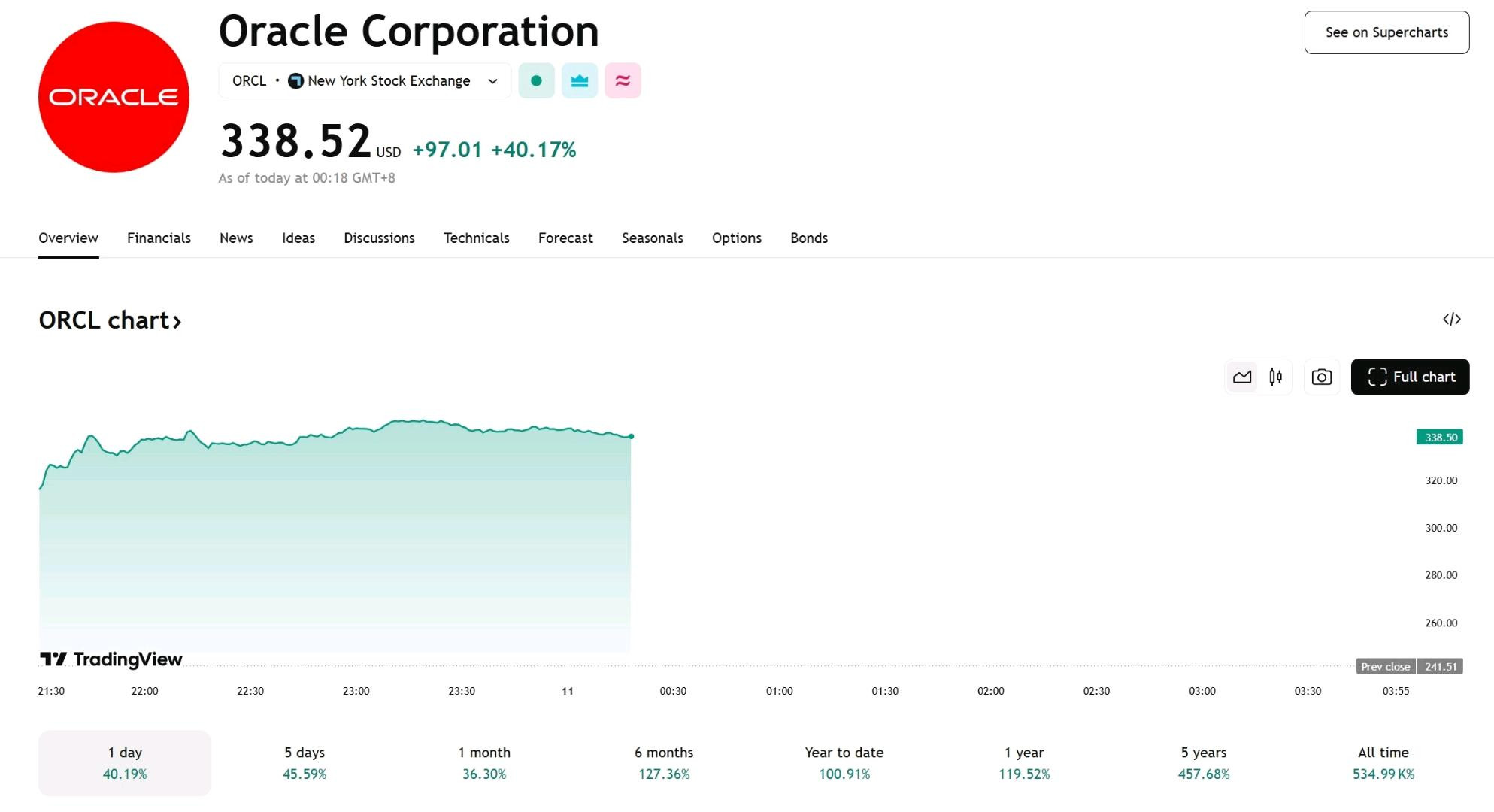
The market rewarded the story with a dramatic rally, pushing Oracle’s market value sharply higher and lifting related AI hardware and service stocks. Analysts have issued divergent responses: some raised price targets and upgraded conviction, while others flagged valuation risk and the need for conversion evidence.
At current prices, much of the long-term upside is priced into expectations for sustained, outsized OCI growth and high conversion of RPO to revenue. That makes Oracle’s next several quarters of execution — new capacity deliveries, customer on-boarding, revenue recognition cadence — critical to sustaining the re-rating.
Who benefits across the AI ecosystem?
Beyond Oracle itself, the RPO and capacity story supports hardware suppliers, GPU-centric vendors, and niche cloud operators that host AI workloads. Names tied to GPU supply chains, data-center construction and AI orchestration have seen positive spillovers.
But Oracle’s decision to own and operate more of the stack could reallocate economics and shape competitive dynamics among cloud incumbents and specialist providers.
What could go wrong? Four clear risks
Conversion risk: RPO ≠ revenue. A meaningful share of the $455B must materialize into billed, recurring revenue at expected timing for the thesis to hold."
Customer concentration: Heavy reliance on one or two hyper-spenders (reports estimate OpenAI could be a very large share of future revenue) creates single-counterparty risk.
Margin squeeze: Rapid CapEx and infrastructure growth could press margins if prices compress or if scale economies take longer than expected.
Execution complexity: Building thousands of racks, logistics, and customer-specific integrations at speed is operationally demanding; missteps would slow recognition and cash flows.
What should investors watch next?
RPO breakdown and contract duration: more granularity from management on contract lengths, annual value and customer concentration.
OCI booking-to-revenue cadence: how quickly newly delivered capacity converts into billed consumption.
CapEx burn vs deployment speed: whether spending translates into usable capacity and revenue.
Margins and free cash flow: signs that infrastructure scale is improving unit economics.
Customer disclosures or renewals: any public confirmations from large AI customers about multi-year commitments.
So — is this a buying opportunity or a bubble?
The quarter represents a paradigm shift in narrative: Oracle is no longer just legacy database software; management is positioning the company as a major AI infrastructure operator with a massive contracted backlog.
That creates a powerful upside scenario if Oracle can convert RPO at scale while protecting margins.
But the path to realizing that upside is far from guaranteed. Execution and concentration risks are real, and much depends on the durability of mega-customer demand (and their own capital plans). Investors should treat the move as a high-conviction, execution-sensitive opportunity: success rewards richly; missteps could trigger sharp re-rating.
Final verdict — what this quarter changed
Oracle’s Q1 results didn’t merely show growth — they signaled a strategic pivot and potentially a new industry role. The $455B RPO number is the catalytic data point that will define Oracle’s narrative for quarters to come.
For long-term, risk-tolerant investors, the story warrants attention and active monitoring of conversion metrics.
For prudent investors, the sensible next steps are to demand transparency on contract terms, track capacity deployments, and consider valuation discipline given the uncertainty around timing and margins.
Oracle has given the market a story worth believing — but the convincing still depends on delivery.