
Jensen Huang’s Most Embarrassing Investment Turns Around

Since Jensen Huang shifted his stance on quantum computing from “skepticism” to “support,” the tech world has been abuzz.
Recently, Nvidia, under Huang’s leadership, officially entered the quantum computing arena. Reports indicate that its venture capital arm made its first investment in Quantinuum, a quantum computing company controlled by Honeywell International Inc., with the investment valuing the company at $10 billion.
Earlier, during his GTC Paris speech, Huang announced Nvidia’s launch of the open-source quantum development platform CUDA-Q, designed as a “super-connector” between quantum computing and classical high-performance computing.
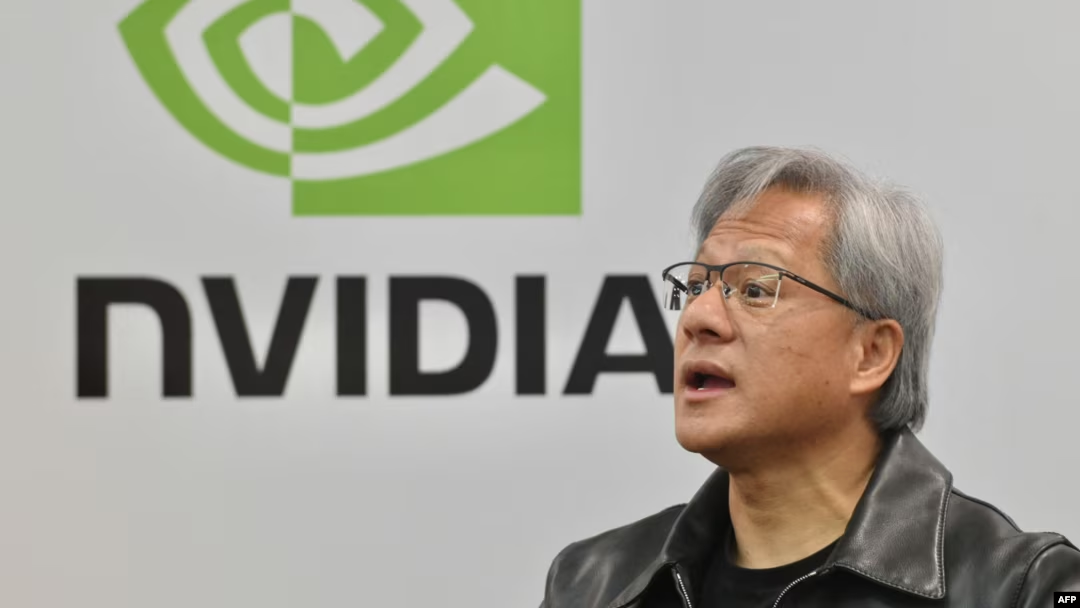
Some views suggest that with Nvidia’s market cap surpassing $4 trillion, the giant is no longer just the world’s top company. By laying the groundwork for a next-generation “quantum computing + AI” computing platform, it is positioning itself as a leader in the future computing era.
Jensen Huang Once Poured Cold Water on Quantum Computing
The entity that successfully drew Huang’s investment is Quantinuum, a quantum computing company under Honeywell International.
Formed in 2021 through the merger of Honeywell’s Quantum Solutions division and Cambridge Quantum Computing, Quantinuum focuses on trapped-ion quantum computing technology and has completed multiple funding rounds.
Its valuation reached $5 billion after a $300 million raise in January 2024. Compared to early 2024, this represents a doubling of its valuation in just 18 months.
Huang had previously been skeptical about quantum computing. In January 2025, he publicly stated that a “truly useful” quantum computer might take decades to emerge, a comment that triggered a sharp drop in stocks of quantum computing-related firms.
In his view, quantum computing faces two core challenges: first, its technical complexity is extreme, remaining in the basic research phase with key issues like quantum error correction and qubit stability yet to be resolved, posing significant barriers to large-scale commercialization; second, in the short term, it cannot replace classical computers, with limited use cases and poor performance-to-cost ratios.
Consequently, Huang questioned whether quantum computing could achieve commercial viability within 15 years, suggesting 20 years as a more realistic industry expectation.
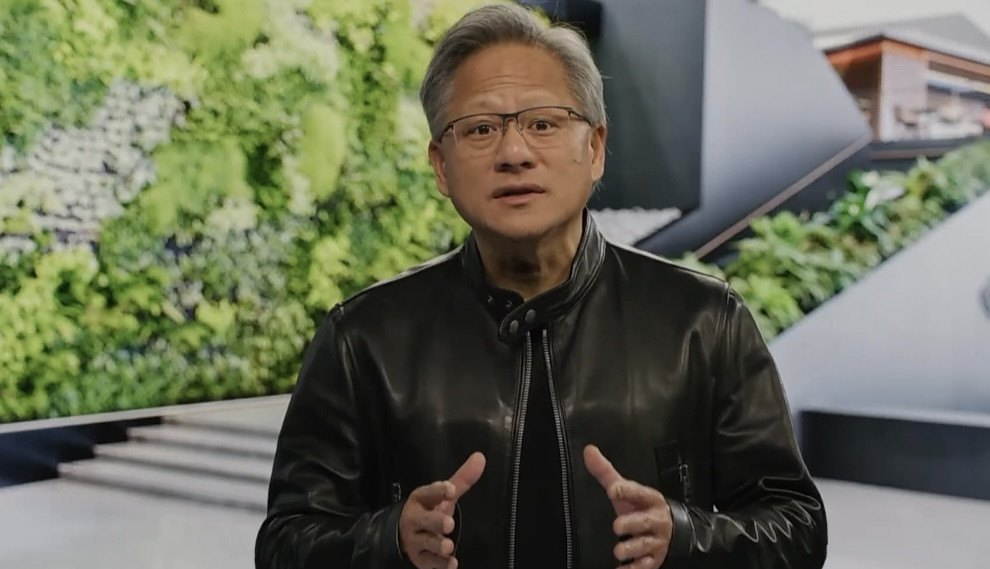
However, his stance shifted in March 2025. During the “Quantum Day” event at Nvidia’s GTC tech summit, Huang unusually issued a public apology, admitting his earlier timeline predictions for quantum computing were inaccurate, formally retracting his critical remarks, and moving from “skepticism” to “support.”
In action, Nvidia responded swiftly by partnering with top industry players. In Quantinuum’s latest $600 million funding round, Nvidia and Quanta Computer joined as new investors, with existing shareholders like JPMorgan Chase, Mitsui & Co., and Amgen adding to their stakes.
Post-funding, Quantinuum stated the capital will accelerate R&D to deliver its next-generation quantum computing system, Helios, slated for late 2025, advancing general-purpose fault-tolerant quantum computing. The company also plans an IPO by the end of 2027.
Quantum Computing + AI: Jensen Huang Building an AI “Nuclear Weapon”?
Known for dominating the AI computing power space, Nvidia has continuously expanded its boundaries through investments. Its reach now extends to healthcare, artificial intelligence, cloud computing, and AI infrastructure, among others.
Quantum computing is no exception. The CUDA-Q platform, launched by Nvidia in March, embodies Huang’s core vision for “quantum computing + AI.”
According to Huang, over the past few decades, the world’s most powerful computing relied on GPUs, but in the future, every supercomputer will be equipped with quantum processing units (QPUs) working alongside GPUs. QPUs will handle quantum tasks, while GPUs manage preprocessing, control, error correction, and post-processing.
This synergy is like adding two engines to a car—faster speeds and a new way of driving. With this new approach, computing shifts from “linear acceleration” to “quantum superposition.”
Huang predicts that the number of qubits (the basic unit of quantum computing) will grow exponentially, akin to Moore’s Law: increasing 10-fold every 5 years and 100-fold every 10 years. This exponential growth will enable quantum computing to surpass traditional systems, tackling complex problems previously deemed unsolvable—such as global financial system simulations, training AI models with hundreds of billions of parameters, and interstellar physics modeling.
To hasten quantum computing’s rollout, Huang is crafting a next-generation AI computing “nuclear weapon”—the CUDA-Q platform. Nvidia’s success has never relied solely on its hardware dominance as a “computing power king” but also on its robust software ecosystem.
In computing power, AMD’s MI300, released last year, outpaced Nvidia’s H100, and Intel’s Gaudi 3 claims a 30% edge over Nvidia’s H200. Yet, these giants struggle to erode Nvidia’s market share, largely due to the irreplaceable software ecosystem barrier built by CUDA.
The CUDA-Q platform follows this strategy. As an extension of the CUDA platform, it avoids developing QPUs directly, instead leveraging CUDA-Q to integrate the entire quantum computing ecosystem. This allows developers to harness GPU, CPU, and QPU computing power within a single program, enabling hybrid programming and providing robust tools for blending quantum and classical computing.
Beyond CUDA-Q, Nvidia offers cloud services, AI infrastructure, electronic circuit simulations, SDKs, and more, further enriching the “quantum computing + AI” ecosystem.
In a video interview, Huang noted that Nvidia has built a tight upstream-downstream partnership ecosystem over the years, with major firms like Microsoft, Google, Meta, and Tesla adopting its computing platforms.
Following the Quantinuum investment, Nvidia will deepen its quantum computing layout: first, by synergizing software tools like CUDA-Q with Quantinuum’s hardware to enhance the quantum-classical hybrid computing ecosystem; second, by co-establishing the Nvidia “Accelerated Quantum Research Center” in Boston, expected to launch late 2025, driving deep integration of quantum and AI technologies.
Tech Giants Vie for the Next Technological High Ground
In reality, Huang is not alone. In recent years, global tech powerhouses have prioritized quantum computing research, rolling out quantum information technology strategies to seize the next technological high ground.
Beyond Nvidia’s investment in Quantinuum, another US quantum startup, PsiQuantum, raised $620 million in a Series D round by late 2024, led by BlackRock, with participation from the Australian federal and Queensland governments, and a partnership with the US Department of Energy.
In terms of scale, this funding became the largest single quantum computing investment of 2024, surpassing the annual quantum computing investment totals of most countries and regions.
Founded in 2016 by Jeremy O’Brien and three scholars, PsiQuantum, headquartered in Palo Alto, California, has grown to a 350-employee firm in nine years, with funding reserves rivaling Google and IBM’s internal quantum projects.
Almost simultaneously with Quantinuum’s funding, Europe produced a quantum computing unicorn. On September 3, 2025, Finnish quantum startup IQM announced a $320 million raise, led by US cybersecurity venture firm Ten Eleven Ventures, with Finnish VC Tesi as a co-investor. IQM CEO and co-founder Jan Goetz revealed the funds propelled the company into “unicorn” status, with a valuation exceeding $1 billion.
Additionally, IonQ, a key US quantum computing player, saw its stock surge about 500% in the past year, reflecting market confidence in its technology, with ambitions to become the “Nvidia of quantum computing.”
In Q2 2025, a major US pension fund, the New Jersey Pension Fund, made significant investment adjustments: it sold off Alibaba stock while building new positions in D-Wave Quantum and Rigetti Computing. D-Wave claimed “quantum supremacy” in March 2025, Rigetti focuses on research and development, and the 500%+ rising IonQ also received increased holdings.
This series of moves signals a “quantum computing investment boom” in the US capital market.
According to *Information and Communication Technology & Policy*, data compiled from CB Insights and Crunchbase shows that by April 2025, the total number of US quantum computing-related companies exceeded 200.
This reflects not only the gradual clarification of quantum computing’s commercial potential but, more critically, its defining feature: extraordinarily fast computation speeds compared to classical computers.
Microsoft CEO Satya Nadella stated that a palm-sized quantum chip could solve problems beyond the combined capacity of all current Earth computers. For instance, Google’s Willow quantum chip completes complex calculations in 5 minutes that would take traditional supercomputers 10²⁵ years. Once humanity enters the quantum computing era, fields like biomedicine and materials science could see revolutionary changes.
In AI, the advent of quantum computing will surpass the current GPU-centric AI computing framework. Training times for large AI models could shrink from months to minutes, enabling true exponential self-evolution, triggering a “flywheel effect” and “intelligence explosion.”
Thus, the computing revolution sparked by quantum technology could propel human technological development to new heights. For Nvidia, already the king of AI computing, preemptive positioning is a natural choice. This strategy will allow Nvidia to maintain its role as the “king of computing power” in the next wave of computing transformation.