
Oracle’s “AI Night”: Breaking Down the Numbers Behind a Historic Rally

Shearing sheep
September 11, 2025
GoGPT Summarizes Articles
When people talk about the AI trade on Wall Street, the names that usually come up first are Nvidia, Microsoft, or maybe Palantir. But last night, it was Oracle ($ORCL) — the 47-year-old database and enterprise software giant — that stunned the market with an earnings outlook so strong it sent shockwaves through global equities.
For much of the past week, sentiment toward AI stocks was shaky. Investors worried that the extraordinary growth of companies tied to the AI boom might not be sustainable. Nvidia, in particular, saw selling pressure as traders questioned how long its growth could continue at this pace. Yet Oracle’s results flipped that script overnight. Suddenly, the debate shifted from whether AI demand is peaking to just how deep the wave of enterprise spending might go.
The Headline Numbers
Here are some of the most striking figures from what many are calling Oracle’s “AI night”:
-
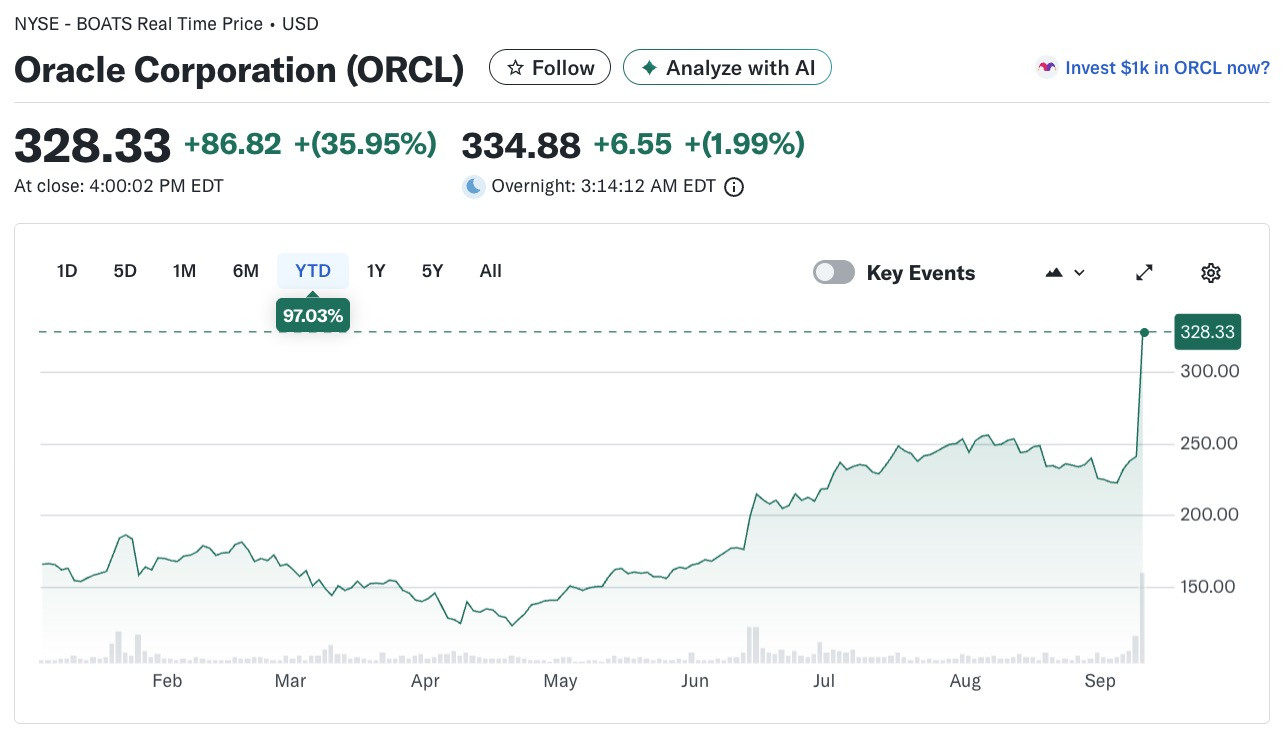
$247 billion: Oracle’s market cap jumped this much in one session, the fourth-largest single-day increase in U.S. stock market history. Shares finished the day up 35.95%, their best performance since 1992, after rising as much as 42% intraday.
-
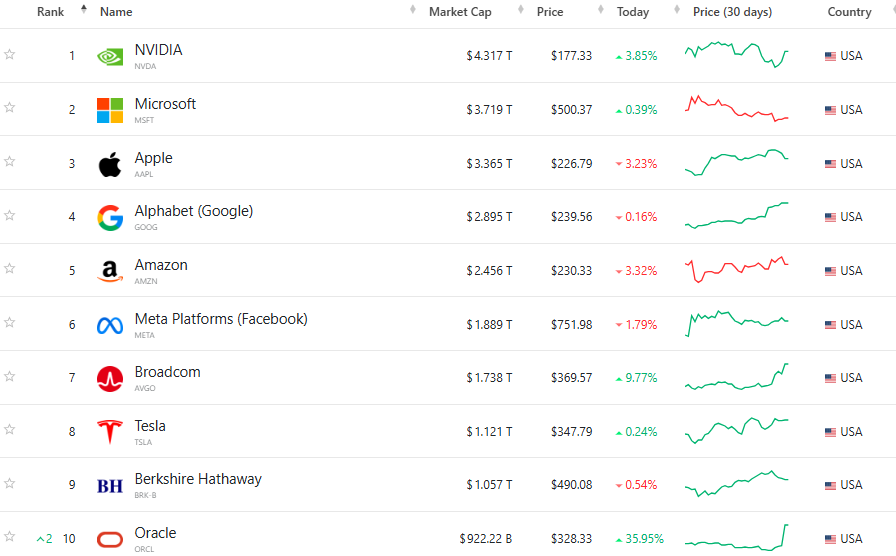
Top 10 status: Oracle is now the 10th most valuable listed company in America, leapfrogging JPMorgan and closing in on the trillion-dollar mark. The last time Oracle was in the U.S. top ten was 2011.
-
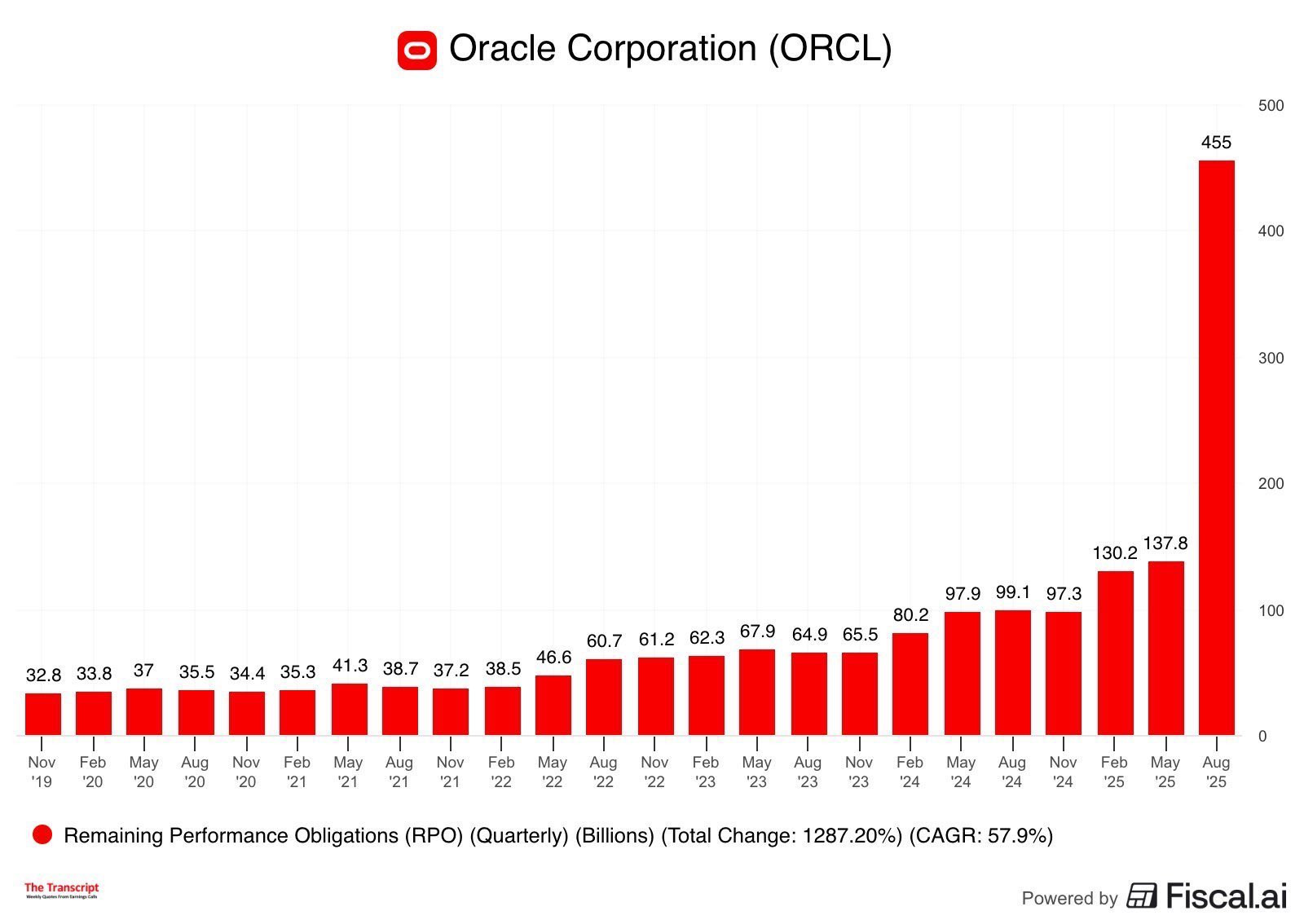
359% RPO growth: Remaining Performance Obligations surged to $455 billion, 2.5 times higher than market expectations. Oracle added $317 billion in new commitments in just the latest quarter, largely from cloud contracts with OpenAI, xAI, Meta, and others. Analysts called this the most important metric of the quarter — Jefferies wrote, “RPO was the star of the show.”
-
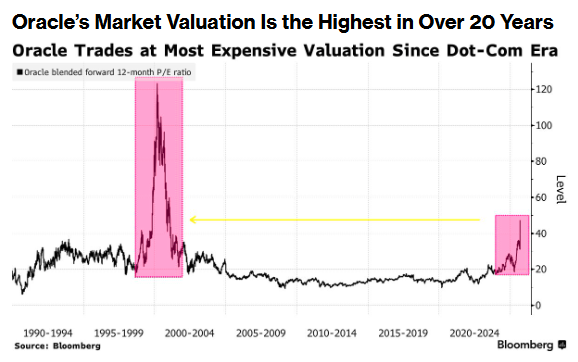
48x forward P/E: Oracle’s valuation hit its richest level since 2001, higher than Nvidia or Broadcom on an earnings multiple basis.
-
$410 price target: Wall Street rushed to raise targets. Deutsche Bank moved to $335, Jefferies to $360, Bank of America to $368, and Citi to a street-high of $410.
-
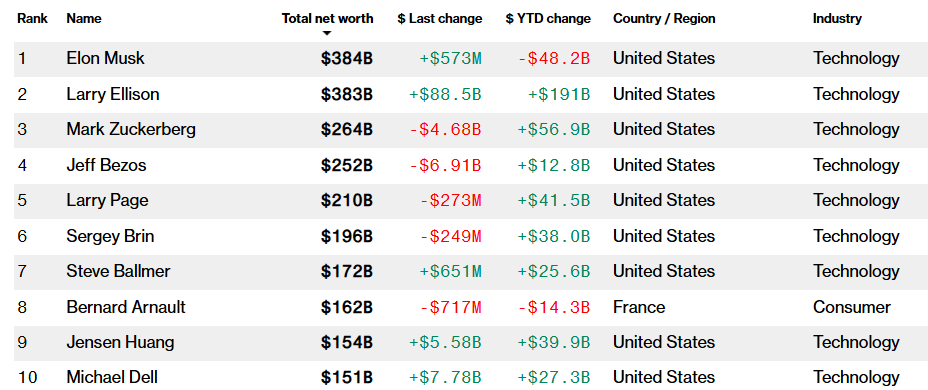
$383 billion fortune: Chairman Larry Ellison, who owns about 41% of Oracle, briefly overtook Elon Musk to become the world’s richest man. His wealth jumped by an astonishing $88.5 billion in a single day, marking the largest one-day gain in Bloomberg Billionaires Index history.
The OpenAI Deal: A High-Stakes Gamble
Perhaps the most eye-catching detail was Oracle’s deal with OpenAI. Reports confirmed that OpenAI has signed a $300 billion, five-year computing contract with Oracle beginning in 2027. To fulfill it, Oracle will need 4.5 gigawatts of power capacity — roughly equivalent to the output of two Hoover Dams, or enough to power four million U.S. homes.
For OpenAI, this is a bold bet on its own growth. The company’s current annualized revenue is around $10 billion, far short of the ~$60 billion per year it would need to cover the deal. Success hinges on ChatGPT and future products maintaining explosive adoption among consumers, enterprises, and even governments.
For Oracle, the upside is huge — guaranteed long-term revenue on a scale that could transform its cloud business. But the risks are equally large: putting so much future income on a single customer, requiring massive capital expenditures to build data centers and secure AI chips, and facing execution challenges in scaling capacity.
As Oracle CEO Safra Catz put it, “Oracle has become the go-to place for AI workloads.” But the market will want to see if these commitments translate into actual revenue delivery in the coming years.
Analyst Reactions: Excitement and Skepticism
Not surprisingly, analysts were quick to praise Oracle’s results. Deutsche Bank called the earnings “stunning,” and Wells Fargo described the backlog as a “major validation” of AI infrastructure demand. Bank of America even upgraded Oracle from “neutral” to “buy,” calling it a “key enabler of AI.”
But not everyone is convinced. Some fund managers voiced concern that Oracle may struggle to fulfill these massive contracts in a world where supply chains for AI chips and power are still constrained. Others questioned whether OpenAI’s commitments are financially sustainable. As one European portfolio manager put it: “I’m not sure their guidance is realistic, but the market is fully buying into the story — that’s typical of how investors react to AI.”
Oracle itself is preparing for the challenge. The company raised its capex forecast to $35 billion for the current fiscal year, with a goal of scaling its Oracle Cloud Infrastructure (OCI) revenues to over $100 billion within four years. Ellison also highlighted Oracle’s push into the AI inference market — which he believes will be larger than AI training — with a new “AI database” strategy aimed at bringing intelligence into enterprise applications.
A Broader Shift in the AI Cycle
The Oracle story isn’t just about one company’s quarter. It highlights how the AI trade is evolving.
Earlier this year, Nvidia and other chipmakers were the center of attention. Now, as Cresset Capital’s CIO Jack Ablin noted, we may be entering the next phase: hardware first, infrastructure second, and then the downstream beneficiaries. Oracle’s blowout RPO suggests enterprises aren’t just experimenting with AI anymore — they’re locking in multi-year commitments to scale it.
The spillover effect was visible. Alongside Oracle, shares of Broadcom, AMD, and Palantir all rallied. In that sense, Oracle’s numbers served as a confidence reset for the entire AI sector.
My Take
Oracle’s “AI night” will likely be remembered as a turning point. The company showed that the AI boom isn’t just about GPUs; it’s also about cloud infrastructure, long-term commitments, and the software layer that enterprises will rely on.
Still, the risks are significant. Valuations are stretched, execution demands are immense, and Oracle’s reliance on a handful of mega-deals could backfire if customers stumble. For OpenAI in particular, the bet looks audacious — committing to spend more than it currently earns by a wide margin.
But for now, the market has spoken. Oracle is no longer being treated as a legacy database company. It’s being priced as one of the central players in the AI buildout.
#Market Spotlight: The Stories Driving Today’s Trading#$Oracle Corp(ORCL)