
Wall Street Goes On-Chain: Is Tokenization Finally Ready for Prime Time?

This week marked a decisive pivot: regulators, exchanges and Wall Street stalwarts moved tokenization from experiment to actionable strategy.
With the SEC signaling a more permissive posture, Nasdaq pushing tokenized securities into its core market, and asset managers from BlackRock to BlackRock rival BlackRock-peer firms testing tokenized funds, real-world assets are starting to appear on blockchains — and one listed company, Galaxy Digital, actually put its SEC-registered shares on Solana.
The implications are immediate: potential 24×7 trading, near-instant settlement and new global access — but material legal, custody and settlement frictions remain to be solved.
Key Takeaways: What changed this week?
- Regulatory tone shifted. SEC chair Paul S. Atkins, speaking in Paris at an OECD forum, framed a move from enforcement to enabling innovation and announced a “crypto project” to modernize securities rules, saying “most crypto tokens are not securities.”
- Exchanges moving to core markets. Nasdaq CEO Adena Friedman committed to bring tokenization into Nasdaq’s core trading systems, pursuing 24×5 trading with an eventual aim of 7-day market availability.
- Big asset managers exploring tokenized ETFs. Bloomberg reported BlackRock is studying ETF tokenization; BlackRock’s prior tokenized liquidity product BUIDL has grown to over $2 billion. Larry Fink has reiterated that “every financial asset can be tokenized.”
- Real issuers and funds are live or launching. Galaxy Digital tokenized its A-class ordinary shares on Solana via Superstate’s Opening Bell. WisdomTree launched a tokenized private-credit and alternative-income vehicle (token: Crdt). Winner Fashion and Delin Holdings announced an RWA tokenization cooperation with HKD 29.9 million subscription details.
- Market mechanics in focus. Tokenization promises 24×7 markets, instant settlement and new collateral use cases — but integrating blockchain settlement with existing clearinghouses and custodians remains the key operational and regulatory challenge.
Regulatory Pivot: From enforcement to enablement
SEC leadership publicly reframed enforcement posture as innovation-friendly.
Paul S. Atkins told attendees the era of "weaponized" enforcement is over and advocated clear tests for which tokens are securities.
His announced “crypto project” aims to align securities law with on-chain financing and permit compliant chain-based capital formation.
This is not a repeal of securities law but an attempt to make legal outcomes more predictable for builders.
Atkins also flagged a future where AI agents execute trades and embed compliance into code — a nod to automated, programmatic finance.
Regulators will still emphasize investor protections and KYC, but the rhetoric shift lowers the political barrier to pilots by exchanges and custodians.
That said, detailed rule changes and formal guidance will be required to convert speeches into broad, commercial activity.
Market Infrastructure: Will exchanges run 24×7?
$NDAQ ’s public stance puts tokenization squarely in the exchange core.
CEO Adena Friedman said tokenized stocks should trade alongside traditional listings, not be consigned to off-market experiments.
$NDAQ is pushing a staged schedule: expand to 24×5 trading as an interim step and — ultimately — enable continuous markets across the week.
The company has also filed for permission to list and trade tokenized stocks, signaling an intent to align blockchain instruments with regulated exchange rules.
24×7 markets raise several practical questions: how do clearing cycles, corporate actions and market-making work overnight?
Integrating blockchain instant settlement with legacy clearinghouses and custodial safekeeping is the thorny engineering and legal problem market participants now face.
Market participants see value: continuous liquidity, fractionalization, and immediate settlement reduce counterparty risk and open ETFs and stocks to global investors outside conventional hours.
But the transition will require coordinated updates to custody, margining, tax reporting and cross-border access rules.
Real-world moves: ETFs, private credit, and tokenized shares
Institutional pilots became public reality this week.
BlackRock is reported to be exploring tokenized ETFs; its earlier digital liquidity product, BUIDL, grew to over $2 billion and provided a commercially validated precedent.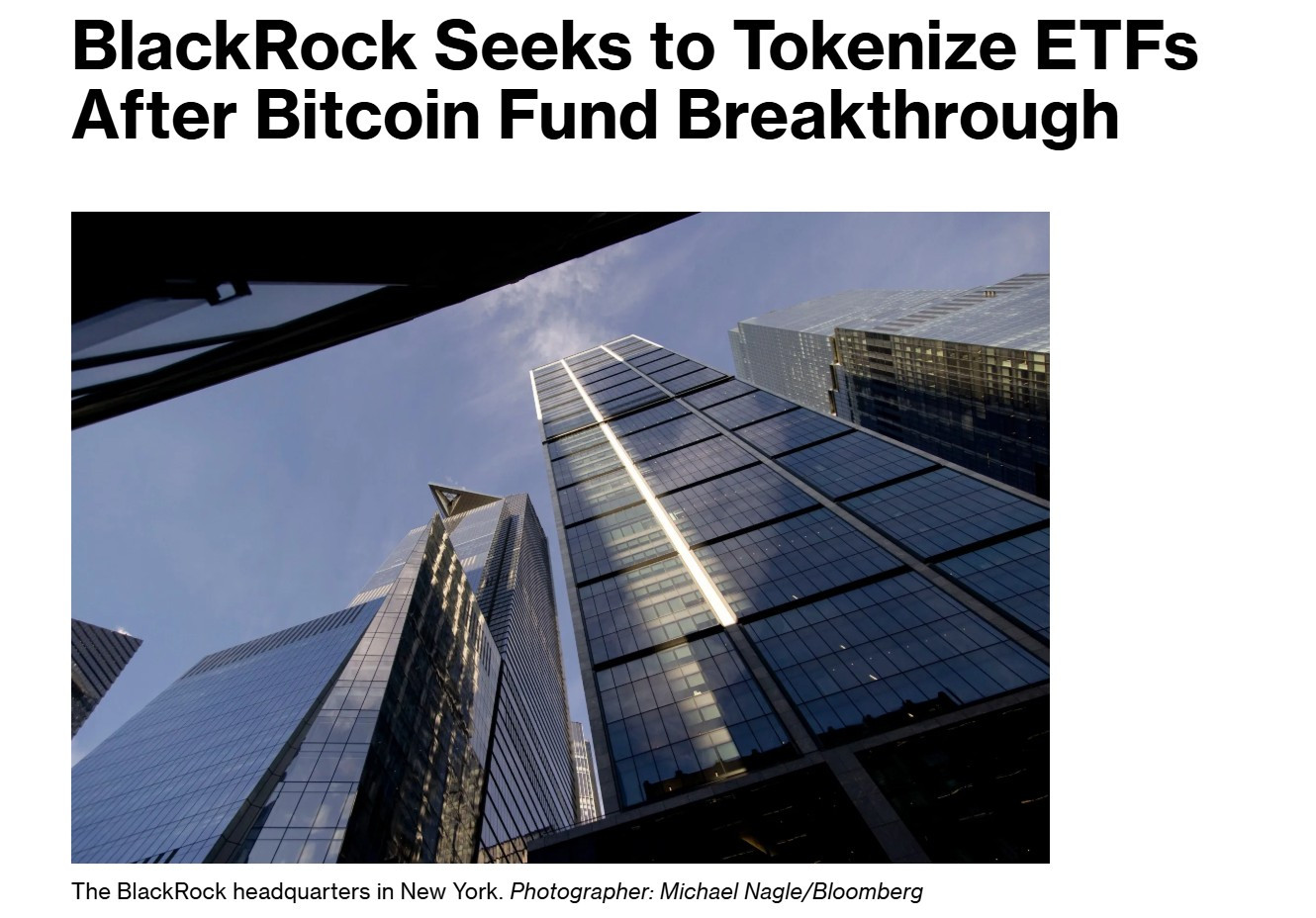
WisdomTree launched a tokenized private-credit and alternative-income digital fund (token Crdt), bringing illiquid credit exposure onto on-chain rails.
These are not tokenized gimmicks — managers are packaging real economic exposure and KYC-gated access.
Galaxy Digital went further: it tokenized SEC-registered A-class ordinary shares on the Solana blockchain through Superstate’s Opening Bell platform.
Galaxy describes the listing as compliant, KYC-restricted and capable of near-instant settlement and around-the-clock transferability.
In Hong Kong, Winner Fashion and Delin Holdings reached a strategic cooperation to explore RWA tokenization, tied to a HKD 29.9 million subscription and an expected 0.65% issued share impact.
These deals show tokenization is crossing geographies and asset types, from ETFs to private credit to corporate equity.
What’s next — speed, scale, or stumbling blocks?
Tokenization now sits at the intersection of policy, infrastructure and market demand.
If policymakers provide clear, durable rules while exchanges and custodians build interoperable infrastructure, tokenization could reduce settlement risk and widen global participation.
Practically, the industry must answer integration questions: who will serve as regulated custodians of on-chain tokens, how will corporate actions be executed, and how will tokenized securities be reconciled with existing accounting and tax frameworks?
Those answers will determine whether tokenization is a niche efficiency play or a structural market shift.
Market players are hedging toward pragmatism: controlled pilots, KYC gating, and hybrid models that keep legacy custodians and clearinghouses in the loop while testing blockchain rails.
The next months will reveal whether pilots scale or become constrained by legal and operational gaps.
Bottom line: A credible path — but not a fast-forward button
This week’s developments moved tokenization from buzz into staged reality: regulators signaled permissiveness, Nasdaq and major managers moved from experiments to filings, and issuers launched live tokenized products.
That combination is the backbone of any market transition.
Expect incremental rollout: more pilots, parallel settlement experiments, and incremental regulatory guidance.
If those elements align, tokenized securities could deliver faster settlement, broader access and new collateral dynamics — but only with careful legal and infrastructure fixes.