
Markets at a Crossroads: Is the Fed About to Restart Easing — and Will ETF Flows Steal the Show?

The short answer: yes — markets are pricing a 25-basis-point Fed cut, but that cut may not mean what it used to. Over roughly a 36-hour “central-bank super-week,” the Federal Reserve, Bank of England, Bank of Japan, Bank of Canada and others will reveal policy.
Traders widely expect the Fed’s first cut since Trump’s second term — 25 basis points — even as passive ETF-driven flows keep fueling equities. That collision of policy and structural liquidity creates both opportunity and risk for next week’s markets.
Key Points
- The market has largely priced a 25bp Fed cut; retail sales and weekly unemployment claims are the last data points before the decision.
- Canada is expected to follow with a rate cut to about 2.5%; the BoE and BoJ are likely to hold.
- Equity markets have soared (S&P +32% from April lows) and ETFs have been huge recipients of inflows — >$800bn year-to-date, ~$475bn into equities.
- That “automatic-pilot” ETF demand can blunt or magnify policy impact: it supports risk assets even if fundamentals weaken, but it’s vulnerable if the Fed signals fewer cuts.
- Sector rotation will depend on whether easing is precautionary or signals deeper slowdown: cyclical names benefit from shallow easing; defensive sectors win if the slowdown is severe.
What’s happening now — the headlines you need
Central banks across the globe are set to announce consecutive policy decisions in a tense, 36-hour stretch. The clearest market signal is that the U.S. Fed is expected to kick off a cut cycle with a 25bp reduction.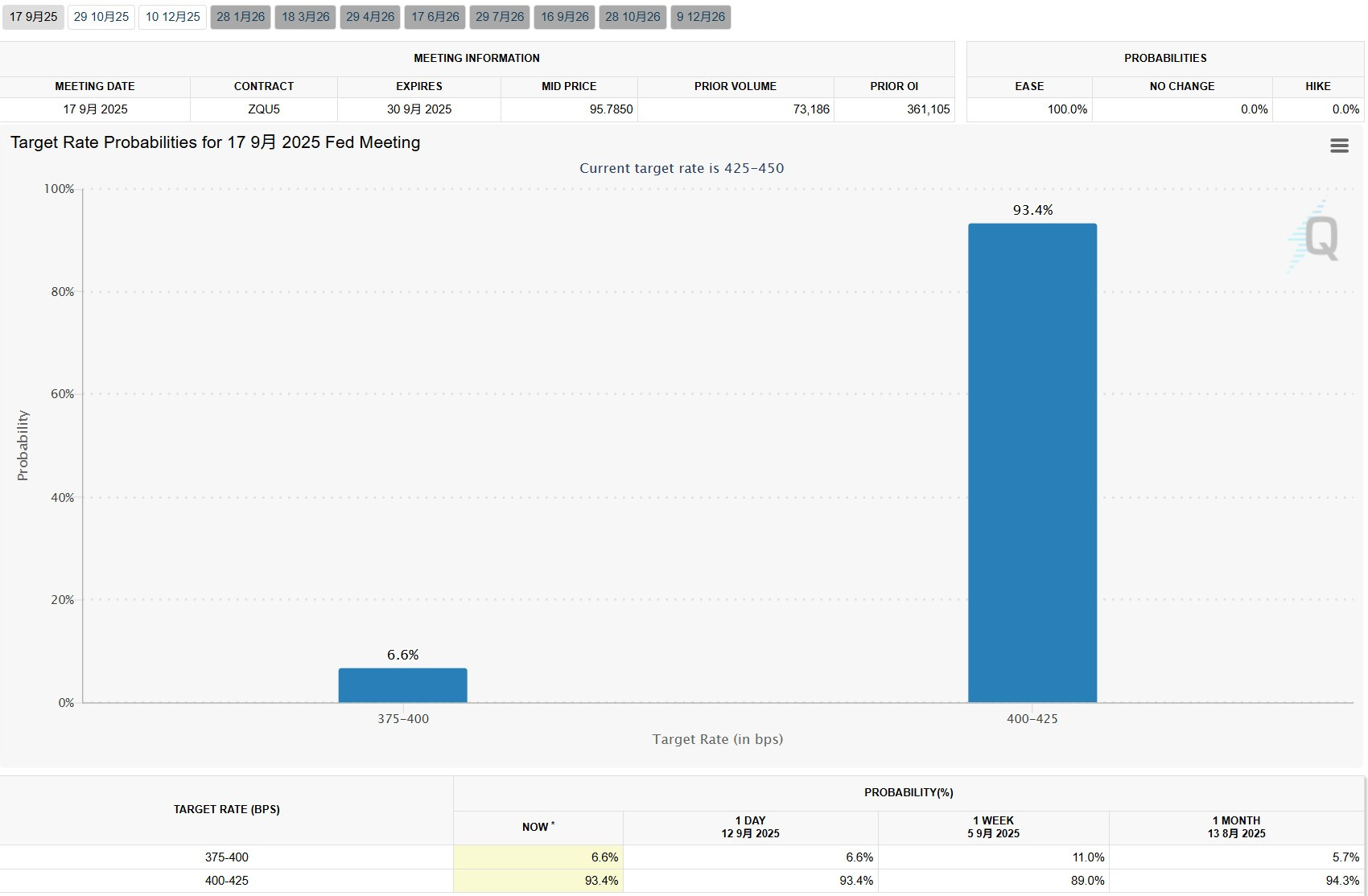
Policymakers are balancing White House pressure for cheaper credit against concerns — particularly about tariffs — that could stoke inflation. Recent weakness in the labor market gave doves room to act.
Canada looks set to mirror U.S. easing given weak employment and a contracting second quarter, while the Bank of England and Bank of Japan are widely expected to stay put. Norway and some emerging-market central banks face greater uncertainty; Brazil appears set to keep policy tight at a high 15% rate.
Why this matters now — the market mechanics
A Fed cut normally hands a lifeline to risk assets. But this time markets are different. Passive ETFs have been sucking in cash at a historic clip, becoming a structural buyer regardless of short-term data.
That steady, automated demand can mute the immediate market response to policy moves, making it harder to read whether price action reflects central-bank stimulus or basket-flow mechanics.
History shows that the first cut after a pause tends to be equity-positive: research suggests the S&P rises materially in the year following a restart. But that historical edge depends on the depth of the economic slowdown — a shallow cooling favors cyclicals; a deeper slump pushes investors into defensives.
The data watch: what could still move the needle
Two data releases stand between today and the Fed decision: U.S. retail sales and weekly initial jobless claims. Retail sales (consensus +0.3% for August) will test consumer resilience amid price pressure. Weekly claims will help determine whether recent unemployment jumps were a blip or a trend.
If retail spending weakens and claims stay elevated, the Fed will have stronger cover to cut. If retail comes in firmer and claims cool, the Fed may still cut because of market expectations and political pressure — but it would have less room to promise a prolonged easing path.
Who’s likely to act — and who’s likely to sit tight
Federal Reserve (U.S.) — priced for a 25bp cut; focus on the post-decision dot plot and Chair Powell’s remarks.
Bank of Canada — expected to follow with a cut to ~2.5% after weak GDP and jobs prints.
Bank of England — likely to hold at 4%, but debate centers on the pace of quantitative tightening.
Bank of Japan — expected to remain on hold; investors will scrutinize any change in guidance from Governor Ueda.
Other central banks — many emerging-market banks (Indonesia, Brazil, South Africa) expected to pause; Brazil is likely to stay at a high policy rate.
ETF flows: a market-structure story that changes the playbook
One of the most important narratives is structural demand from ETFs. Year-to-date inflows exceed $800 billion, with roughly $475 billion into equities alone.
This creates a non-elastic source of demand: monthly contributions to pension plans, target-date funds and model portfolios mean money keeps hitting index funds regardless of macro noise.
That “automatic-pilot” effect can turn macro signals into amplified market moves. When inflows are large, they compress volatility and support valuations; when flows reverse they can accelerate sell-offs. For policymakers, that raises a subtle question: does lowering rates actually stimulate the real economy as directly as before, or does it now primarily lubricate balance-sheet mechanics that prop up asset prices?
Strategy map: what investors are telling us
Investors are split on the next phase. Some lean into the liquidity story, keeping exposure to top performers like AI and large caps. Others prefer a rotation: buy financials and industrials if easing is clearly aimed at sustaining activity; shift to health care and consumer staples if weakening data points to a deeper slowdown.
History helps but does not settle the trade. In “mild-slowdown” scenarios, cyclical sectors and small-cap stocks often outperform after the first cut. In “serious-slowdown” scenarios, defensive sectors typically win. The exact policy path — number and size of subsequent cuts — will determine which script plays out.
The communication game: watch the dot plot and Powell’s tone
Markets will digest not only the headline rate decision but the Fed’s projections and Powell’s tone. The dot plot will be scrutinized for the committee’s rate expectations; a dovish dot plot that signals multiple cuts would likely send equities higher.
A more cautious message — implying limited easing ahead — could trigger a sharp repricing because ETF flows may not be able to sustain prices on their own without fresh monetary accommodation.
Risk checklist — what could upend consensus
Unexpectedly strong retail or payroll data would undercut expectations for easing and could force markets to reprice higher-for-longer rates. Conversely, surprising hawkish language from the Fed in its post-meeting communications would signal fewer cuts ahead, jolting risk assets.
A sudden reversal in ETF flows or large institutional redemptions could amplify market moves and expose valuation fragilities. Geopolitical developments or tariff shocks that materially lift inflation risk would complicate the Fed’s calculus and potentially delay easing.
Bottom line — what to watch this week
This is a make-or-break period for market narratives. A 25bp Fed cut is widely expected, but its market impact depends on the Fed’s forward guidance and how durable the economic softening proves.
Structural ETF inflows are a parallel force reshaping how policy moves translate into asset-price response. Traders should watch the data prints, the Fed’s dot plot, Powell’s remarks, and the real-time behavior of passive flows.
If easing is shallow and communicated as pre-emptive, cyclical sectors and risk assets may extend gains. If the Fed signals a deeper, multi-cut path because of deteriorating data, or if flows falter, the market may rotate toward defensives.
Either way, the coming 36 hours are likely to set the tone for the markets’ final quarter — but this time the script is being co-written by central banks and the ever-larger machinery of passive investing.