
Deadline and Dice: Will Congress Let ACA Subsidies Expire?

With a September 30 funding deadline looming, Congress is locked in a high-risk standoff that could push the federal government into another shutdown — and, crucially, let enhanced Affordable Care Act (ACA) subsidies lapse.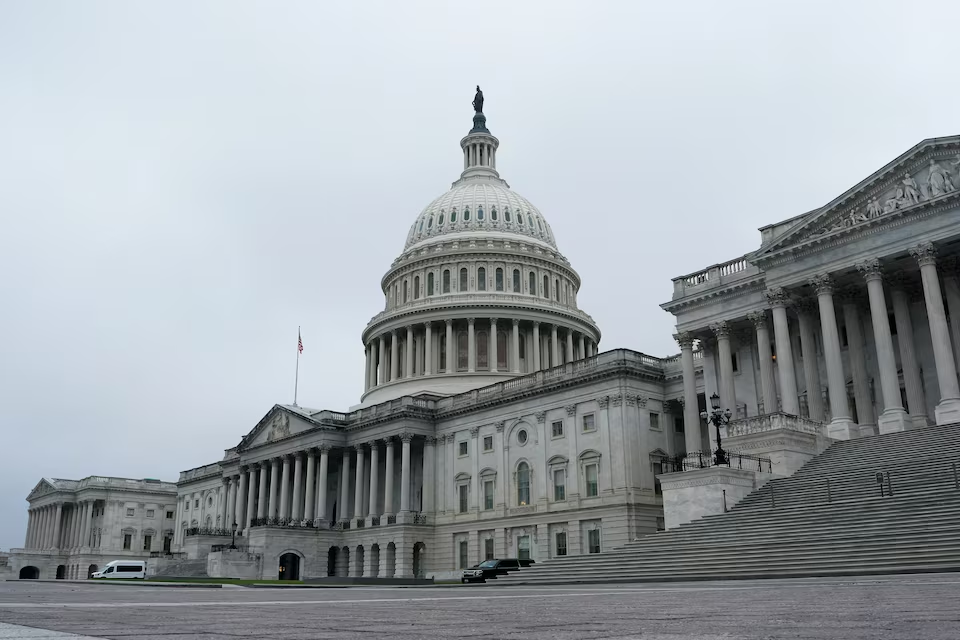
If those subsidies end, roughly 22.4 million Americans who currently receive premium assistance would face an average monthly premium surge of more than 75%, sparking political backlash and new uncertainty for markets.
Key Points
- Democrats insist any stopgap spending bill must extend enhanced ACA premium tax credits; they’ve threatened to block clean funding bills without it.
- Republicans, led by Senate and House leaders, prefer a “clean” short-term spending measure to buy time for year-end negotiations.
- KFF data: about 24.3 million people are enrolled in ACA marketplaces; roughly 22.4 million receive subsidies.
- CBO estimate: making enhanced subsidies permanent would add roughly $335 billion to the deficit over the next decade to 2034.
- Senate math: Republicans hold 53 seats and need Democratic support to overcome the 60-vote filibuster threshold. House math: GOP majority is narrow (219–213), increasing intra-party leverage and risk.
- Political pressure: both parties fear voter backlash ahead of the 2026 midterms; Trump and his advisers publicly weigh in against concessions.
What’s at stake: Who bears the cost?
If the temporary, pandemic-era boost to ACA subsidies expires, millions would see their monthly premiums jump dramatically. The subsidy expansion — passed in 2021 as part of pandemic relief — lowered costs for low- and middle-income enrollees.
Without it, KFF projects average bills would rise by over 75%, a shock that could push many to drop coverage and escalate political fallout.
Where the parties stand: Demand, offer — and a standoff
Democrats have made clear they will not support a short-term funding bill that omits subsidy relief. Senate Minority Leader Chuck Schumer publicly warned he would vote down a GOP short-term measure unless real bipartisan negotiations include ACA language.
Republican leaders have proposed a two-month, “clean” continuing resolution to extend funding until November, arguing it creates space for a full-year budget deal without last-minute adds.
Senate Majority figures like John Thune say subsidy discussions can happen later, but they resist conditioning stopgap funding on major policy changes.
Why Republicans are split: Ideology versus electoral math
For many Republicans, ending the enhanced subsidies aligns with long-standing opposition to the ACA and a desire to reduce federal spending.
The Congressional Budget Office’s projection of a multi-hundred billion dollar cost for permanent subsidy extension reinforces that view.
Yet a number of GOP senators and representatives are uneasy. Facing narrow margins in the House and thin control in the Senate, several Republicans fear the political consequence of millions suddenly paying far more for health insurance.
Internal polling and even advisers tied to President Trump have signaled that subsidy expiration could be toxic in competitive districts.
The timeline and levers: How a shutdown could happen
The government funding deadline is fixed: September 30. If a continuing resolution fails in either chamber, nonessential operations could halt and funding gaps would take effect.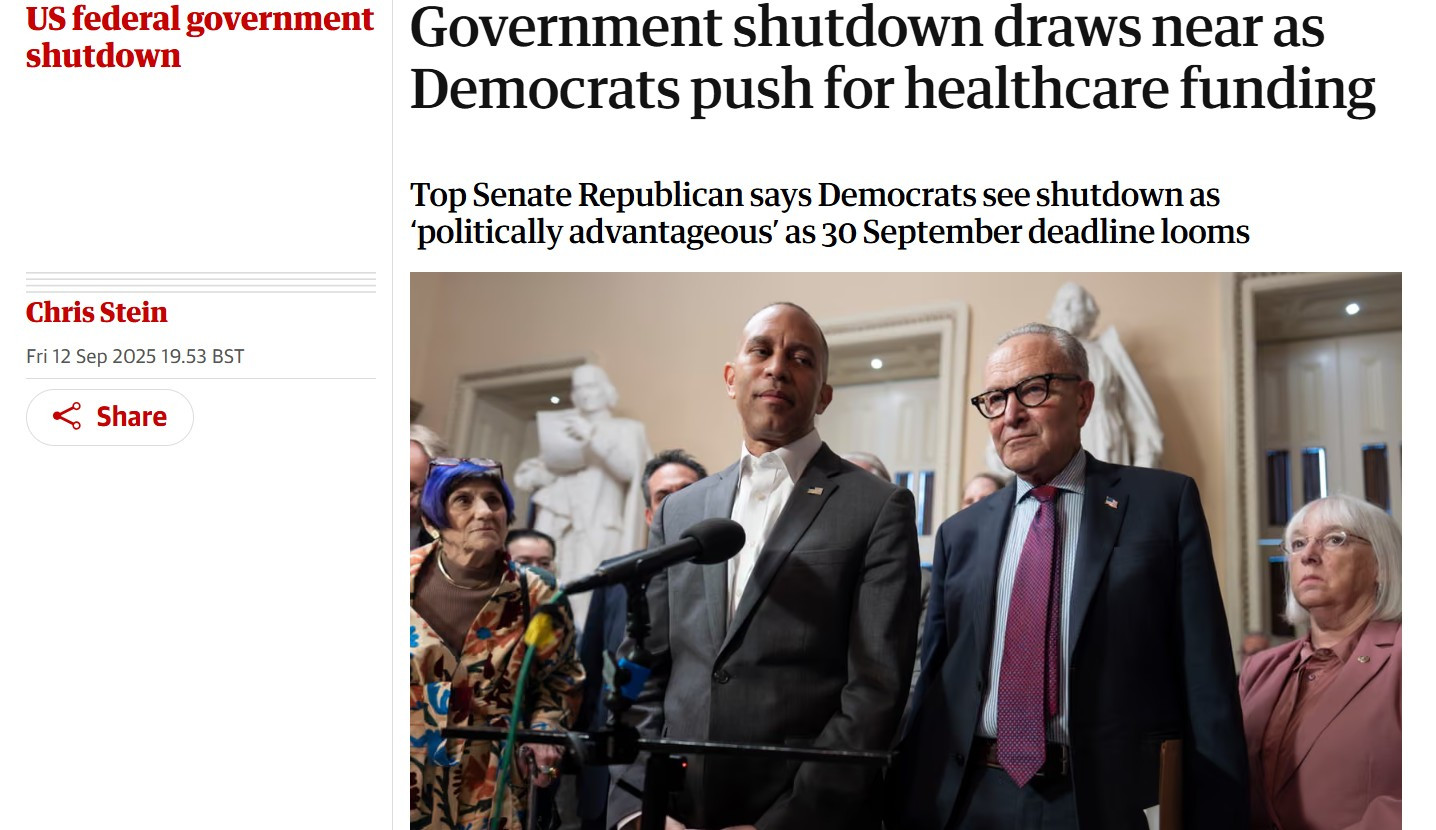
In the Senate, with a 60-vote threshold needed to advance most funding measures, Democrats hold substantial leverage. In the House, a slim GOP majority can pass bills but must also manage internal factional resistance.
Some GOP leaders have signaled openness to discussing subsidy extensions in a broader negotiation — but they insist those talks occur outside the immediate stopgap vote. Democrats say that makes a shutdown more likely unless leaders agree to bind subsidy relief to funding now.
Political pressure cooker: Voices inside and outside
Both parties face pressure from their bases. Progressive Democrats want leadership to use the brinkmanship to push back on cuts including Medicaid. Centrist Democrats argue avoiding a shutdown and shielding constituents from higher premiums must be the priority.
On the Republican side, conservative hardliners demand spending offsets for any subsidy extension, while more pragmatic Republicans warn that allowing a sudden premium spike would hand Democrats ammunition ahead of the 2026 midterms.
Public-opinion oriented advisers — including pollsters who have worked with high-profile Republican campaigns — warned privately that extending subsidies enjoys strong voter support in battleground districts, complicating a purely ideological GOP strategy.
What happens to people and markets: Immediate and ripple effects
The most immediate impact would be on households relying on marketplace coverage. A sudden cost increase could push many to cancel plans. Politically, that would likely intensify voter anger and messaging advantages for Democrats.
Financial markets would also face a new element of uncertainty. Analysts warn that a messy funding fight and a potential shutdown could unsettle investors already navigating monetary policy shifts, trade tensions, and tech-sector re-ratings, though the scale of market impact would depend on the duration and depth of the shutdown.
Can they avert the cliff? Paths forward
A handful of plausible outcomes exist: a bipartisan compromise that either extends the subsidies short-term, ties them to offsets, or phases them; a clean continuing resolution that postpones the health debate (and risks subsidy expiry later); or a failed funding vote that leads to a shutdown.
Which path prevails depends on intra-party discipline, willingness to negotiate offsets, and external political calculations in the weeks before the midterms.
Parting thought: Politics, policy and the countdown
This is more than routine appropriations theater. The dispute mixes fiscal conservatism, electoral strategy, and the immediate financial well-being of tens of millions. With just days to go, leaders face a high-stakes choice: bind a narrow majority to a politically risky cost-cutting course, or broker a compromise that shields voters — and potentially reshapes the fall campaign narrative.