
Dollar Fall Incoming?: Is 2025 the Year “Anything But the Dollar” Replaces “Anything But Bonds”?

Bank of America strategist Michael Hartnett argues 2025 marks a structural market pivot: the long-running “Anything But Bonds” (ABB) trade is ending and being replaced by “Anything But the Dollar” (ABD). He says U.S. nominal GDP growth is peaking, which should weaken the dollar, revive bonds and lift rate-sensitive and international assets.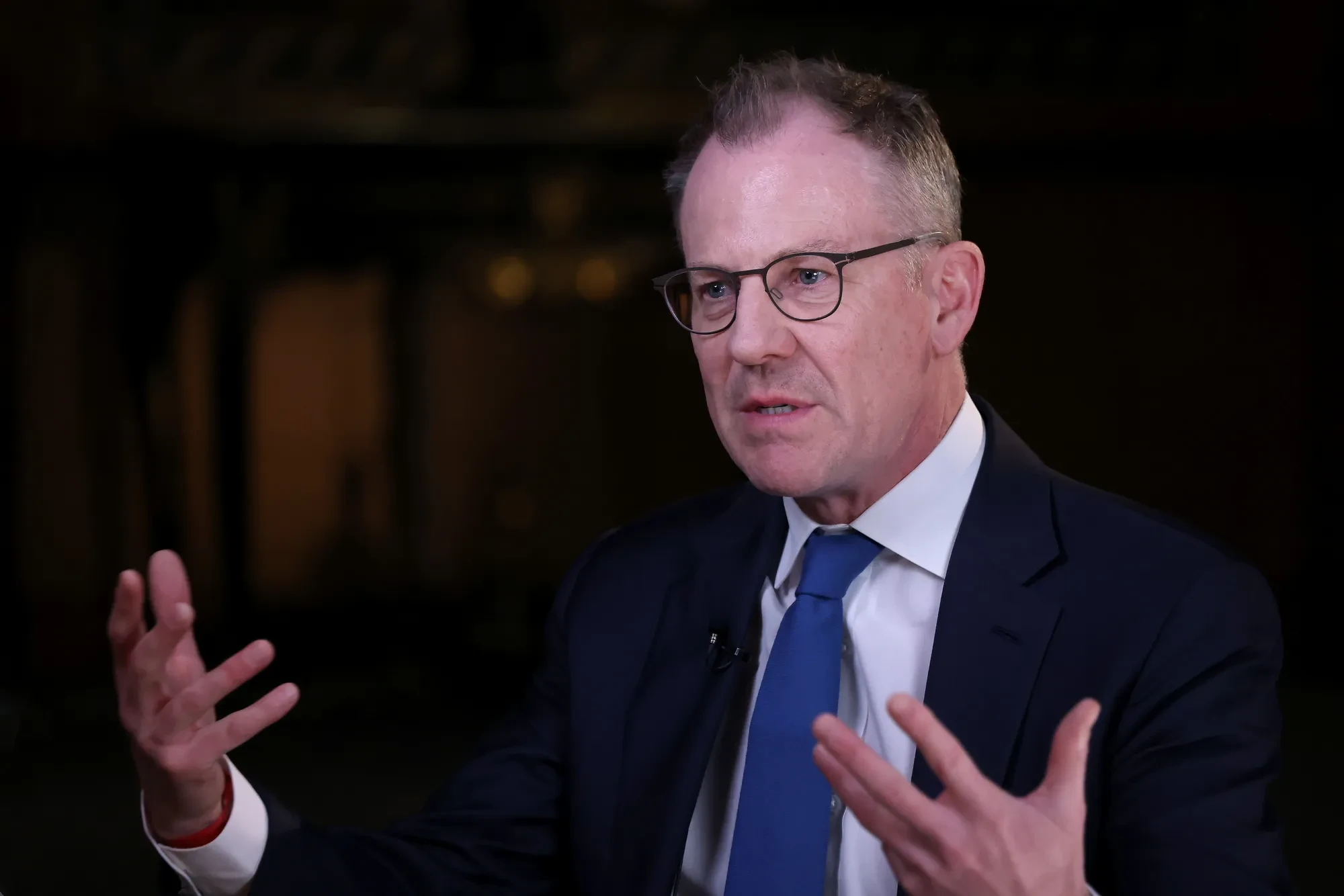
Key Points
- Hartnett’s thesis: ABB → ABD because U.S. nominal GDP likely peaks in 2025.
- Market evidence cited: gold +38% YTD; global equities +25%; Bitcoin +23%; dollar down ~10%; oil down ~13%.
- Risks flagged: surging AI capex (hyperscale capex share up from 35% to 72%) and historically tight tech credit spreads.
- Watchlist: IG CDX >60bps, BKX <140, RTY not clearing 2400 — any of these would falsify the ABD turn.
Why nominal GDP peaking matters — bond yields and the dollar, together
Hartnett points out that U.S. nominal GDP jumped about 54% since 2020 and is forecast to slow from roughly 6% to about 4% annualized in 2025.
A peak in nominal growth typically precedes a peak in bond yields, which would usher in a bond bull market and reduce the dollar’s safe-haven bid.
Lower nominal growth often reduces inflation concerns and rate expectations, pressuring real yields and lifting fixed income. If yields fall, assets that benefit from lower rates — small caps, value stocks and rate-sensitive financials — should re-rate higher, supporting Hartnett’s rotation thesis.
ABD rotation: who wins and why this isn’t just semantics
Hartnett’s ABD thesis recommends pivoting away from dollar-centric positions and into non-U.S. assets. He explicitly favors international equities (Europe, Japan), gold as strategic insurance against dollar weakness and geopolitical risk, and selective exposure to China technology to diversify away from a concentrated U.S. AI bubble.
The market evidence he cites supports this tilt: gold’s 38% YTD lead, wider dispersion between winners and losers, and the dollar’s ~10% decline.
Taken together, these patterns make a case for increasing non-dollar allocations while trimming positions most exposed to a strong-dollar environment.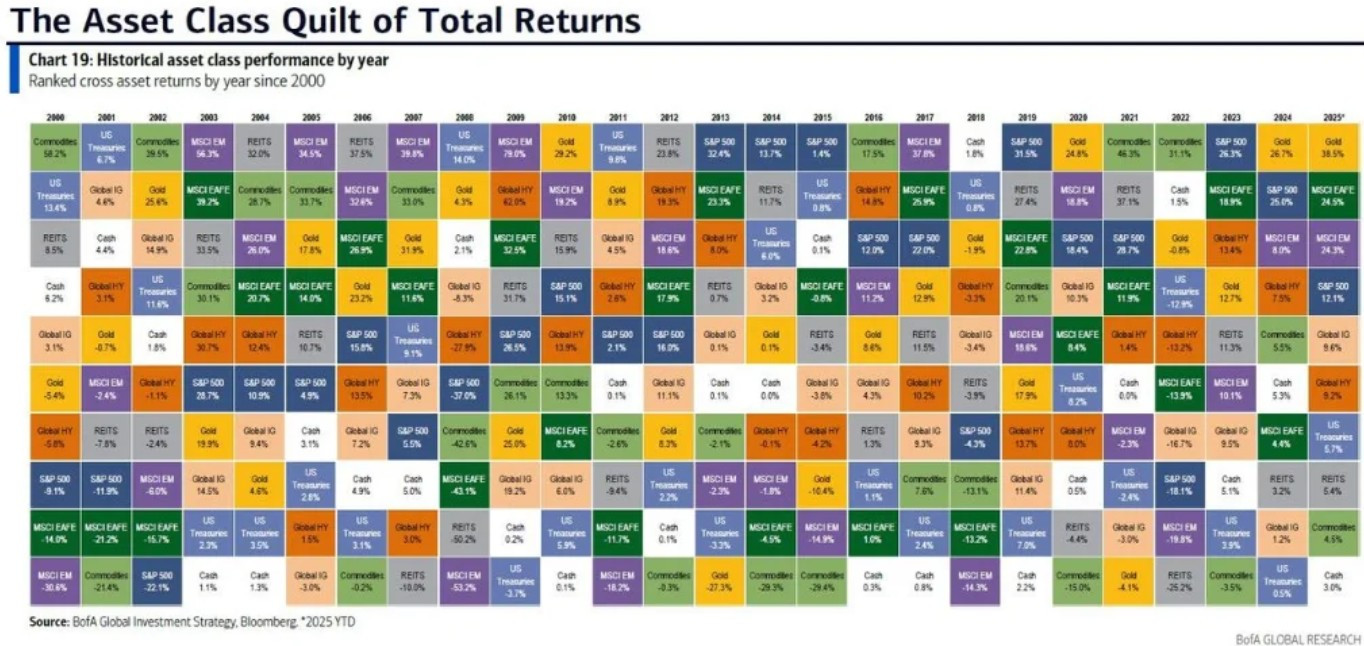
AI capex and credit: the blind spot investors must not ignore
A critical caveat in Hartnett’s view is the explosive rise in AI-related capital expenditure. He highlights hyperscale data-centre capex jumping from 35% of cash flow in 2023 to 72% more recently — a sign that capacity-building is consuming far more cash.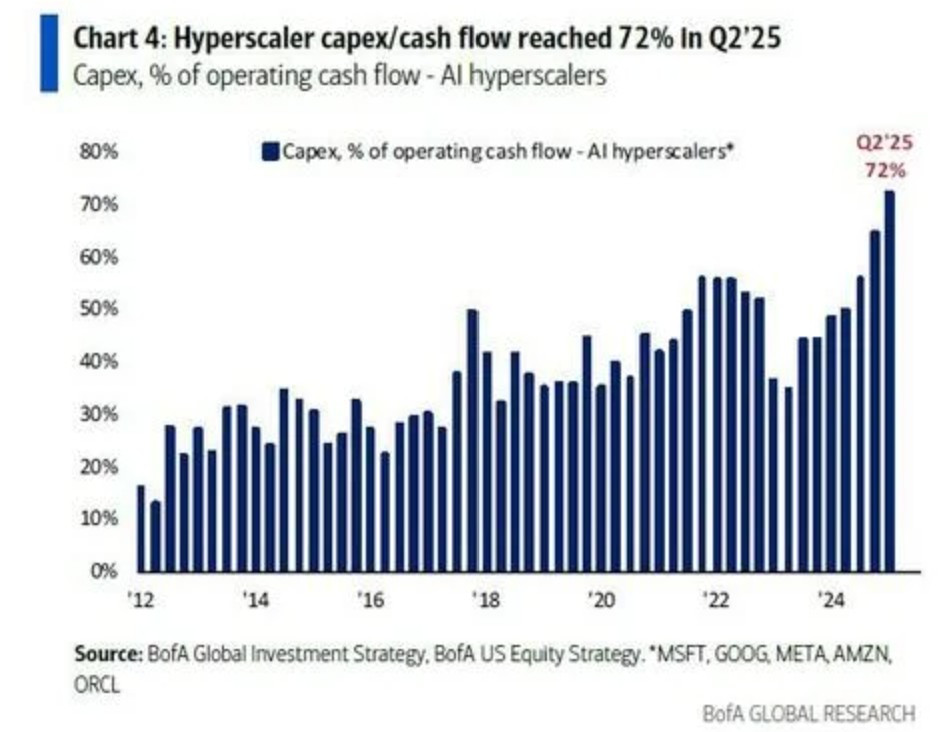
That escalation increases reliance on external financing, and yet credit markets appear complacent: tech credit spreads are near the narrowest levels since 1997.
Hartnett warns this mismatch — rising leverage with compressed spreads — could be a systemic blind spot if growth or returns disappoint.
PPP stress test: policy, profits and politics — merged and clear
Hartnett applies his PPP framework to test ABD’s durability. Policy: markets currently price a credible Fed cut (at least 25 bps), which supports risk assets, but widening credit spreads (IG CDX >60bps), a BKX bank index under 140, or a Russell 2000 stuck below 2400 would suggest the Fed is behind the curve and could reverse sentiment.
Profits: household equity wealth rose sharply—$9tn in 2024, +$3tn in H1 2025, and another +$3tn in 2025Q3—buffering weaker payroll gains. Politics: rising populism and social strain raise the odds of growth-first policies, which would further erode dollar support and keep dollar hedges like gold bid.
What would falsify the ABD narrative — explicit red flags
Hartnett is explicit about falsification: sustained widening of credit spreads, a banking-sector rout (BKX <140), or persistent weakness in small caps (RTY failing to reclaim 2400) would indicate economic deterioration and a Fed that is behind the curve — undermining ABD and re-empowering defensive, dollar-linked trades.
Practical playbook: how investors might position, cautiously
- Tilt toward international equities and value/small-cap exposure that benefits from lower rates.
- Add gold as strategic insurance; it hedges dollar depreciation and policy uncertainty.
- Use China tech to diversify U.S.-centric AI concentration, but keep position sizing disciplined.
- Most importantly, monitor credit and banking indicators daily — they’re the earliest warning lights.
Why this matters beyond markets — a political and structural angle
Hartnett warns that if policymakers favor short-term growth to counter political pressures, currency weakness could persist. He invokes a “Nixon redux” scenario where growth-first measures are paired with toleration of higher prices, further challenging dollar dominance and reinforcing demand for alternative stores of value.
Bottom line
Hartnett’s ABD thesis is a coherent, testable framework: if U.S. nominal growth truly peaks in 2025, expect dollar weakness, a potential bond rally and a better environment for international and rate-sensitive assets. However, the thesis rests on fragile credit and banking conditions; if those crack, the ABD story could quickly reverse.