
A First in PE History: Carlyle Directly Partners with an F1 Team

Carlyle takes a bold leap.
Recently, PE giant Carlyle Group and Oracle Red Bull Racing released a joint statement at the Monza circuit in Italy, announcing the signing of a Global Partnership Agreement.
The agreement spans four years, covering the 2026-2030 seasons. Carlyle has become the “exclusive private equity investment partner” of the Red Bull team and the first PE firm in F1 history to form a deep, direct partnership with a team.
Carlyle Co-CEO Harvey Schwartz stated that sports franchises offer cash flows that transcend economic cycles, with F1 being the only annual event globally averaging over 100 million viewers per race, meeting the “scarce asset” criterion.
Beyond $350 Million, Carlyle Brings LPs and Over 200 Portfolio Companies
Details reveal that Carlyle will invest $350 million through its Carlyle Global Sports Partners II (CGSP II) fund, acquiring about 5% equity in Red Bull Technology, the parent company of the Red Bull team, and securing an observer seat on the board.

Additionally, Carlyle will mobilize advertising budgets from over 200 portfolio companies, generating at least $120 million annually in “trackable sponsorship revenue” for the team. Its global limited partners (LPs), including sovereign wealth funds and university endowments, will become regular guests at the Red Bull VIP paddock club.
Furthermore, Carlyle will integrate its portfolio software company Arcadia with the team’s Oracle Cloud Infrastructure (OCI) to co-develop a “real-time energy consumption-tire wear-drag” model for managing energy under the 2026 power unit regulations. Arcadia was privatized by Carlyle last year.
Revenue data shows Red Bull generated $465 million in operating revenue and $105 million in EBITDA in 2024. Based on the $350 million for 5% equity, the implied valuation is $7 billion, with an EV/EBITDA multiple of approximately 67x.
This valuation exceeds the 45x multiple of F1-listed McLaren but falls short of the 80x multiple when the NFL’s Denver Broncos were sold in 2022.
The market widely views Carlyle’s offer as a “2026 regulation premium,” reflecting the power unit budget cap and more equitable prize money distribution, which significantly enhances profitability visibility for top teams.
Carlyle Co-CEO Harvey Schwartz: “Sports franchises offer cash flows that transcend economic cycles, with F1 being the only annual event globally averaging over 100 million viewers per race, meeting the ‘scarce asset’ criterion.”
Red Bull team principal Christian Horner believes that in the budget cap era, the team needs more than just sponsor decals—it requires partners who can bring technology, branding, and capital to the paddock. Carlyle delivers on this.
A First in PE History: Private Equity Firm Directly Holds Stake in an F1 Team
Public records show the F1 World Championship was founded in 1950, with tobacco brands making their first major entry in 1973. F1’s first partner, Marlboro, provided Ferrari with about $6 million annually (equivalent to $45 million in 2024 CPI-adjusted terms), accounting for 70% of the team’s budget.
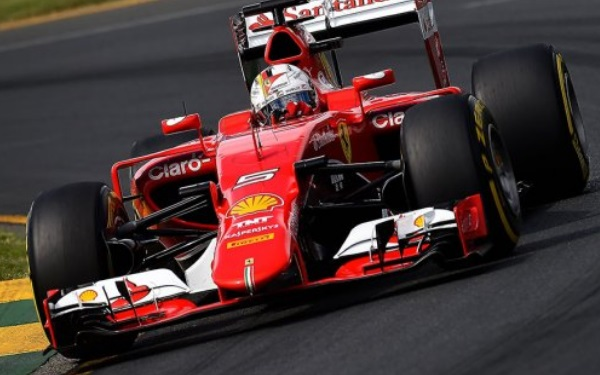
Later, Bernie Ecclestone negotiated TV deals on behalf of teams, and by 1995, F1’s global TV audience reached 420 million, making it the second-largest sports IP after the World Cup. At the time, team revenue was structured as 60% sponsorship, 30% prize money, and 10% engines/other.
Unfortunately, the 2006 EU tobacco advertising ban slashed annual sponsorship from $1.2 billion to $700 million.
In 2006, CVC Capital Partners gained control of F1 Group’s parent company Delta Topco through a series of fund entities (collectively “CVC Funds”), effectively becoming the controlling entity of the Formula 1 championship.
During CVC’s over-a-decade tenure, F1 faced shrinking audiences and team discontent. The 2008 financial crisis led to the exit of Honda, BMW, and Toyota, reducing the F1 grid to just 18 cars at one point—a near-decade of dark days.
Left with no choice, F1 opted for a sale. In 2017, Liberty Media acquired the F1 Group for $8 billion and initiated a “Netflix-ization” reform. That year, the launch of the *Drive to Survive* documentary boosted North American viewership by 54%.
However, no PE firm directly held stakes in teams during this period, with only passive co-investments (e.g., CVC’s 2006-2017 control of the F1 Group).
Official 2024 F1 data shows an average of 109 million viewers per race, a cumulative 1.5 billion unique viewers annually, and 76 million social media followers—all record highs.
The new power unit (PU) retains a 1.6L V6 turbo but increases electrical output from 20% to 50%, aligning with PE firms’ “energy transition” narrative—a window Carlyle seized to enter.
Carlyle thus becomes the first PE firm in history to directly hold a stake in an F1 team.
Bain, Boyu, KKR, and Other Top PEs Also Partner with Sports Assets
A trend seems to be emerging. Carlyle is not the first to target the sports industry.
Since 2020, PE firms’ interest in scarce sports assets has expanded beyond a single domain. Beyond F1, PEs have eyed soccer clubs, NBA teams, and top-tier events. It’s as if PE giants have suddenly “awakened,” broadening their horizons.
CVC was an early mover in sports partnerships. Beyond its 2006 control of the F1 parent company, it acquired a 10% commercial stake in LaLiga in 2021 for €270 million, earning €110 million in dividends in 2024 with an IRR of about 18%.
In 2022, Silver Lake bought a 25% stake in Barcelona Studios for €500 million, selling half to a Middle Eastern consortium in 2024 for €320 million, achieving a 28% return in two years.
NBA teams have also attracted PE attention. Since 2021, Arctos Partners has taken stakes in the NBA’s Golden State Warriors and MLB’s Boston Red Sox, managing over $6 billion in sports assets. In 2022, Sixth Street acquired a portion of the NBA’s San Antonio Spurs for $2 billion, including new arena naming rights.
In 2024, KKR formed a $500 million joint media venture with F1’s electric series Formula E and holds a 9% stake in the ATP Tour’s commercial entity, creating a “four-wheel + racket” dual-IP portfolio.
Last year, Boyu Capital led a $320 million Series B round in esports event “BLAST Premier,” dubbed the “virtual F1” benchmark.
Early this year, Bain Capital acquired the WTA Finals operator for $180 million.
Returning to this deal, Carlyle’s partnership with Red Bull marks a pivotal shift for F1 from a “car manufacturer marketing tool” to a “global alternative asset class.”
It signals that, amid high interest rates and geopolitical uncertainty, sports IPs with scarcity, pricing power, and continuous content generation are becoming new “low-beta, high-alpha” pastures for PE giants.
As the 2026 power unit roars to life, the paddock will echo not just with engine sounds but also the clatter of Wall Street’s abacuses.