
Markets Ignore Tariffs: Are Traders Betting Everything on a Fed Rate Pivot?

Markets have clearly put Fed policy and an AI-driven earnings story ahead of trade-policy worries. Investors are pricing an imminent rate cut, profit forecasts and enthusiasm for AI are rising—and tariffs have, for now, fallen to the back burner. That does not mean tariff risk is gone.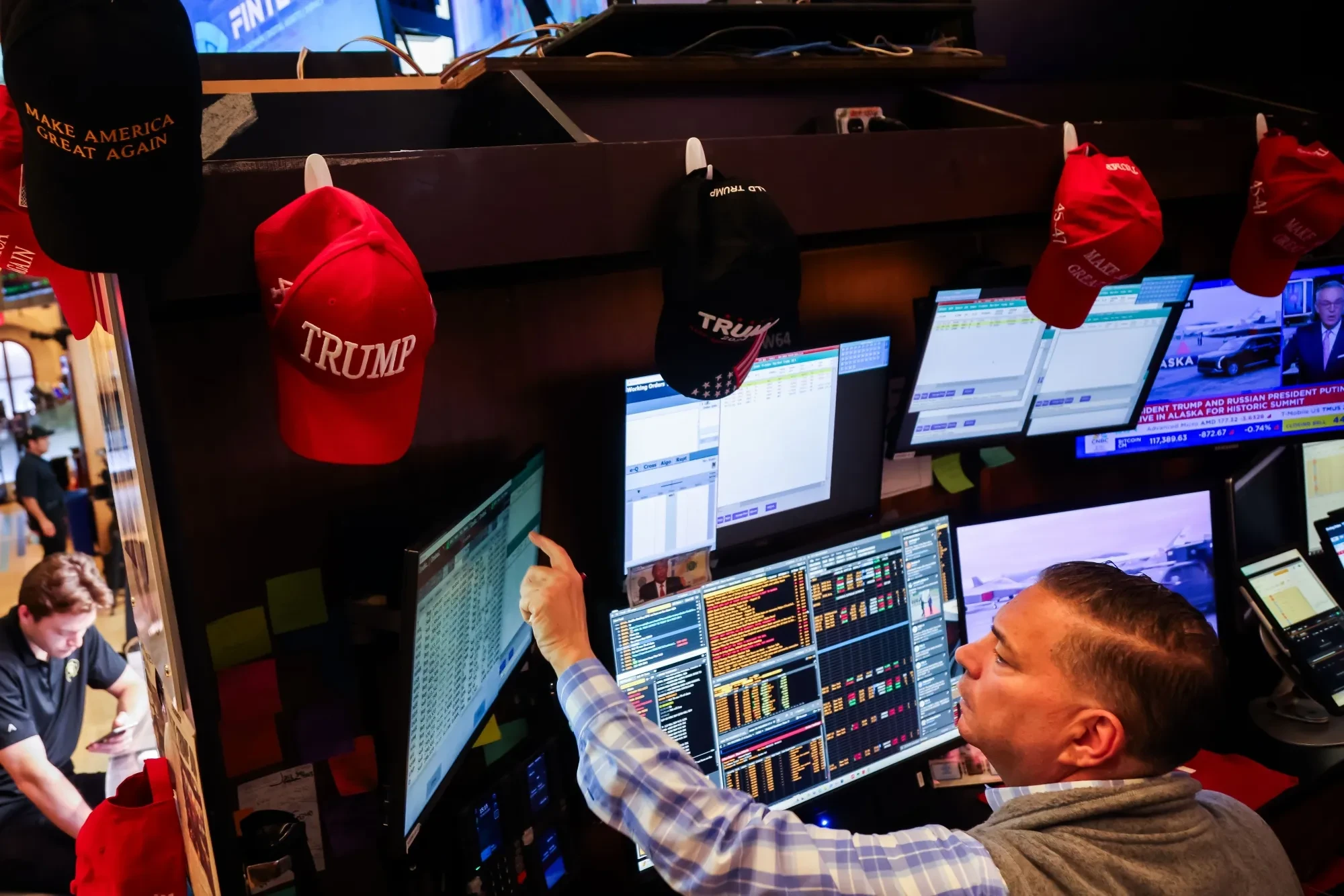
Key points
- Wall Street is prioritizing Fed easing and AI investment over trade fears; S&P gains have accelerated since April’s tariff flap.
- Analysts’ 2026 earnings expectations have rebounded to roughly $295 per share, back to late-April levels.
- Market consensus expects a 25 basis-point cut this week; a 50bp move is widely seen as unlikely.
- Trade uncertainty indices have eased from April peaks, but company-level tariff pain persists.
- Political pressure on the Fed and internal dissent could make the path after the initial cut more volatile.
What’s priced in — and why is the market so confident?
Markets are largely betting that the Fed will deliver a modest, timely easing and that the central bank will not signal an aggressive tightening of policy thereafter. That expectation has driven equity indices higher and pushed short-term yields lower.
Analysts and strategists cite a combination of softer labor indicators and cooling inflation metrics—core CPI measures showing modest monthly gains—as justification for moving from caution to risk-on positioning.
The anticipated 25bp move is the market’s baseline. Traders appear to have already priced a series of subsequent cuts into valuations, a stance that helps explain why volatility measures have been unusually calm for a period of heightened political risk.
Will tariffs bite again when earnings season returns?
Tariffs are no longer the headline worry for most investors today, but they are not forgotten. Several strategists warn the issue will resurface during next quarter’s earnings season, when companies must disclose concrete impacts and guidance.
At the firm level, some companies already report tariff-driven cost pressures. Yet the aggregate effect so far shows up more in purchasing-manager price series than in headline consumer inflation, and a global trade-uncertainty index has eased from its April spike.
Structural factors—transshipment and exemptions—have kept the effective U.S. tariff rate closer to single digits, muting the immediate macro shock. Still, earnings calls in October could refocus investor attention on supply-chain pass-through and margin pressure.
Run it hot: a sensible play or a dangerous bet?
“Run it hot” is the phrase traders use for the current cocktail: looser fiscal policy expectations plus easier monetary policy, aimed at stoking growth. The idea is simple—tax cuts and rate cuts push risk assets higher. The market has embraced the narrative enthusiastically.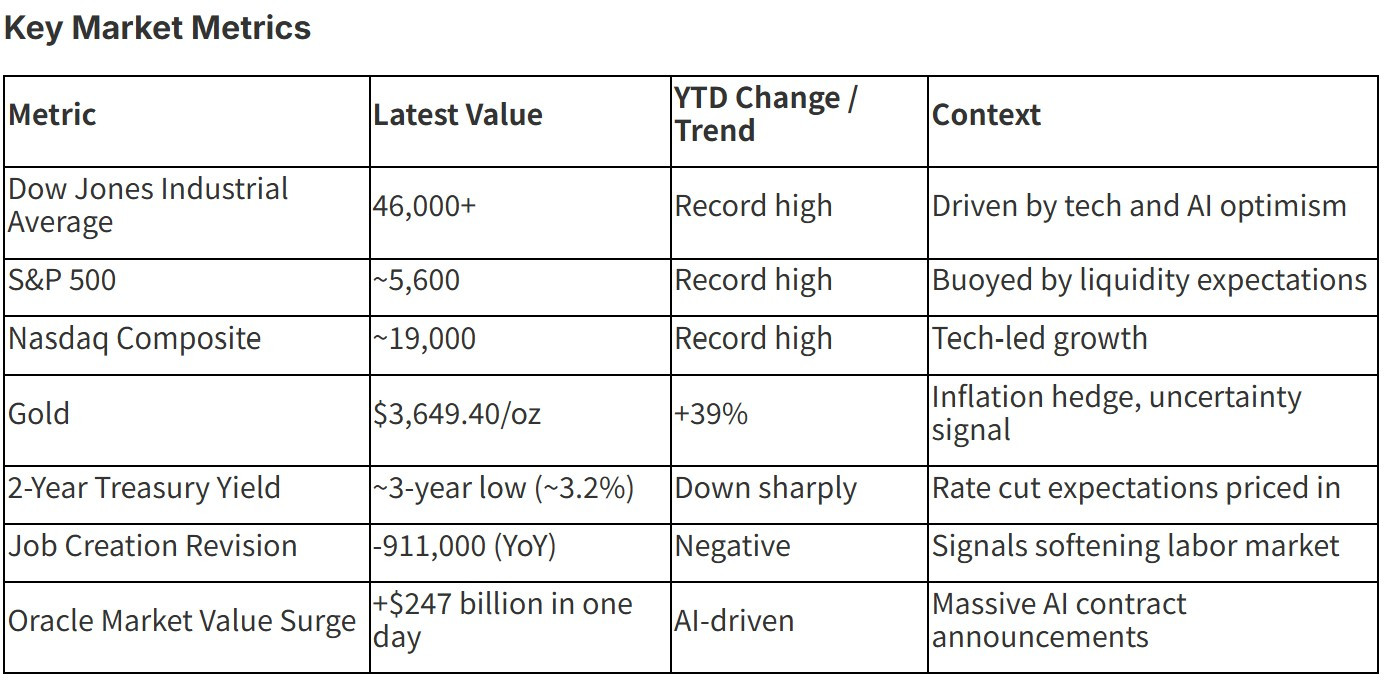
Proponents point to resilient consumer activity indicators—air travel and restaurant bookings—and hefty corporate deals tied to AI spending.
Big technology contracts and continued AI capex provide a near-term earnings tailwind for some firms.
Skeptics caution that accepting weaker labor prints and betting entirely on policy support is risky. A prematurely cavalier approach to policy-driven growth could leave investors exposed if underlying demand softens or if inflation reaccelerates.
Why politics and Fed divisions matter
Political pressure on the Fed—public calls for faster or larger cuts—complicates the bank’s internal calculus. That pressure, coupled with mixed economic data, appears to produce an unusually wide range of views inside the committee.
Officials reportedly face a tradeoff: some want larger cuts to shore up the labor market, while others urge caution given inflation’s persistence. That division increases the chance that the initial cut will be followed by ambiguous forward guidance, producing market whipsaws.
Investors should watch not only the size of the cut, but the nuances of the statement and the Fed’s economic projections. Those signals will determine whether today’s complacency endures.
How earnings and AI are propping up sentiment
Earnings have surprised on the upside recently—profit growth strong enough to lift analyst forecasts. Corporate resilience and continuing AI investments are the twin pillars propping up the rally.
Analysts have quickly revised upward 2026 profit expectations since July, reflecting strong second-quarter results and sustained AI spending. That recalibration matters: the market’s valuation comfort depends on earnings growth keeping pace with enthusiasm.
AI deals and multi-year contracts augment confidence that technology capex will sustain margins for some large firms. But the breadth of that boost—how many companies truly benefit—remains an open question.
Who’s warning investors they might be misreading things?
A number of market veterans warn that the “run it hot” consensus risks misreading the macro backdrop. Some highlight downward revisions to historical employment tallies and rising initial jobless claims as signals of deeper weakness.
Critics argue that if the Fed’s easing is seen as a response to faltering growth, the narrative flips: rate cuts could be read as recession insurance rather than a stimulant. That shift in interpretation can be bearish for equities, not bullish. Prudent investors, these critics say, should hedge for the scenario in which policy support arrives but earnings momentum fades.
Tactical implications: who wins if the Fed cuts?
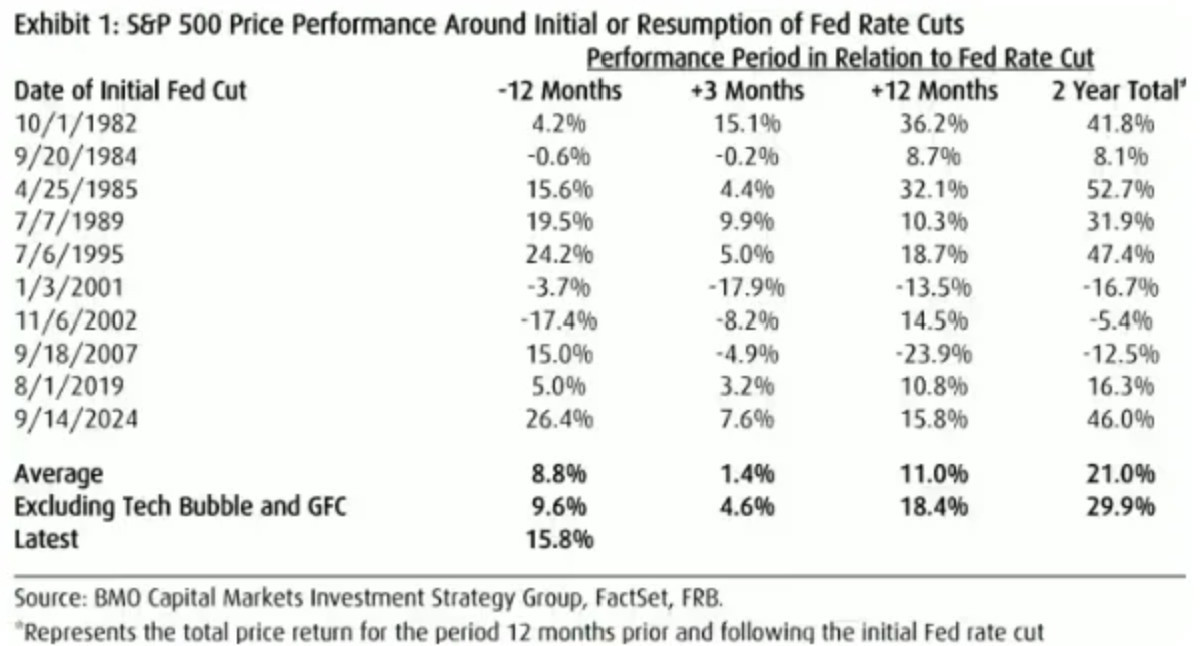
If the Fed does cut and the economy holds, cyclical sectors—financials, industrials and small- and mid-caps—could outperform. History shows that initial restart cuts, when paired with a resilient growth backdrop, often favor cyclicals.
Conversely, if cuts signal recession avoidance tactics, defensive sectors—healthcare and consumer staples—may outperform as investors seek shelter. The difference depends on whether policy simply smooths a soft landing or signals deeper weakness.
Positioning should therefore balance exposure: benefit from potential cyclical upside while keeping some ballast against a downside macro surprise.
The calendar risk: earnings season and October’s disclosure window
Earnings season is the next obvious calendar risk. Companies will start reporting and will be asked to quantify tariff impacts and supply-chain strains. October looks especially important for updated guidance and management commentary.
Investors expecting continued benign readings on tariffs may get a reality check when firms report lagged cost pressures or updated assumptions about transshipment. That is the clearest path for trade policy to reassert itself in market pricing.
Bottom line
Watch three things closely: 1) the Fed’s statement and officials’ rate projections; 2) October earnings commentary for fresh tariff disclosures; and 3) whether AI spending converts into broad-based revenue acceleration.
The market’s current calm reflects a bet—one that depends on modest, predictable policy moves and an earnings story sizable enough to justify lofty valuations. If any of those underpinnings falter, volatility could reappear quickly.