
Precious Metals Surge: Could Gold Hit $4,000 and Silver Soar to $50 Within Months?

A prominent European strategist says yes: BNP Paribas Fortis chief strategist Philippe Gijsels forecasts gold reaching $4,000 per ounce and silver $50 within three to six months, driven by a rapidly weakening U.S. economy and aggressive central-bank action. Markets are already pricing a move toward safe havens, and recent price action gives the claim fresh momentum.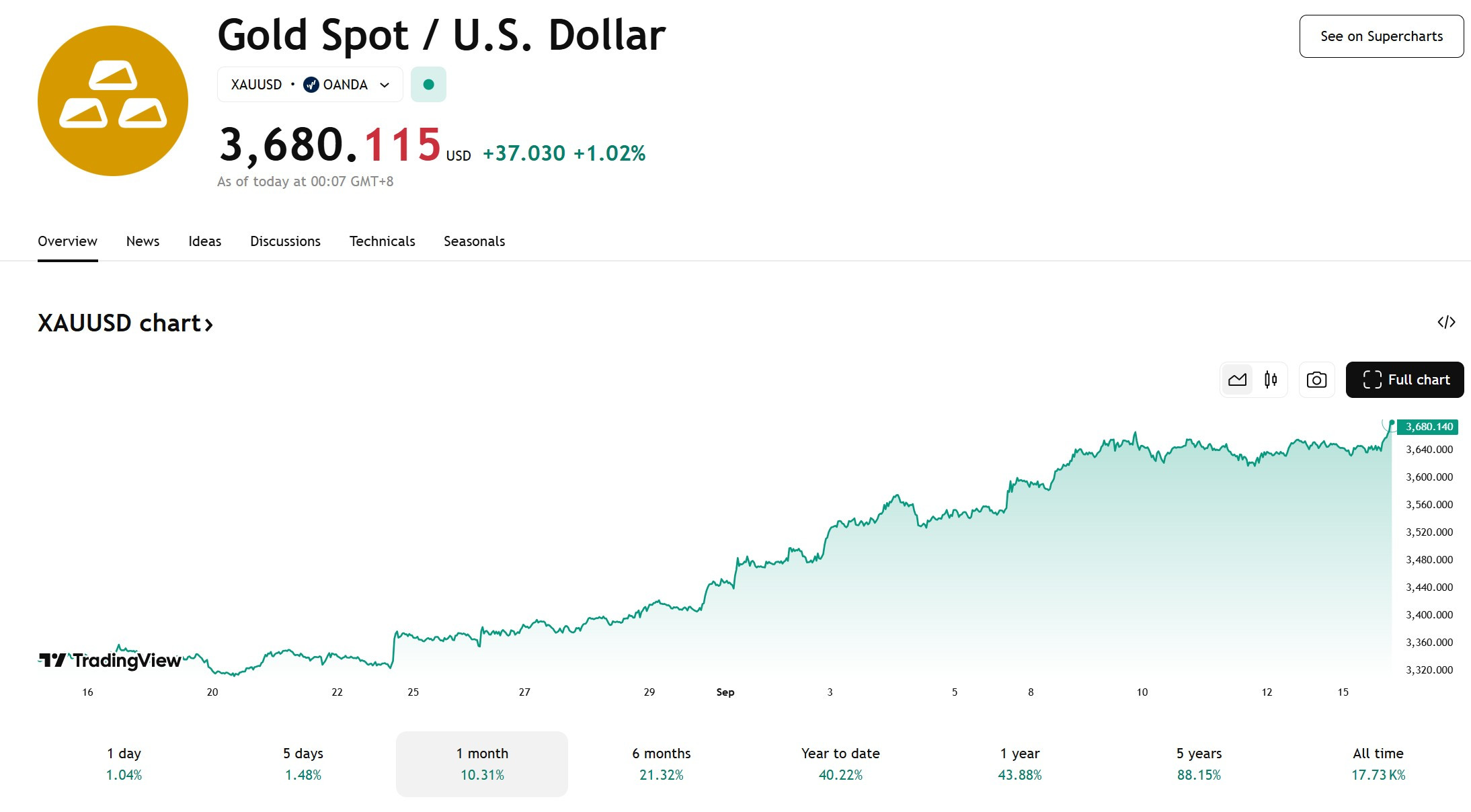
Key points
- Philippe Gijsels predicts $4,000/oz gold and $50/oz silver in 3–6 months amid a sharp U.S. slowdown.
- Large downward revisions to U.S. employment data weaken the growth narrative and strengthen the case for aggressive Fed measures.
- Gijsels expects the Fed to deploy unconventional tools — including renewed QE or yield-curve control — if the slowdown deepens.
- European political stress, especially France’s recent government upheaval, adds to risk-premia and safe-haven demand.
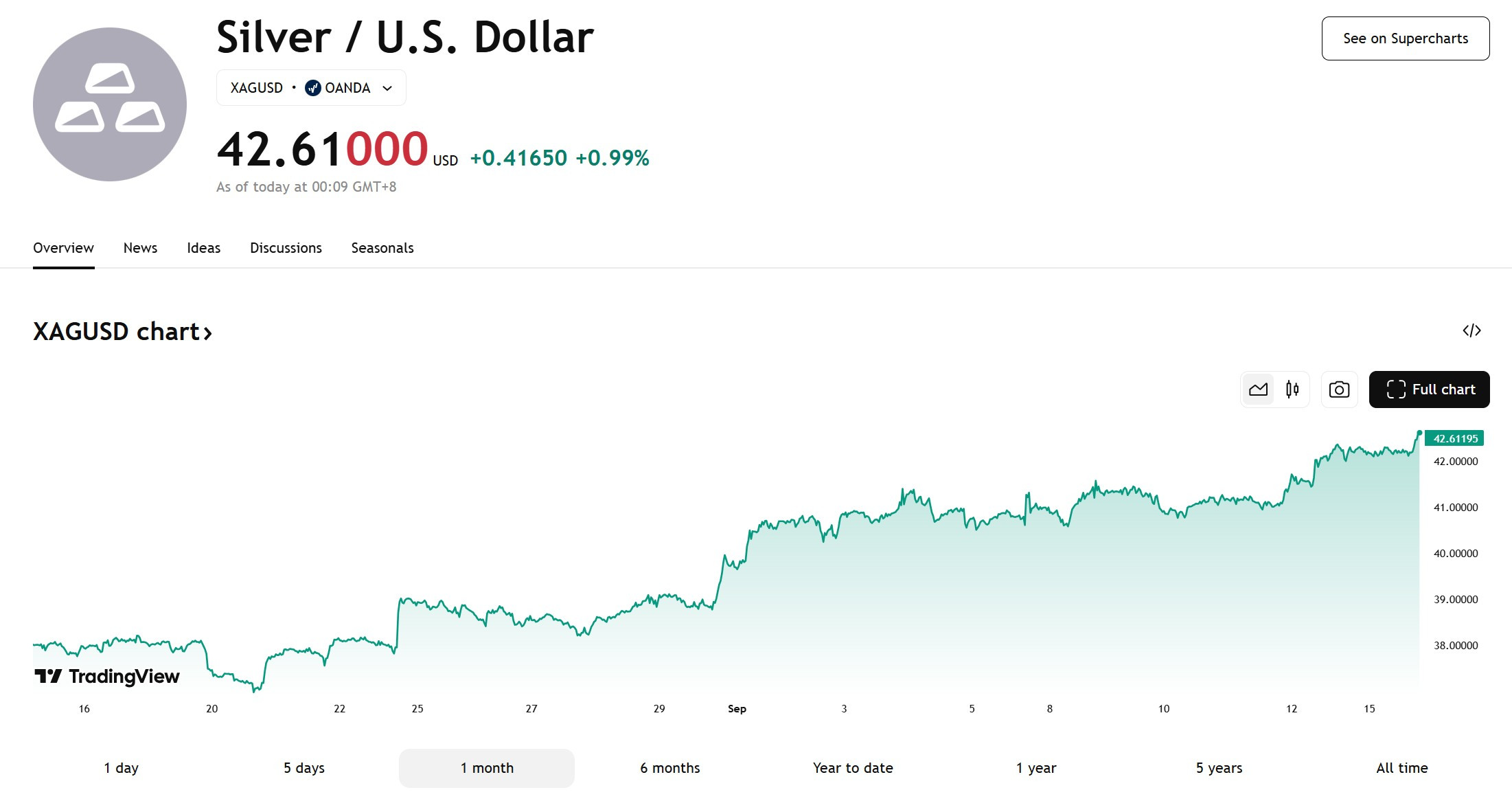
- Gold recently traded near $3,650/oz; silver rose from about $41 to break $42/oz, setting fresh annual highs.
- Industrial demand (notably photovoltaics) and a repaired gold–silver ratio support silver’s further upside.
Why this bold forecast matters — and why people are listening
Gijsels’ call is notable because it ties macro weakness, central-bank reaction function, and political instability into a single bullish thesis for precious metals.
He argues that a large enough deterioration in U.S. labor-market fundamentals will force the Fed beyond conventional rate cuts into more aggressive policy territory. That prospect, he says, would sharply lift demand for physical assets.
The recent jobs data revision — a massive downward rerating of payrolls — lends weight to his thesis. If the labor market is materially weaker than previously reported, the Fed’s policy stance and the dollar’s trajectory could change quickly. That creates a powerful tailwind for gold and silver prices.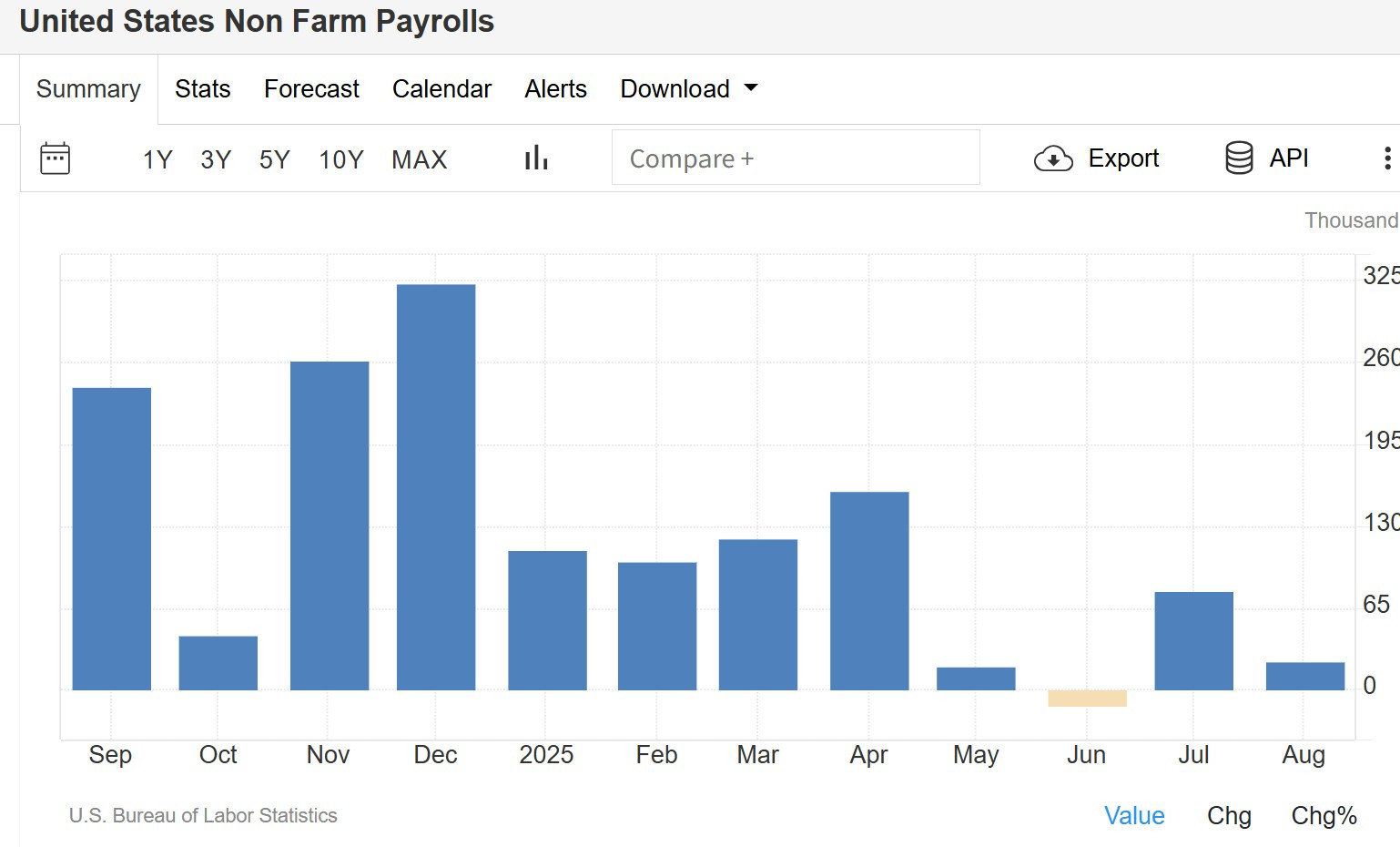
What changed in the U.S. data — is this a structural signal?
The Labor Department’s annual revision indicated U.S. payrolls may be roughly 911,000 jobs lower than earlier estimates. That produces an average monthly nonfarm payroll gain closer to 71,000 rather than 147,000. Such a large correction is historic and suggests the U.S. labor market is softer than consensus assumed.
Gijsels interprets this “shocking reality check” as evidence the economy is already slowing well before tariff measures took full effect. A materially weaker labor backdrop raises the probability the Fed will shift from mere rate cuts to more forceful measures.
Could the Fed really go unconventional again?
Gijsels doesn’t rule out it. When asked whether the Fed might return to quantitative easing or adopt yield-curve control, he answered plainly: “That is where they will go… at the point of emergency.” His view is that policymakers, faced with worsening growth and mounting political pressure, would choose tools that directly support asset prices and compress real rates — a bullish setup for tangible assets.
Europe’s political cracks — another accelerant
It’s not only U.S. macro that matters. France’s sudden government collapse — the resignation of Prime Minister François Bayrou’s successor and President Macron appointing Defence Minister Sébastien Lecornu — is cited as symptomatic of broader political fragility across advanced economies.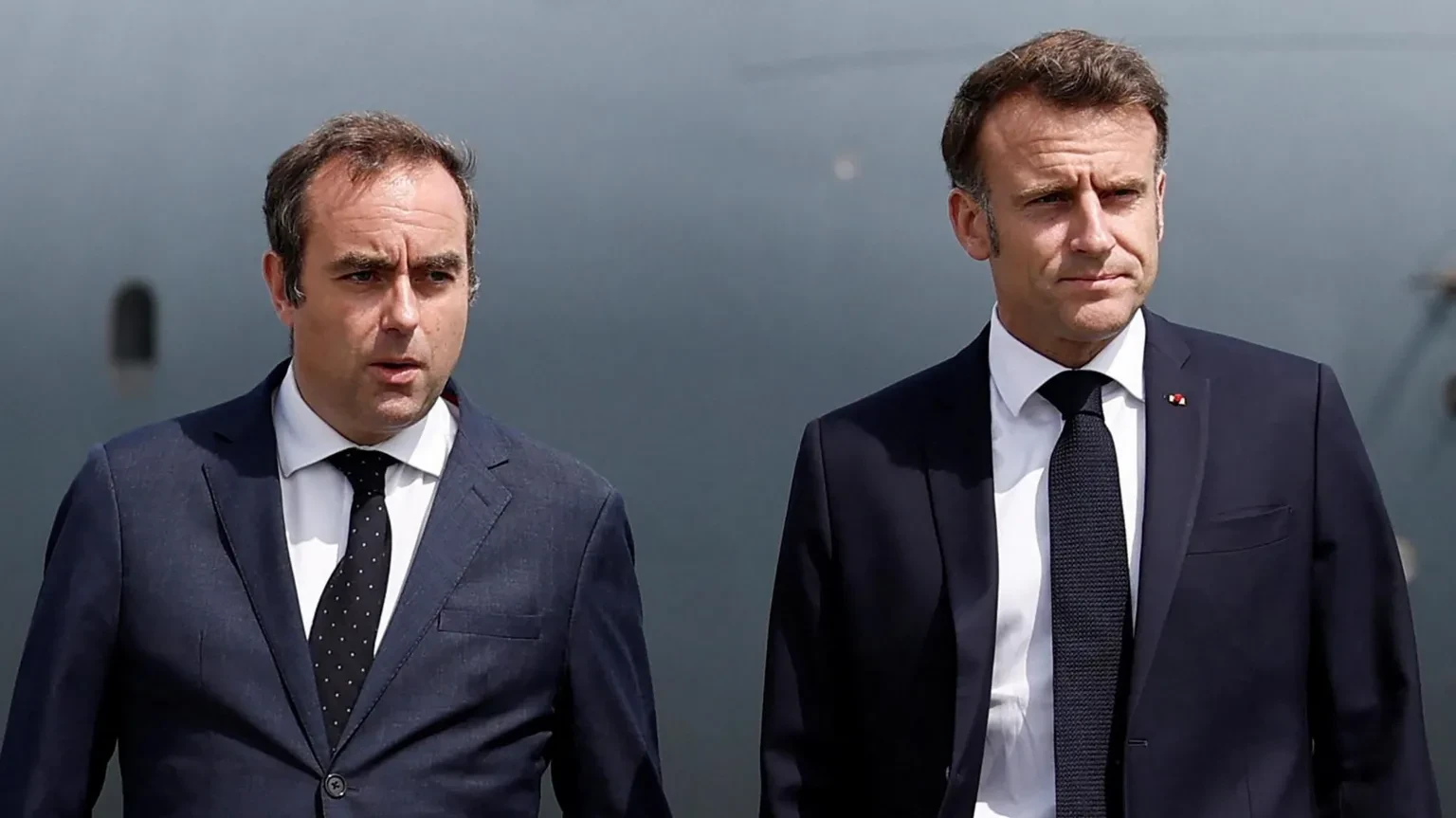
When fiscal credibility frays and political institutions struggle to manage deficits, investors often demand insurance in physical assets.
Gijsels frames this as a structural moment: governments that cannot carry deficits politically will tolerate moderate inflation rather than undertake painful fiscal adjustments. That implicit shift towards higher inflation expectations underpins his forecast for precious metals.
Why silver could outpace gold
Gijsels prefers silver. He highlights silver’s dual role as both an industrial and monetary metal. The recent run — silver moving from the low $40s and breaking $42/oz — reflects not only safe-haven flows but also improving industrial demand, including photovoltaic use.
He argues that once silver clears its previous highs near $50/oz, the pathway to $100/oz becomes materially easier. Given tighter physical markets and limited near-term mining response, percentage moves in a constrained market can be multiple-fold.
Mining M&A and supply-side dynamics: are producers already reacting?
Gijsels points to consolidation signals in the mining sector as confirmation that producers sense an inflection. Big transactions, such as the Anglo American–Teck Resources deal valued at about $53 billion, indicate the start of a merger cycle.
At current metal prices, he says, major miners are effectively “printing money,” and the corporate response may tighten future supply.
The risks and the counterarguments
This bullish scenario relies on significant macro shifts that are not guaranteed. If employment revisions prove transitory or if the Fed limits itself to traditional rate cuts, inflation expectations may not rise enough to justify extreme precious-metals prices.
Moreover, a stronger dollar or a quick policy pivot that stabilizes growth would reduce safe-haven demand. Finally, mining production and recycling could respond, moderating upside if price signals persist.
Bottom line — what this means for portfolios
Gijsels sees a “wealth transfer” moment: savers holding cash risk a real purchasing-power loss under elevated inflation. For investors concerned about inflation and policy risk, real assets such as gold and silver — and selected mining equities — may offer insurance and asymmetric upside.
Whether gold reaches $4,000/oz and silver $50/oz in three to six months hinges on the depth of the U.S. slowdown, the Fed’s willingness to deploy extraordinary tools, and how political and industrial demand dynamics evolve.
Recent price action and data revisions make the scenario plausible, but it is not inevitable. Risk-aware positioning — combining exposure to precious metals with defensive hedges — may be the prudent response while this narrative plays out.