
After Nine Months on Hold, the Fed Cuts: What’s Next for the Economy?

Shearing sheep
September 17, 2025
GoGPT Summarizes Articles
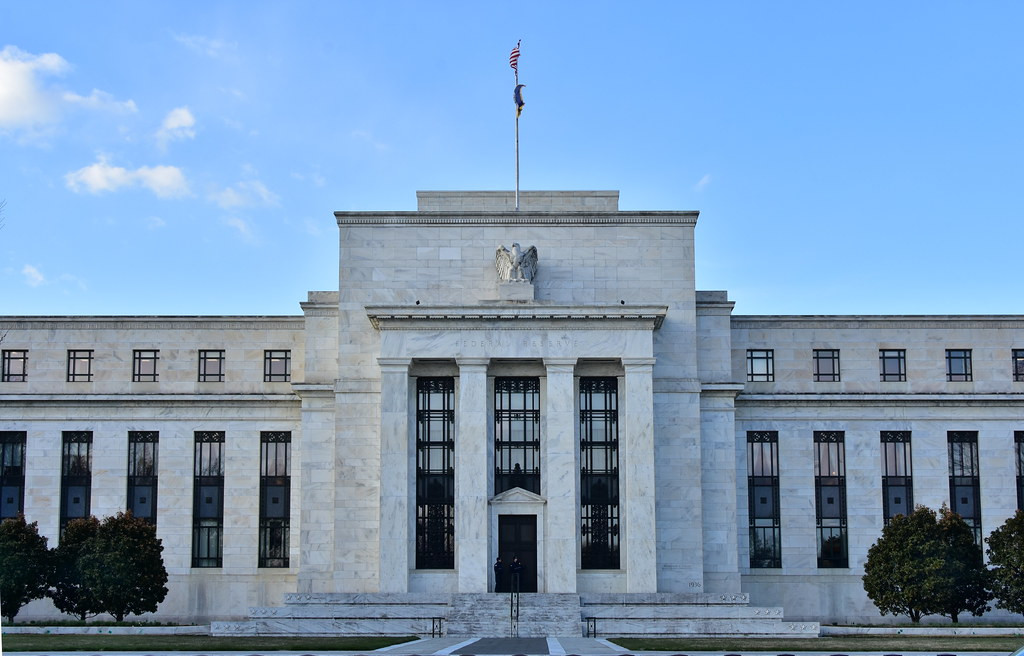
After nine months of waiting, markets are finally on the verge of seeing a rate cut. The Fed is set to announce its decision following this Wednesday’s policy meeting, with investors widely expecting the central bank to deliver its first rate cut of 2025.
Markets have been pricing this in for weeks, and investors are hoping for some relief. But just because the Fed is opening the door to easing doesn’t mean the path ahead will be smooth or predictable.
Why is the Fed cutting now?
The backdrop is complicated. On one side, the U.S. labor market has been cooling more quickly than many expected. Jobless claims are at their highest since 2021, and nonfarm payrolls have been revised down. Slower hiring is weighing on consumer spending, which is the backbone of U.S. growth.
On the other side, inflation is still sticky — running above the Fed’s 2% target. Add Trump’s new round of tariffs, and price pressures could flare up again in the months ahead. This is exactly the kind of situation central bankers hate: cutting rates risks fueling inflation, but staying too tight could deepen the slowdown.
Politics complicating the picture
This rate decision isn’t just about economics. The political backdrop is unusually noisy. Trump has openly demanded faster rate cuts, even tried to fire a sitting Fed governor, and is pushing a close ally, Stephen Millan, onto the Fed Board. If confirmed in time, Millan could even vote in this week’s meeting.
All this raises questions about Fed independence. Investors are watching not only Powell’s press conference but also the tone of the debate inside the FOMC. Analysts expect at least three dissenting votes — maybe even four, which would be the most since 1990. That would send a clear message of division.
What exactly is on the table this week?
-
A 25 bps cut is almost certain. A larger 50 bps move is possible but unlikely.
-
The dot plot is the real centerpiece. Markets are betting on a series of cuts stretching into 2026. If the dots show a more cautious path, risk assets could wobble.
-
Powell’s messaging: Does he emphasize jobs (which would sound dovish), or inflation (which would sound hawkish)? His balance here could shape how markets trade into year-end.
How are markets positioned?
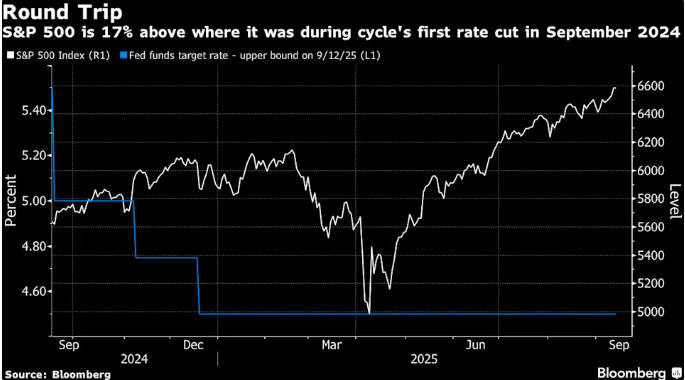
Since April, global equity markets have added roughly $14 trillion in market cap. The S&P 500 keeps setting new records, helped by falling bond yields and expectations of a Fed pivot.
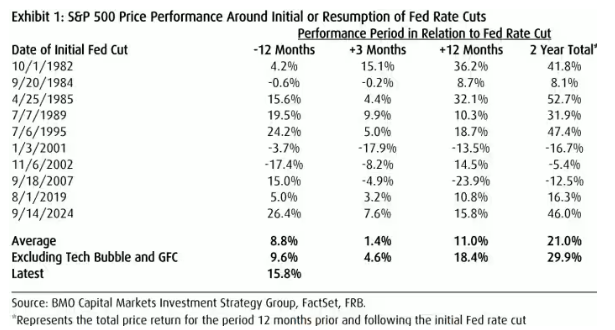
History gives some comfort: in most past cycles, equities have delivered positive returns in the year after the Fed’s first rate cut, averaging around +15%. But the spread is wide — from a +36% rally in 1982 to a -24% collapse in 2007. The difference? Whether rate cuts managed to extend the expansion or simply failed to stop a recession.
Right now, opinion is split. Some strategists, like BMO’s Brian Belski, argue the U.S. economy is still resilient: GDP is above trend, corporate earnings are holding up, and the labor market hasn’t fully broken. Others point to softening job data and argue that the Fed is already behind the curve.
Bonds vs. equities
Bond investors have already leaned into the slowdown story. Long-term Treasury yields have fallen to multi-month lows, and managers like Brandywine’s Jack McIntyre are buying 30-year bonds on the view that the Fed stayed restrictive for too long.
Equity investors, however, are hedging against volatility. Options markets imply that the S&P 500 could swing about 1% on Fed day — the largest move in three weeks. That tells you traders are bracing for surprises in the dot plot or Powell’s press conference.
Sector and style rotation
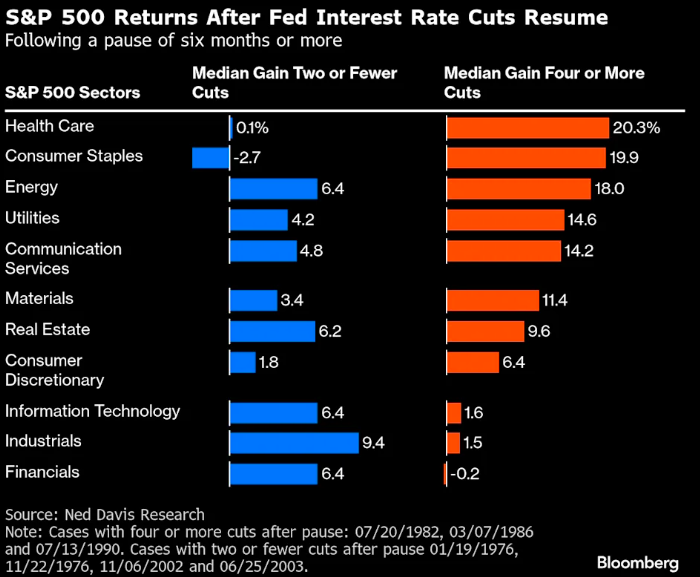
The sector outlook could hinge on how deep the rate-cutting cycle goes:
-
If the economy proves resilient and the Fed only cuts once or twice, financials and industrials (classic cyclicals) could outperform.
-
If growth weakens and the Fed is forced into a long easing cycle, history suggests defensive sectors like healthcare and staples hold up better.
-
Some managers are rotating into small- and mid-caps, which have lagged big tech but tend to benefit more from lower borrowing costs. The Russell 2000 is up ~7.5% this year versus ~12% for the S&P 500 — so there’s catch-up potential.
My take
This cut feels less like a “green light” for endless easing and more like a careful step into uncertain territory. Powell will almost certainly stress that the Fed is data-dependent, meeting by meeting. He’ll also try to cool expectations of a rapid series of cuts, given the inflation risk from tariffs.
But here’s the problem: markets are already priced for a dovish Fed. If Powell sounds cautious or the dot plot shows fewer cuts than expected, we could see turbulence in both stocks and bonds. On the flip side, if the Fed caves to political pressure and cuts faster, that could undermine confidence in its independence.
For investors, the key isn’t just whether the Fed cuts 25 or 50 bps this week. It’s how they frame the path ahead — and whether the economy holds up enough to make easing a positive for risk assets rather than a sign of panic.
History suggests this could still be a supportive backdrop for equities, but the window for error is narrow. The balance between jobs, inflation, and politics will decide whether this “first cut” extends the cycle — or marks the beginning of a messier chapter.
#Breaking Macro Events: Market Impact & Analysis