
Markets on Edge: Will Fed Cuts Collide with the Biggest Triple-Witching Ever?

Markets face a compressed risk window: a widely expected 25-basis-point Fed cut and Jerome Powell’s press conference will be followed within days by a colossal “triple-witching” options expiry.
SpotGamma estimates roughly $6.3 trillion of U.S. equity and index option notional will expire this week — a scale that could amplify any Fed-driven knee-jerk move.
If Powell’s message disappoints or confuses, the subsequent expiration of index, single-stock and futures options could turn a routine policy move into outsized intraday volatility.
Short-dated “zero-day” option activity is already near record levels, and VIX sat at 16.29 (FactSet) in the run-up — suggesting traders are eyeing volatility even while many price a benign outcome.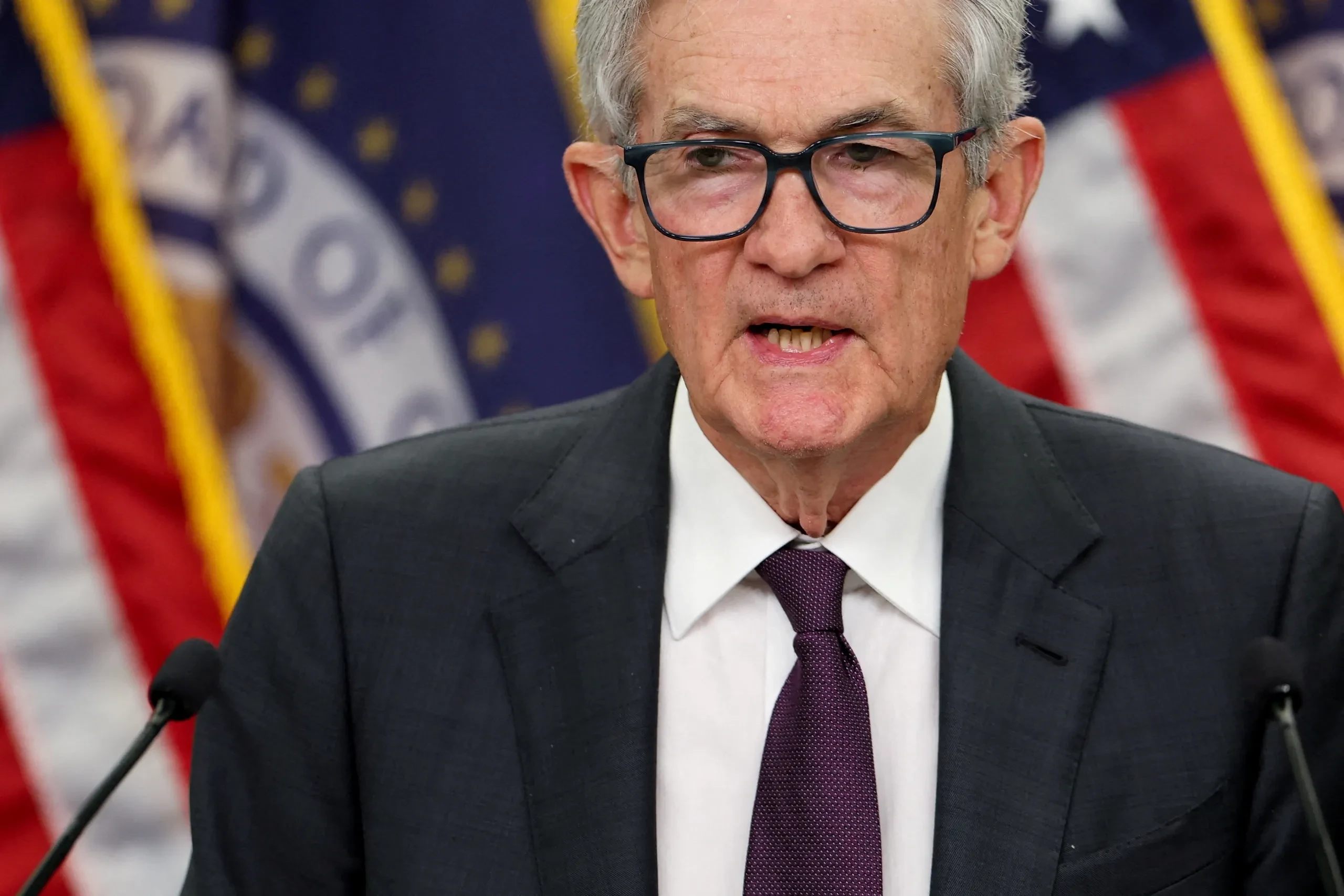
Key Points
- The Fed is widely expected to cut 25 bps; decision at 02:00 Beijing time and Powell’s press conference at 02:30.
- Roughly $6.3 trillion of U.S. equity and index options will expire this week, making this one of the largest triple-witchings ever.
- Short-dated “zero-day” volumes are near record and VIX was 16.29, so expiries could materially amplify any Fed reaction.
- Historically, stocks and bonds often rally around a first cut; large hedged strategies (including JPMorgan collars; funds >$20bn) may provide temporary support.
Triple-Witching: Why $6.3 trillion of expiries is a big deal
Options expiries concentrate hedges and forces. When many contracts expire on the same day — index futures, index options and single-stock options — market makers and institutional hedgers often need to buy or sell large quantities of underlying stocks and futures to remain hedged.
SpotGamma’s Brent Kochuba warns that the sheer notional — roughly $6.3 trillion — makes this triple-witching one of the largest on record. That scale increases the chance that any directional reaction to Powell’s words gets magnified as expiring positions are settled or closed.
Little Harbor Advisors’ portfolio managers, Matt and Mike Thompson, note that concentrated expiries commonly release volatility into the market. With both the Fed decision and triple-witching falling in the same narrow window, that release could be sharper than usual.
The Fed’s showdown tonight: how fractured could the vote be?
Markets generally expect a 25bp cut, but the internal FOMC dynamics may be unusually complex. Reports describe a potential “four-way split”: hard-dove calls for 50bp, Powell’s camp favoring 25bp, some members preferring to stand pat, and a wildcard who might vote unexpectedly tighter.
Political interventions — a recent appointment and a court decision allowing a contested governor to vote — raise the odds of idiosyncratic outcomes.
Such a fragmented vote or mixed forward guidance could sow confusion, and in a time of massive expiries, even a small tonal mismatch could trigger outsized trading flows.
Fact-based signals to watch after the statement: whether the FOMC acknowledges growing downside risks to employment, the language on tariffs and inflation, and the dot-plot path for year-end rates. Goldman Sachs and others expect cuts later this year (October and December included), but the dot plot will be the committee’s clearest quantified guide.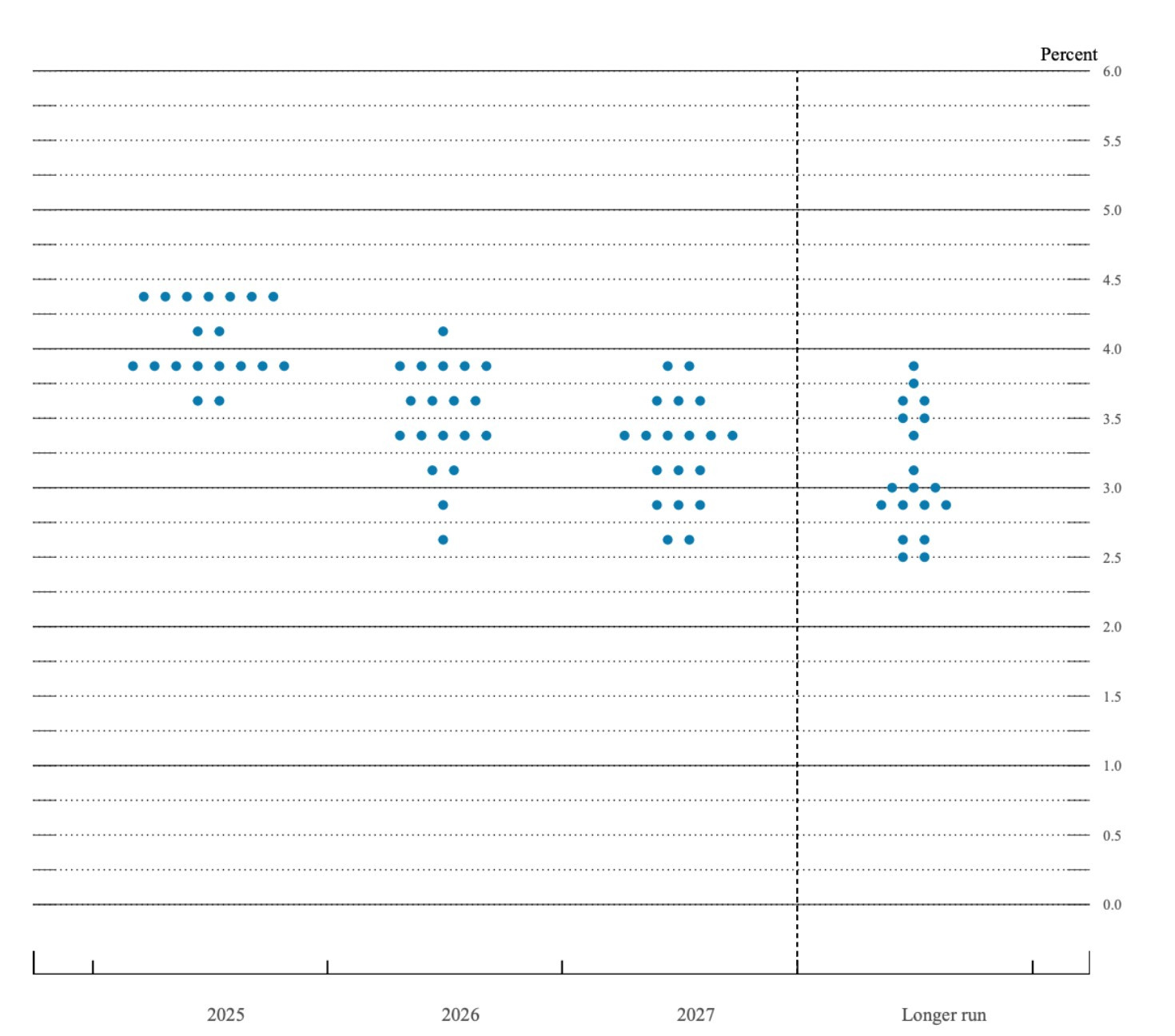
Historical compass: what past first cuts usually mean
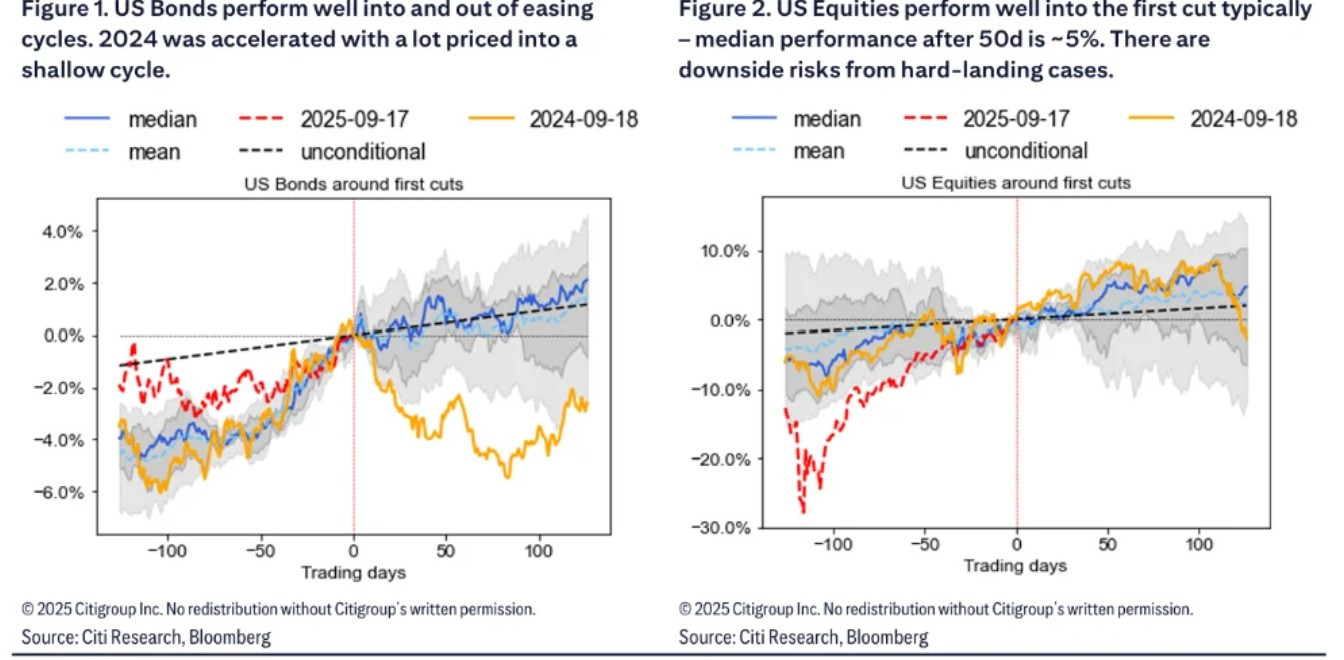
Citigroup’s analysis of historical episodes gives a conditional guide: stocks and bonds have tended to rally around the first Fed cut, the dollar usually weakens before the cut and gold often strengthens ahead of it, then calms.
But history is a guide, not law. The 2024 episode showed how outsize pre-pricing can invert expected outcomes — bond prices peaked earlier when the market had already priced aggressive cuts.
Today’s pricing is more measured than last year, which reduces the chance of a repeat of that bond-price reversal — but it doesn’t remove it.
In short: historically stocks and bonds can both do well around a first cut, but the path depends on whether markets are surprised and on the depth and timing of subsequent easing.
Tactical scenarios: three ways this week could play out
Scenario 1 — “Powell soothes, Option flow calms.”
Powell signals a cautious but clear easing path; market breathes a sigh of relief. Option expiries roll off mostly orderly; the triple-witching amplifies a short squeeze or modest rally but doesn’t produce structural dislocation.
Scenario 2 — “Mixed message, mechanical chaos.”
The statement or press conference is ambiguous. Expiry hedging and “zero-day” flows kick in, producing large intraday swings. Index and single-stock strikes force substantive rebalancing, briefly widening bid-ask spreads and volatility.
Scenario 3 — “Surprise or intense political noise.”
A sharp surprise in Fed guidance or an unexpected political flashpoint coincides with expiries. Market makers scramble, and liquidity evaporates; the result could be a more sustained sell-off or violent rotation.
These are not predictions — they are concise tactical frameworks. SpotGamma and several proprietary indicators show that option gamma and short-dated flows are primed to accentuate whichever path Powell sets them on.
The role of JPMorgan collars and large hedged funds
Not all concentrated option positions are destabilizing. The so-called “JPMorgan collar” — options tied to quarter-end hedging — typically expire on the final trading day of the quarter.
JPMorgan’s hedged strategies and the Hedged Equity Fund (with assets north of $20bn) can provide both buying and selling pressure depending on price action.
Kochuba suggests these collars could supply downside insurance that supports equities if the post-Fed reaction is weak. In other words, some large managers’ structured hedges can act like cushions, at least temporarily, even while other option flows push prices around.
What traders and risk managers should watch in real time
- Powell’s tone at 02:30 Beijing time — clarity on whether cuts are a string or isolated matters.
- Option gamma and zero-day volumes — already elevated; they determine how aggressively dealers hedge.
- Expiration flows by index vs single stock — index-linked expiries move futures; single-stock expiries jolt individual names.
- JPMorgan collar expiries later in the month — potential support if markets weaken.
- Employment and tariff language in the statement — these lines shape the committee’s near-term path.
Keep reactions measured: immediate intraday moves after the statement often reverse before the close, but a sustained directional conviction can take hold if follow-up data confirm the new narrative.
Bottom line: amplified risks, not guaranteed chaos
This week combines two market-moving forces: a high-profile Fed decision and an unusually large triple-witching of options. Together they raise the odds of outsized intraday moves — but not necessarily a long-term regime shift.
History suggests assets often benefit around a first cut, yet mechanical expiry flows can turn any surprise into an acute market event. For investors the prudent stance is to expect higher volatility, avoid overleveraging, and maintain clarity on time horizons: tactical noise can be fierce, but strategic positioning should be driven by fundamentals and risk tolerance.