
China’s AI Cloud Surge: Is Alibaba About to Win the Enterprise Cloud Race?

Goldman Sachs says China’s enterprise AI infrastructure story has reignited. Daily token consumption for enterprise-grade Chinese large models hit 10.2 trillion in H1 2025 — a 363% jump from H2 2024 — and Goldman elevated Alibaba’s 12-month SOTP target to $179 (from $163), arguing $BABA is best positioned to capture the enterprise opportunity.
Rapid token growth lifts demand for compute, and Goldman forecasts a meaningful capex cycle: Chinese cloud service provider (CSP) capital spending is expected to rise sharply into Q3 2025, supporting sustainable AI revenue growth.
In Goldman’s view, $BABA ’s market share, model capability and multi-chip strategy make it the primary beneficiary.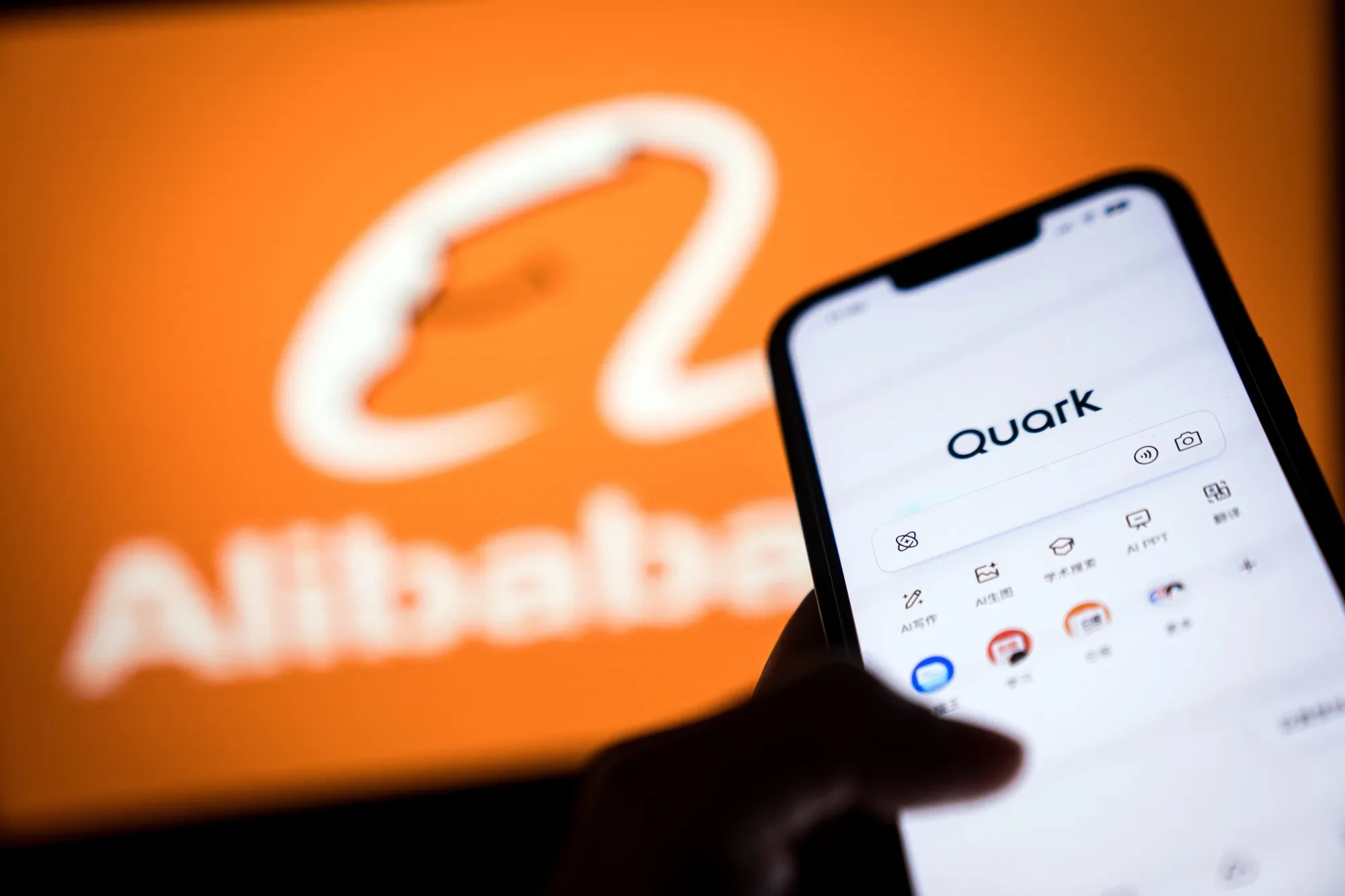
Key Points
- China enterprise large-model daily token use reached 10.2 trillion in H1 2025, up 363% vs H2 2024.
- Goldman raises Alibaba ADS target to $179 and increases Alibaba Cloud valuation from $36 to $43 per ADS.
- Alibaba holds about 47% of China’s public cloud market (IDC).
- Goldman expects Chinese CSP capex to jump 39% YoY in Q3 2025, powering more AI compute.
- Global AI applications ARR ≈ $30bn; China’s AI applications ARR ≈ $1.5bn (about 5% of global).
- Morgan Stanley views Tencent as the best 2C AI practitioner and keeps target HK$700.
Token demand exploded — what the numbers mean
Ten-trillion-level token consumption is not academic: it translates directly into sustained model inference and cloud compute demand. Pricing models that bill by API calls or token usage give cloud vendors recurring, high-visibility revenue streams tied to usage.
Goldman points to enterprise adoption and tokenized billing as structural drivers. Companies that own leading models and the inference stack can monetize at scale, making cloud incumbents with model IP very valuable.
Alibaba: why Goldman sees it as the primary beneficiary
Goldman’s bullish case rests on three pillars. Alibaba’s model capabilities and product set — evidenced by its new Qwen3-Next models — put it in a competitive position for enterprise deployments.
Alibaba’s estimated 47% share of China public cloud gives it a commanding distribution advantage. Third, Alibaba’s multi-chip sourcing reduces single-supplier risk and supports resilient capacity buildouts.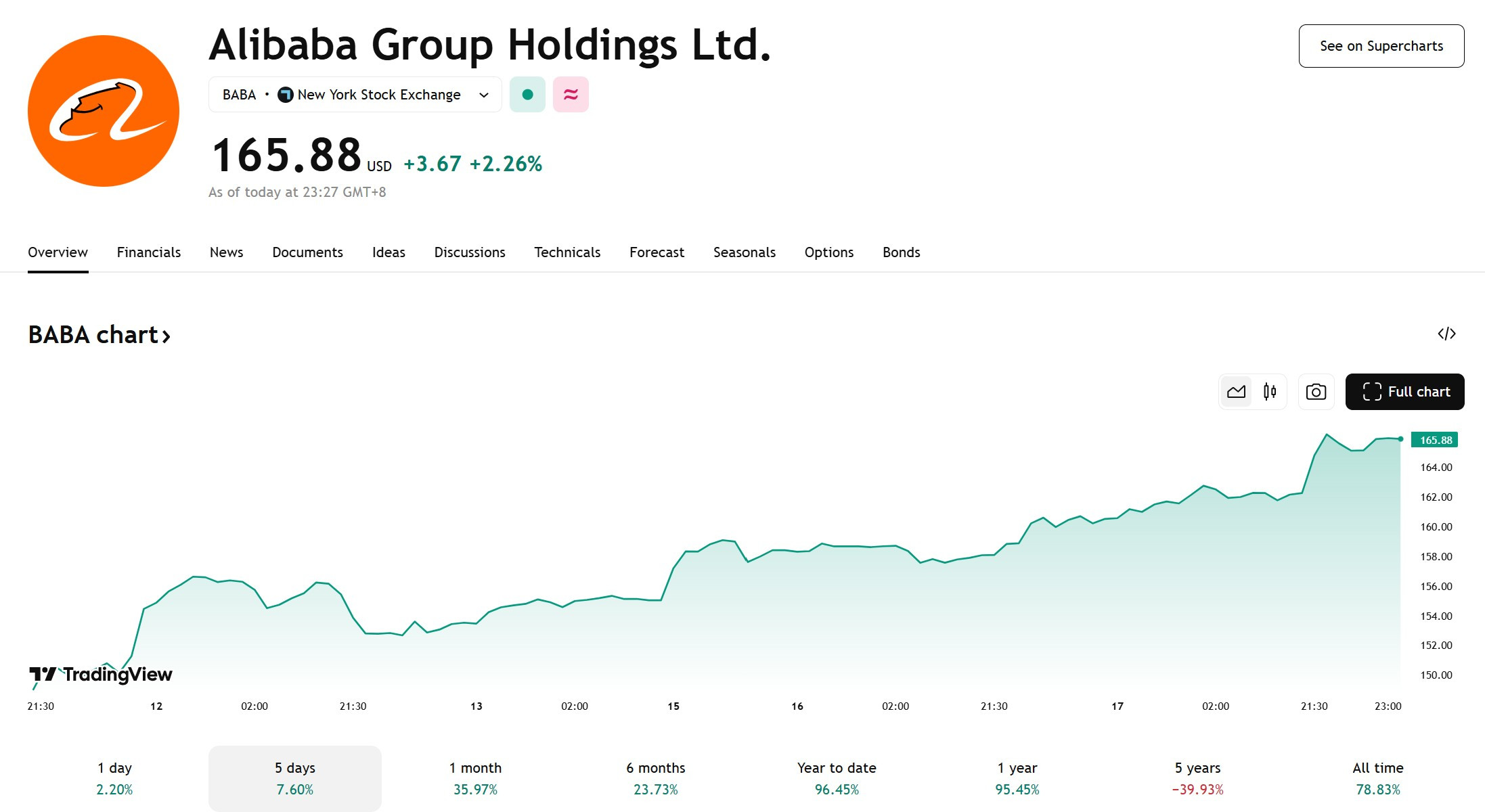
Goldman raised its Alibaba ADS component valuation from $36 to $43 and lifted the overall target to $179, reflecting higher expected cloud revenue and capex-driven capacity to capture token demand.
Multi-chip strategy: breaking the supply bottleneck
Goldman highlights a structural shift: Chinese cloud players aren’t purely dependent on overseas chips. Domestic inference chips and a multi-chip strategy are reshaping supply dynamics, reducing a key historical bottleneck to AI scale.
That diversity matters because more supplier options let CSPs expand compute faster and keep utilization rates high as token demand surges — a key input into Goldman’s higher growth forecasts.
Morgan Stanley’s counterpoint: Tencent is the 2C champion
Wall Street isn’t unanimous. Morgan Stanley argues Tencent is the best 2C AI practitioner, leveraging WeChat and an integrated application stack.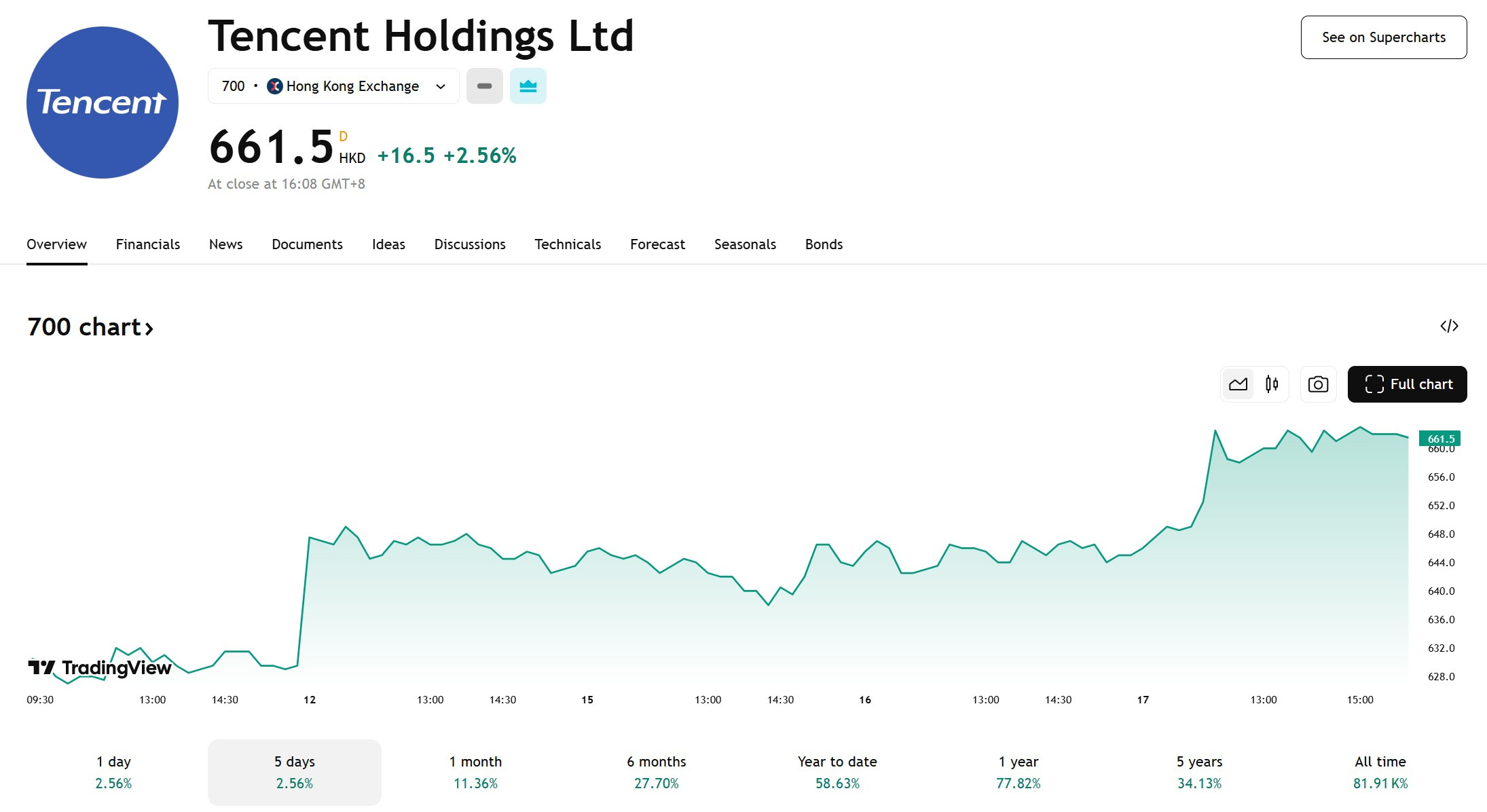
Morgan Stanley maintains an overweight rating on Tencent with a HK$700 target, citing strong consumer-facing AI use cases, ad monetization gains and global expansion in cloud infrastructure.
The market therefore sees a bifurcation: Alibaba as the primary 2B/cloud/multi-chip beneficiary, Tencent as the 2C and application powerhouse.
Product and model headlines: who released what
Chinese AI innovation is active across incumbents:
- Alibaba launched Qwen3-Next on Sept. 12, claiming up to 10× performance vs prior generations while lowering build cost to 1/10. Its Qwen3-Next-80B-A3B (80B parameters) reportedly runs 10× faster than April’s 32B model.
- $BIDU Baidu rolled out ERNIE X1.1 on Sept. 9 with claimed improvements in factuality and instruction following, aiming at parity with top global models.
- $TME published multimodal advances — including HunyuanWorld-Voyager and HunyuanImage 2.1 — and continues to push consumer and developer integrations.
These advances show both breadth and depth: China is rapidly narrowing model-quality gaps while expanding commercial integrations.
Adoption examples: AI as a built-in product feature
Generative AI is moving into mainstream workflows. Meituan’s AI assistant “Xiaomei” supports voice ordering and bookings; Alibaba’s Gaode map rolled out “XiaoGao” as a travel and life assistant. Embedding AI agents into core apps creates steady token flows — the revenue base Goldman and others are modeling into cloud growth.
Capital spending and the infrastructure cycle
Goldman expects CSP capex to jump 39% YoY in Q3 2025. That’s the hardware backbone investors are seeking: more servers, more accelerators, and expanded data center capacity to run persistent enterprise workloads.
This capex narrative echoes the U.S. early-AI infrastructure days around 2022: build capacity, then let enterprise demand and monetization follow. Goldman explicitly compares the current China stage to that U.S. inflection.
Monetization gap: infrastructure vs application revenue
Despite rapid infrastructure ramps, monetization lags at the application layer. Goldman notes global AI-apps ARR is roughly $30bn, while China’s AI app ARR was only $1.5bn (about 5% of the global total) as of August 2025.
That ratio underscores both the upside and the runway: infrastructure revenue can grow faster in the near term while application monetization matures.
Goldman and other banks are implicitly valuing near-term infrastructure capture more highly than near-term app revenue.
What could go wrong: the risks investors should mind
- Monetization lag: Infrastructure wins don’t guarantee rapid app revenue.
- Execution and cost: Building capacity at scale requires disciplined capex and cost control.
- Competition: ByteDance, DeepSeek and others are active — share shifts are possible.
- Model performance and client traction: Claims of huge performance gains must translate into durable enterprise adoption.
Goldman’s upgrades assume that these risks are manageable; Morgan Stanley’s Tencent emphasis is a reminder that outcomes are not pre-ordained.
Bottom line: an infrastructural refueling of the China AI story
Goldman’s upgrade of Alibaba — and the explosive token usage data — signal a renewed investment narrative: infrastructure matters again. Alibaba’s market share, model IP and diversified chip approach make it the bank’s top 2B/cloud pick. Tencent remains the Wall Street favorite for 2C wins.
For investors, the takeaway is straightforward: watch token velocity, capex trends and early enterprise billing patterns. If token growth translates into stable API revenue and higher utilization, the clouds that own the stack will likely be richly rewarded.