
September’s biggest global market risk may come from Japan: Will the rate hike “shoe” drop?

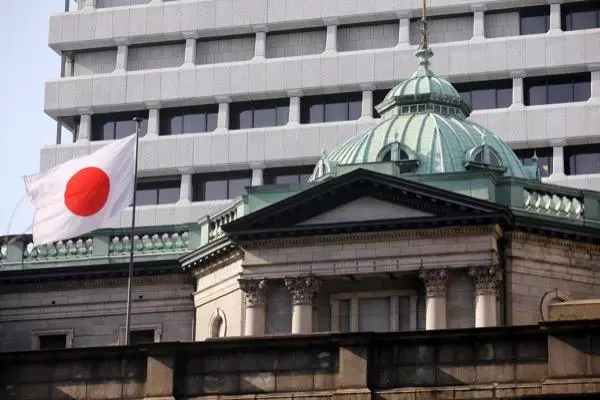
With the Fed already backing down, the focus shifts to the Bank of Japan’s potential rate hike today, posing the market’s biggest risk as one of the two key factors affecting global liquidity.
Markets widely expect the Bank of Japan (BOJ) to keep its benchmark rate unchanged at Friday’s policy meeting.
Japan’s rate hike aligns with its needs
On August 28, BOJ Policy Board member Junko Nakagawa said in a Yamaguchi speech that Japan’s economic environment is more favorable for a rate hike than in April. If economic and inflation outlooks hold, the BOJ will continue raising rates.
“If our economic and inflation projections materialize, the BOJ will keep increasing policy rates and adjust monetary easing accordingly,” Nakagawa said. The BOJ’s Policy Board meets September 18-19.
Her remarks hint at a possible September hike, but analysts see uncertainty. Japan faces a dilemma: U.S. tariff policies have triggered Japan’s worst export slump in over four years, a blow to its trade-driven economy, while persistent domestic inflation demands tighter policy.
Nakagawa noted that while U.S. tariff uncertainties have slightly eased, their impact on Japan remains highly uncertain, possibly to temper market expectations for a September hike.
Meanwhile, Japan’s core CPI has consistently risen, well above the BOJ’s 2% target, fueling persistent inflation. The wide U.S.-Japan interest rate gap and slow BOJ tightening have kept the yen from appreciating, exacerbating imported inflation pressures.
Opposition parties like the Constitutional Democratic Party propose cutting consumption taxes and expanding welfare, raising market concerns about fiscal deficits and debt risks. Though the ruling Liberal Democratic Party is cautious on fiscal stimulus, markets reflexively expect “political instability → fiscal expansion,” driving inflation expectations and high bond yields.
A survey shows 92% of economists expect the BOJ to hold rates at 0.50% through September. Of 31 analysts, 21 worry about fiscal expansion post-upper house elections. 63% predict a rate hike to at least 0.75% by year-end, up from 54% in July.
BOJ likely to hike rates in January
With rate hike speculation growing, BOJ watchers will scrutinize Governor Kazuo Ueda’s post-meeting press conference for signals. Insiders say another hike is possible by year-end.
Recent data shows Japan’s economy recovering moderately despite tariff impacts, pushing the Nikkei 225 to a record high.
With the BOJ reiterating plans to hike if projections hold, 36% of analysts see an October hike, and nearly 90% expect one by January.
Economist Taro Kimura said: “The BOJ needs to reduce stimulus as real rates are deeply negative, inflation exceeds targets, and wage growth supports it. But the next move may wait until October. Political turmoil will keep the BOJ on hold for now.”
As the BOJ’s nine-member board meets, Shigeru Ishiba’s LDP colleagues announced bids for the October 4 party leadership election. A leading contender, Sanae Takaichi, previously warned against rate hikes.
Ueda is likely to say he’ll monitor government policies’ economic and inflation impacts while avoiding comments on candidates or their agendas.
The policy statement is expected around noon, with Ueda’s press conference at 3:30 p.m in local time.