
Another top PE approaches Puma with bigger ambitions

The Puma sale rumors have a sequel.
Germany’s Manager Magazin broke the news that brand manager ABG and PE giant CVC have informally contacted Puma’s controlling shareholder, eyeing the 29% stake held by Puma SE.
Kering Group spun off 86% of Puma’s shares to shareholders, with Artémis, Kering’s major shareholder, holding about 29%, making it Puma’s largest single shareholder.
No price agreement has been reached yet.
CVC has bigger plans, but Pinault family waits for a better offer
Sources say ABG’s Jamie Salter and CVC’s Alex Dibelius reached out to Artémis, the Pinault family’s investment holding company. In the past two weeks, each had at least one phone call and one coffee meeting, but no formal banking process has started.
ABG reportedly offered a “mid-teens” (around 15%) premium, while CVC suggested a higher range but insisted on 75% control and privatization.
The Pinault family’s response was “not considering it now,” but they didn’t close the door, saying, “If the price is well above the current range, we can talk.”
This isn’t Puma’s first sale rumor. In June 2022, France’s Le Figaro reported Kering was considering a Puma spinoff, which Kering denied the next day, saying, “No plans to sell or spin off.” In March 2024, Bloomberg speculated about a 29% stake sale, and Kering’s investor relations said, “Puma is a key asset, no comment.”
In September 2024, German media reported ABG and CVC’s talks, but Puma’s spokesperson said, “We’re unaware of specific proposals and focused on our Forever Faster strategy,” mirroring 2022’s response.
Official statements have gotten shorter, but Puma’s ownership hasn’t changed. Some market watchers think the Pinault family is holding out for a better price.
Puma’s solid but average performance
To get why there’s a “sell or not” debate, go back to 2007. Puma’s growth was stalling, and its stock fell from €350 to €180. In April 2007, Kering (then PPR) bought a 27.1% stake for €5.2 billion at €290 per share. By 2018, Kering nudged its stake to 29%, with 70% held by public shareholders (55% institutions, 15% retail).
From 2013 to 2017, Kering tried to make Puma a “sports fashion” brand alongside Gucci and Saint Laurent, but Puma’s EBITDA margin stayed at 8-10%, way below Gucci’s 35%.
In 2022, Kering shifted to a “Pure-Play Luxury” strategy, focusing on luxury and sidelining Puma as non-core.
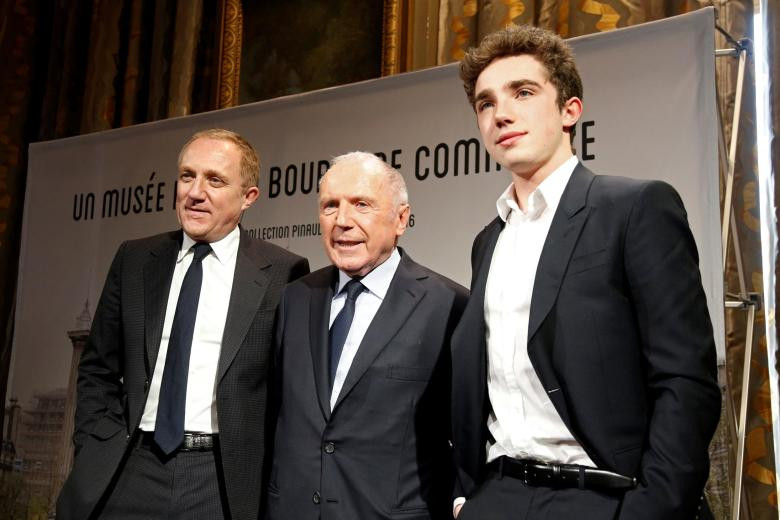
After buying Creed and Maui Jim in 2024, Kering’s net debt hit €17.6 billion (2.3x leverage). Gucci’s same-store sales dropped for four straight quarters, and Kering’s stock fell 46% in 2024.
So, markets guess the Pinault family might sell Puma to raise cash, since Puma has good liquidity and a low valuation, making it a prime cash-out option.
In 2024, Puma’s revenue was €8.61 billion, up 7.2% (10% excluding currency effects), with Americas at 34%, Asia-Pacific at 24%, and China at €1.4 billion (16% share, up 18%). Puma’s gross margin is 47.5%, below Nike’s 44.7% but above Adidas’ 47%.
In short, Puma’s profits are decent, cash flow is strong, and its sporty-fashion vibe makes it an easy target for buyers to reshape and leverage.
Two very different players: ABG vs. CVC
ABG, dubbed an “inventory-free” IP machine, buys brands, cuts direct operations, and licenses globally. In 2022, ABG bought Reebok for $2.5 billion, shut all 450 global stores in 18 months, licensed to Adidas and Foot Locker, and hit a 32% EBITDAR margin in 2024.
ABG’s Jamie Salter said on a September 16 investor call that Puma’s €8.6 billion in sales comes with a 220-day inventory turnover. Going full licensing could free €2 billion in cash. If ABG wins, it’d likely slash retail and inventory, keeping only branding, marketing, and sponsorships. As of Q2 2025, ABG manages $31 billion in assets.
CVC, a European PE heavyweight, has a history with deals like F1, Coleman, and Taylormade. Sources say CVC’s privatization plan includes €1 billion in equity with Hudson Structured Capital and €2.5 billion in leveraged loans to buy over 75% of public shares and delist Puma. The goal is a 14% EBITDA margin in five years, then exiting via IPO or sale.
In short, CVC’s plan is bigger and longer-term, targeting control, privatization, and a profitable exit after repackaging Puma.