
Largest-Ever September "Triple Witching Day" Looms: Will U.S. Stocks Fall?

This Friday, the largest-ever September "Triple Witching Day" is approaching, with over $5 trillion in U.S. stock options and futures contracts set to expire on the same day.
Among the positions expiring this time, 90% are call options. Once these positions are closed out today, it is likely to trigger a market adjustment. But will the U.S. stock market crash today?
Goldman Sachs Expects The Rebound Momentum To Continue
According to Goldman Sachs options expert John Marshall, over $5.3 trillion in notional value of options will expire this Friday, including $3 trillion in S&P 500 index options and $935 billion in single-stock options.
In terms of relative scale, the total notional value of these expiring options equates to 8% of the Russell 3000 Index’s total market capitalization, marking the largest September Triple Witching Day on record.
According to options analysis firm SpotGamma, nearly 90% of the expiring positions are call options. As these positions are closed out upon expiration, the long stock positions held by dealers for hedging purposes will be unwound, meaning a significant source of market buying support will disappear.
For short-term market trends, Goldman Sachs predicts that the market’s rebound momentum is likely to persist before the options expiration event concludes on Friday, often associated with the "gamma squeeze" effect leading up to expiration. A pullback may follow in the subsequent week.
Review of Previous Triple Witching Days This Year
Looking back at the March and June Triple Witching Days, March saw a sharp correction, while June was dominated by FOMO sentiment. The Triple Witching effect was not significant, but slight counter-directional movements were observed in the days leading up to the event.
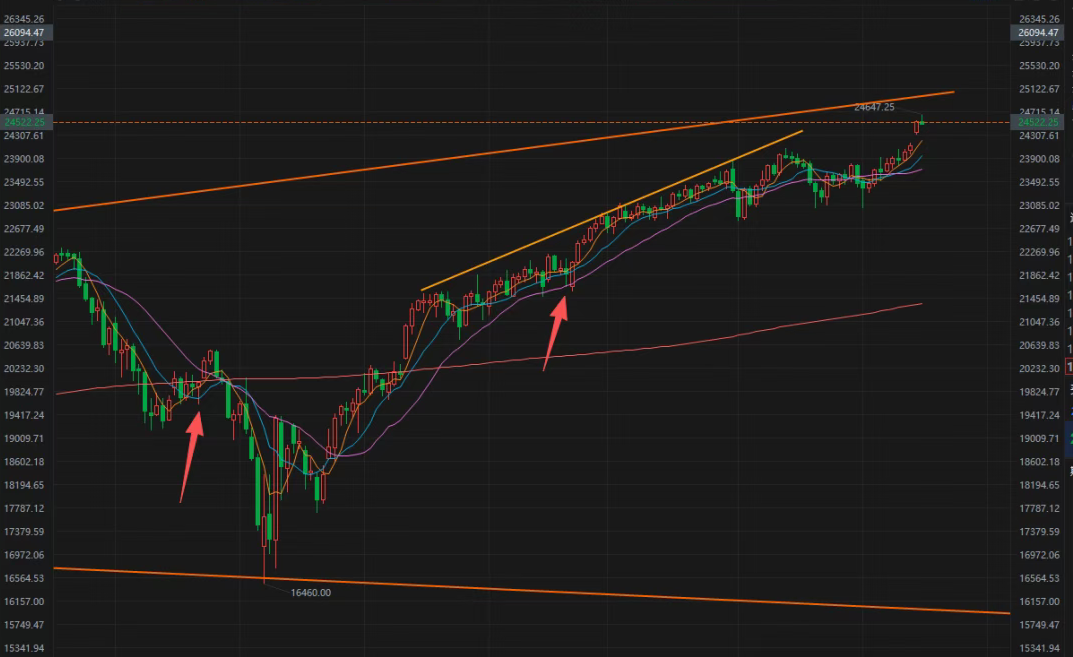
This week, the Nasdaq reached the upper boundary of an expanding triangle pattern, coupled with a gap-up opening, signaling that this will not be a calm week.
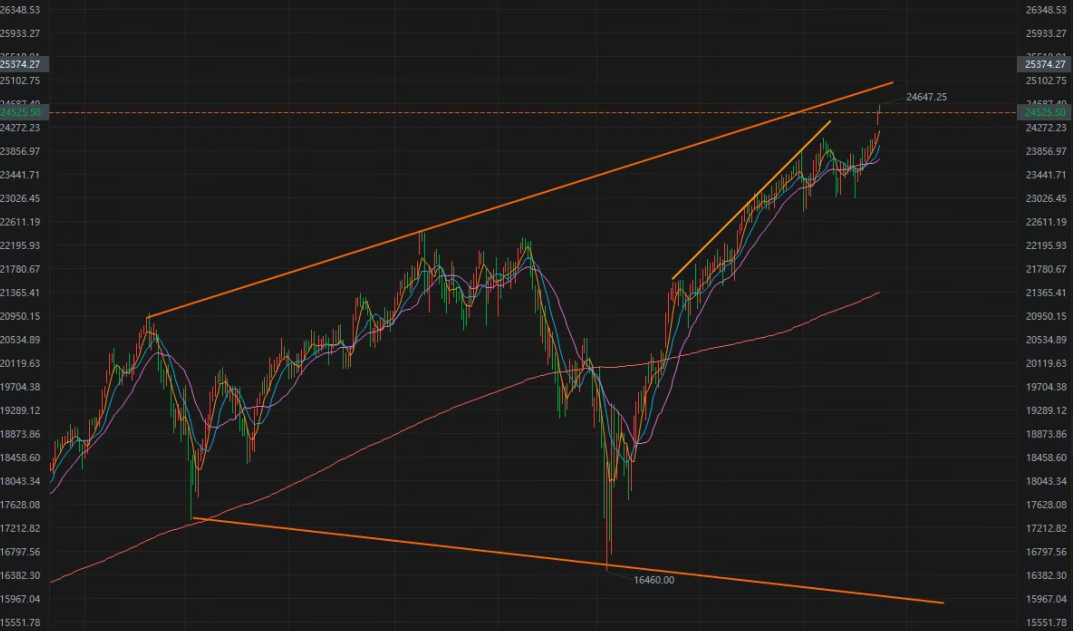
(Nasdaq 100 Index)
Another Major Options Expiration Event at Month-End
Another significant options expiration event will occur at the end of this month, known as the "JPMorgan Collar" strategy, with related options expiring.
The "JPMorgan Collar" strategy typically involves options expiring on the last trading day of each quarter—March, June, September, and December. This strategy generally entails selling S&P 500 call options while purchasing put options to provide downside protection for its portfolio.
According to FactSet, the "JPMorgan Collar" is closely tied to the JPMorgan Hedged Equity Fund, which manages over $20 billion in assets.
Kochuba noted that if the market shows some weakness following the Fed’s meeting, the "JPMorgan Collar" strategy could provide strong support for U.S. stocks.
Kochuba also stated that recent movements in the options market suggest the market may be preparing for significant volatility in either direction, but the outcome will likely depend on the Federal Reserve.
He pointed out that implied volatility tied to short-term zero-day expiration contracts and longer-term contracts has started to rise slightly this week. According to FactSet, the VIX index closed at 16.29 on Tuesday. Meanwhile, the daily trading volume of so-called zero-day expiration options has been at or near record levels in recent weeks.
"U.S. stocks are at historic highs, and the market hasn’t seen a 2% drop in a long time, yet call option prices aren’t that high," Kochuba said. "I think this could be a short-term signal that volatility is about to spike."
My Take
I still believe it’s unlikely for the index to crash significantly. While there’s pressure for a U.S. stock market correction today, it’s more likely to maintain a high-level consolidation pattern.
As long as the index doesn’t face a significant decline, individual stocks will definitely present opportunities.
The key is selecting the right sectors.
Overall, at this stage, the U.S. stock market does not face significant risks. The best strategy now is to buy strong stocks on dips during corrections.