
Another Top PE Decides to “Pull Back”

Recently, SoftBank confirmed that its Vision Fund team will cut about 20% of its global staff, affecting around 60 employees.
This is the second major PE fund to officially scale back this year, after Tiger Fund disbanded its European team earlier.
This marks the third round of layoffs for the fund since 2022. Currently, the Vision Fund has about 300 employees worldwide, which will drop to around 240 after this cut. At its peak, the team exceeded 400 people.
A Vision Fund spokesperson said the savings from these layoffs will be redirected to big AI investment projects like “Stargate.”
Big Layoffs While Offloading Non-Core Assets
What’s interesting is that this round of cuts isn’t due to financial trouble—it comes right after the Vision Fund posted its best performance in four years.
Earlier, SoftBank reported that in the first quarter of fiscal 2025 (April-June), the Vision Fund made a pre-tax profit of ¥451.4 billion, the highest quarterly figure since June 2021. It’s a real high point for the fund right now.
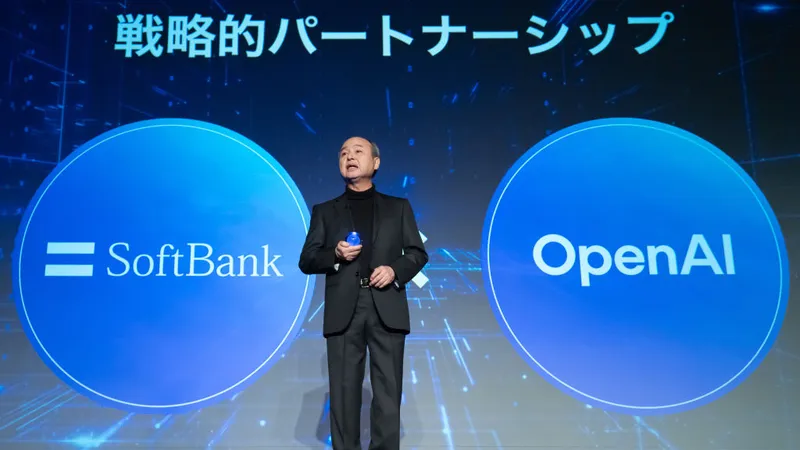
So why slim down now? SoftBank founder Masayoshi Son explained in an internal memo and public statement that the focus is shifting to put all resources into AI infrastructure, especially big projects in the US market.
The “Stargate” project, launched with SoftBank, Oracle, and OpenAI, aims to build a nationwide AI data center network in the US, with a total investment of about $500 billion, including a $100 billion first phase.
On top of that, SoftBank plans to add another $30 billion to OpenAI, with $9.7 billion already delivered through Vision Fund 2 in the past year, and the rest expected by December 2025.
To fund these massive projects, SoftBank intends to keep selling off non-core assets.
Earlier this year, the Vision Fund cashed out about $2 billion from listed and private holdings, including partial exits from DoorDash and cybersecurity firm Wiz. In June, it raised another $4.8 billion by selling T-Mobile shares.
CFO Yoshimitsu Goto said SoftBank Group’s net asset value as of March 31 was ¥25.7 trillion (about $175 billion), with “plenty of firepower.”
Two Vision Funds
SoftBank’s financials show that as of June 30, 2025, the combined net asset value of Vision Fund 1 and 2 was about $193 billion, up 15% from the previous quarter.
In Q1 2025, the Vision Fund posted a pre-tax profit of ¥451.4 billion, a 380-fold jump year-on-year, thanks to stock gains from holdings like Nvidia and South Korea’s Coupang, plus a $650 million unrealized gain from Swiggy’s July IPO.
The group’s overall quarterly net profit was ¥421.8 billion (about $2.9 billion), turning around last year’s loss.
But behind the shiny numbers, the two funds tell different stories—think of it like an old Chinese saying: “looks good on the outside, but not so much within.”
Looking closer, Vision Fund 1 (SVF1) has invested $89.5 billion total, with returns of $111.1 billion as of March 2025, netting $21.6 billion in gains. In fiscal 2024, it earned $6.7 billion, with $5.8 billion from ongoing projects and a $4.1 billion loss from exited ones.
Vision Fund 2 (SVF2), managing $65.8 billion, lost $3.6 billion on investments in fiscal 2024, with $4.6 billion lost from exited deals and a cumulative $15.7 billion paper loss on unlisted stakes.
As of March 2025, its value dropped 2.7% quarter-on-quarter, with listed holdings falling 21.7%, hit hard by declines in Swiggy and India’s Ola Electric.
Overall, in the first half of 2025, the Vision Fund raised about $6.8 billion by selling DoorDash warrants and T-Mobile shares, freeing up cash for the group’s big AI bets.
Moving Away from Scattering Cash, Son Switches His Approach
In the 2025 fiscal report, Son boldly said that over the next decade, AI will take over 5%-10% of global GDP, adding $9-18 trillion in value each year.
To grab a central spot in this shift, his plan is to “clear the deck for new players”—pulling resources from hundreds of startups to focus entirely on a few game-changing projects like “Stargate,” OpenAI, and Ampere that could shape AI infrastructure.
So, to Son’s team, this 20% staff cut isn’t just shrinking—it’s the Vision Fund’s biggest “strategic shift” yet.
The Vision Fund is no longer the cash-throwing “mega PE” of old but a tool to execute Son’s personal AI vision.
This profit-time layoff might just be the beginning. The real challenge is whether that $500 billion infrastructure gets built on schedule, if the $30 billion OpenAI investment buys control of the next big thing, and if the chip-cloud-energy loop can hold up against US-EU rules and market ups and downs.
Son’s back at the table, betting bigger than four years ago, with all his chips on a few key hands.