
Gold Rallies to Fresh Records: Fed cuts, central-bank demand and geopolitical risk push prices higher

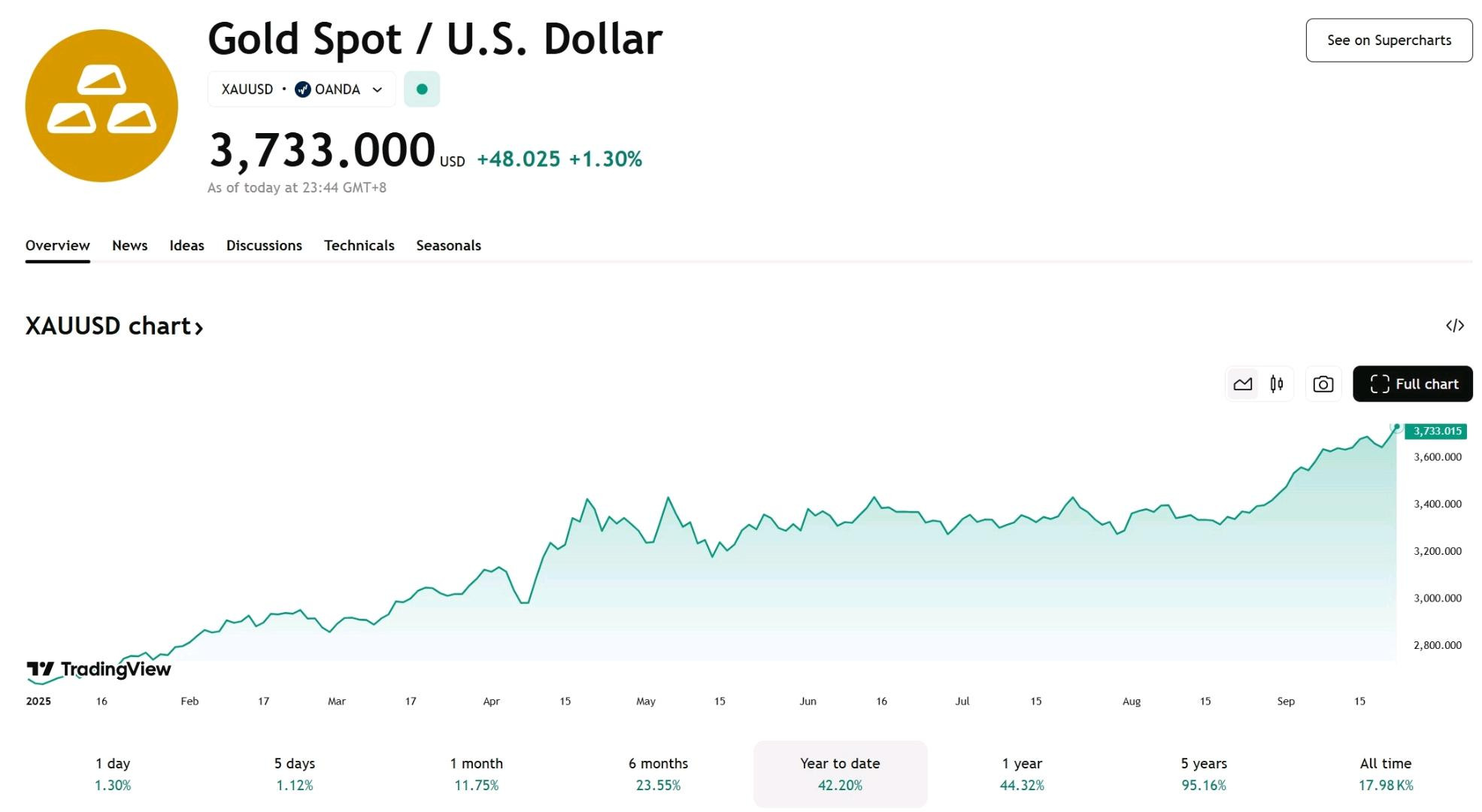
On September 22, 2025, spot gold surged to new record territory — passing roughly $3,720 per ounce — extending a dramatic rally that began in late August. Spot prices are up more than 12% since August 20 and have climbed over 42% year-to-date.
Futures, miner stocks and Asian-listed gold names joined the move as analysts and major banks raised near-term targets and flagged upside scenarios.
Key Points
- Spot gold touched about $3,721/oz on September 22; COMEX futures traded near $3,760/oz.
- Gold is up >12% since August 20 and over 42% year-to-date.
- The Fed cut rates 25 bps to 4.00%–4.25% and the September dots now imply more cuts this year.
- Major banks raised targets (JPMorgan ~ $3,800 by Q4 2025; UBS and Goldman upward revisions and larger upside tail risks).
- Miners and Asian-listed gold names rallied strongly; central-bank buying and room for ETF flows remain structural supports.

What happened in markets — immediate moves
Gold’s latest leg higher arrived after the Fed’s 25-bp cut and clearer market expectations for more easing. Spot gains on the day exceeded 1%; futures rose further. Gold miners across US, Hong Kong and mainland exchanges jumped — Barrick and several US miners advanced more than 4–5% intraday, while mainland and Hong Kong listed producers often traded large gains and occasional limit-up moves.
Asian equities mirrored the commodity move. Onshore A-share gold concept names saw steep rises at close; several Hong Kong producers hit multi-year highs and notable rallies.
Who’s calling it — consensus and scenarios
Several big institutions updated gold price paths and risk scenarios. JPMorgan lifted its near-term forecast to roughly $3,800 by Q4 2025 and expects a breakout above $4,000 in early 2026. UBS increased both year-end and mid-2026 targets by a few hundred dollars.
Goldman Sachs kept a base case of $3,700 for end-2025 and $4,000 for mid-2026, but stressed a strong upside “tail” if Fed credibility wanes — even sketching extreme scenarios that could push prices toward $4,500–$5,000/oz under acute institutional flows. These forecasts reflect both policy expectations and stress-test modeling.
Why gold is rallying — the main drivers
Monetary policy pivot: The Fed’s September 25-bp cut and the dots indicating more cuts this year underpin a lower real interest rate outlook, reducing the opportunity cost of holding non-yielding bullion. Market pricing of two further cuts within months has materially shifted investors’ risk-reward calculus.
Central bank demand and ETFs: Continued official purchases by central banks and room for private/institutional ETF inflows were repeatedly cited. Analysts note ETF holdings remain below the 2020 peak, leaving structural space for additional accumulation without exhausting liquidity.
Geopolitics and safe-haven bids: Ongoing geopolitical tensions were flagged as another persistent support factor. Heightened uncertainty tends to funnel capital into gold as a portfolio diversifier.
Concerns about Fed independence: Several reports emphasize political commentary and appointments that raise questions about central bank autonomy. Analysts say even modest doubts about institutional credibility can accelerate the move into hard assets.
What the data and traders are watching next
Traders are parsing upcoming economic prints, including U.S. Personal Consumption Expenditures (PCE) data and European activity indicators. The Fed’s preferred inflation measures and wage dynamics will shape the next rate decisions and therefore the gold path. Fed Chair remarks scheduled for the week are also singled out as market catalysts.
How miners and regional markets are behaving
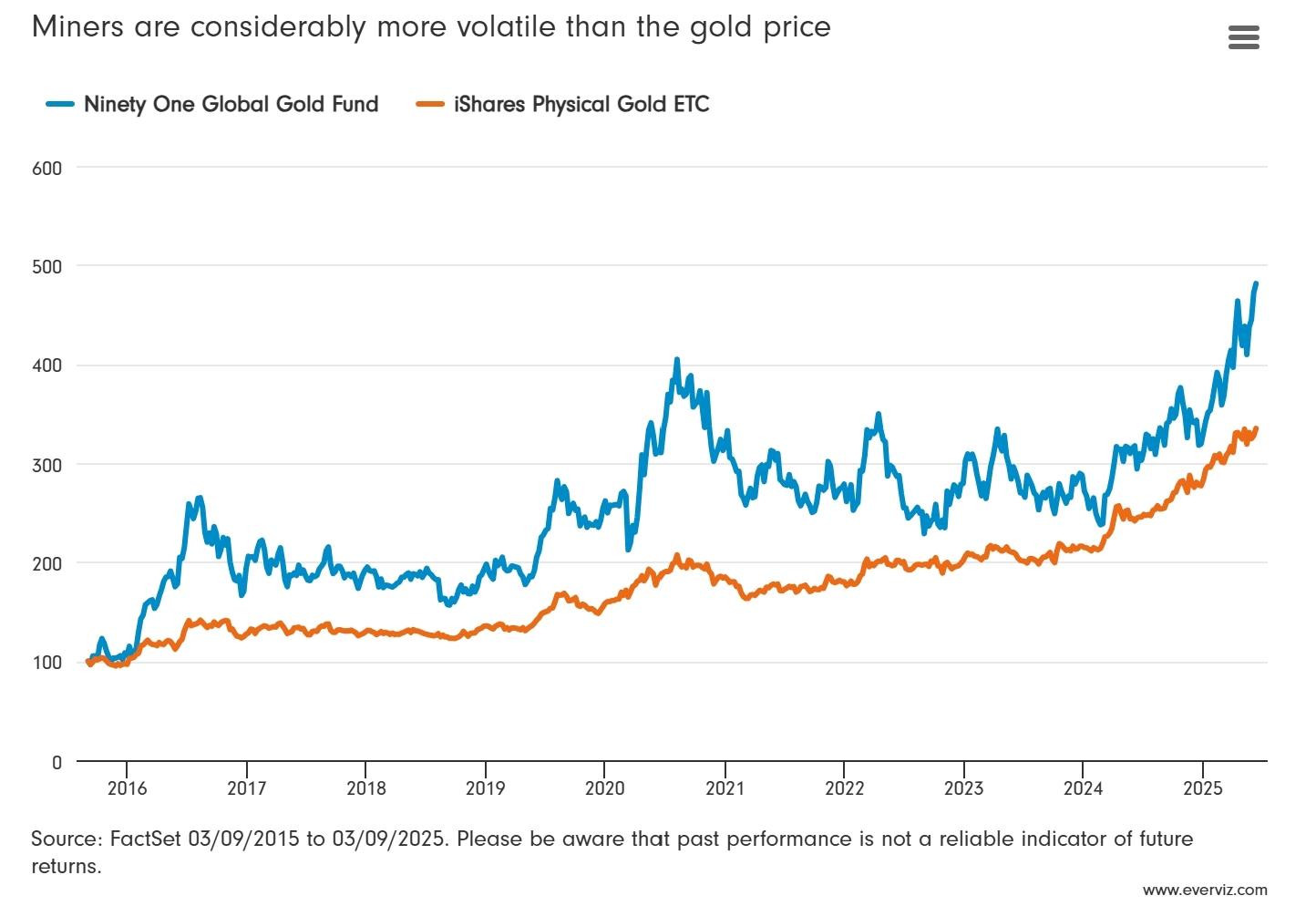
Miners: Equity reaction has been swift. Large legacy names and smaller producers have outperformed, reflecting margin leverage to higher spot prices. Several US miners rose over 4–5% intraday; Hong Kong and mainland gold stocks recorded some of the biggest percentage jumps across markets.
Regional winners: Onshore A-shares saw high single-digit to limit-up moves in certain gold concept stocks; Hong Kong names logged historic intraday highs and notable rallies.
The bullish case — why some see more upside
Analysts point to three reinforcing themes: easier US monetary policy, sustained central-bank buying, and structural private demand. Historical patterns from past easing cycles are cited as supporting further gold gains in the months after rate cuts.
Surveys from major houses show record bullish positioning — Goldman notes bullish:bearish positioning near 8:1, highlighting unusually concentrated long sentiment.
The bear case — what could check the rally
Key risks include a sudden turnaround in inflation momentum that forces the Fed to pause easing, a rapid re-accumulation of U.S. real yields, or a significant shift in dollar strength.
Markets are also debating how much of the recent performance is driven by positioning and momentum rather than fundamentals — creating potential for sharp short-term corrections.
Bottom line
Gold is leading many asset classes in 2025, propelled by policy easing expectations, continued central bank demand, and risk-off flows. Near-term direction will hinge on the next round of data (PCE, jobs, European activity) and Fed communications.
With institutional forecasts now clustering in the $3,700–$4,000+ band and explicit upside tail risks cited by banks, the market now confronts both stronger conviction and higher event sensitivity.