
Nvidia, Oracle, OpenAI: A Trillion-Dollar Triangle Game Locked In?

Big-ticket deals are nothing new in Silicon Valley’s AI scene. On Monday, September 22, Nvidia announced a potential $100 billion investment in OpenAI, pushing the chip giant’s stock up over 4% to a new record high, with its market cap nearing $4.5 trillion.
These massive collaborations are playing out among the “ONO” trio—OpenAI, Nvidia, and Oracle—forming what looks like a tight-knit “triangle” to build the next AI computing empire.
The diagram clearly shows this closed loop built by the “big model-cloud infrastructure-computing chip” giants.
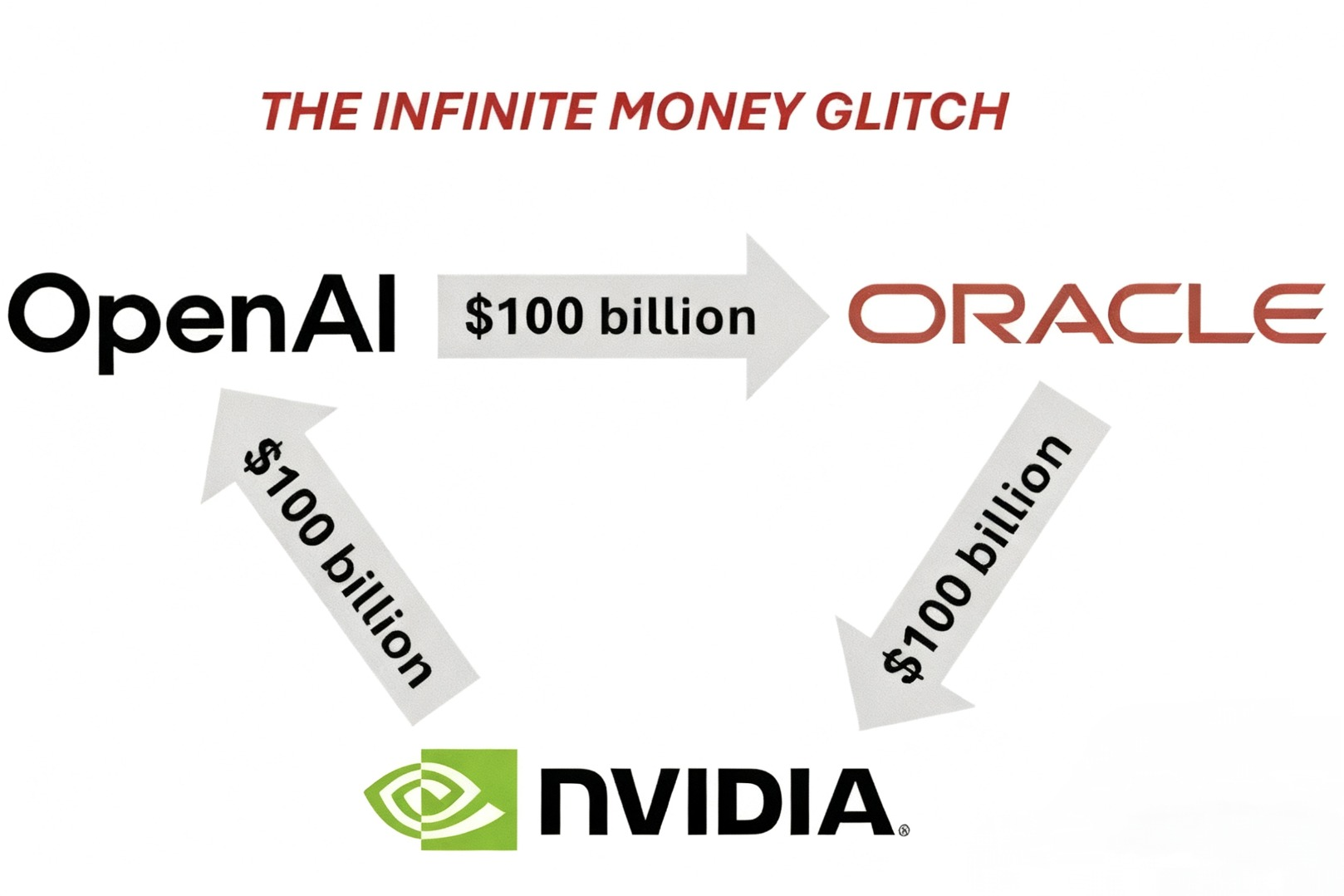
It all started with a blockbuster deal between OpenAI and Oracle.
In June, hints of a deal emerged when Oracle disclosed in a regulatory filing a cloud service agreement set to generate over $30 billion in revenue by fiscal 2027. Reports later revealed OpenAI signed a contract to buy $300 billion in computing services from Oracle over about five years, starting in 2027, with annual spending around $60 billion.
This deal, one of the largest cloud contracts ever, dwarfs OpenAI’s current revenue and is seen as a key step in its “Stargate” project.
On September 22, Nvidia completed the loop, committing up to $100 billion to OpenAI to co-build massive data centers.
Under the agreement, OpenAI will use Nvidia systems to deploy at least 10 gigawatts of AI data centers for training and running next-gen models, equivalent to the power needs of 8 million U.S. households. Nvidia CEO Jensen Huang said in an interview Monday that 10 gigawatts equates to 4 to 5 million GPUs, roughly Nvidia’s total shipments this year and double last year’s.
The profit flow seems crystal clear. OpenAI buys cloud services from Oracle; Oracle, as a hardware infrastructure provider, builds and runs huge data centers, needing tons of Nvidia GPUs, with funds largely flowing back to Nvidia; Nvidia then reinvests some profits into OpenAI to support further AI infrastructure.
The question lingers: after all this money circles around, it seems to land back where it started. If it works, OpenAI solves its computing shortage, Oracle gets the hardware to build data centers, and Nvidia sells more chips.
Is this a virtuous capital cycle for AI or a glitchy financial game?
One hard truth stands out: while Nvidia and Oracle’s stocks are soaring, OpenAI has no cash flow to speak of.
Valued at over $100 billion, the AI app giant is far from profitable and bleeding cash. According to The Information, citing internal financials and industry experts, OpenAI is projected to lose over $5 billion in 2025. In June, OpenAI reported annual revenue of about $10 billion—less than a fifth of the $60 billion it spends yearly on data centers and Oracle’s computing services.
Meanwhile, Oracle’s breakneck growth hides risks—high debt and negative cash flow. Its debt load relative to cash holdings far exceeds that of Microsoft, Amazon, or Meta. Reports indicate Oracle’s AI-driven spending has outpaced its cash flow, with a debt-to-equity ratio of 427% compared to Microsoft’s 32.7%.
This makes the “ONO” alliance look like a high-stakes, no-fail chain reaction.
OpenAI faces fierce competition from Google, Anthropic, and others, plus hefty salaries to win the talent war. With growing tensions with key investor Microsoft and a delayed profitability timeline, whether ChatGPT can stay ahead is a big question mark. The “ONO” alliance is undeniably powerful, but a crack in any link could spark a domino effect. For all three, this is a high-risk gamble.
Wall Street Buzzes Over Nvidia’s Massive Investment in OpenAI
Wall Street analysts are largely upbeat about Nvidia’s $100 billion investment in OpenAI, viewing it as a strategic move that could yield significant returns and solidify Nvidia’s market dominance.
Following the investment news, Bank of America reiterated its “Buy” rating on Nvidia with a $215 price target, suggesting about 17% upside potential.
Bank of America believes this investment could generate up to $500 billion in returns for Nvidia.
“The partnership includes a letter of intent for Nvidia to join in building at least 10 gigawatts of systems starting in late 2026 using the Vera Rubin platform, which we estimate could drive $300 billion to $500 billion in revenue over time, or roughly a 3-5x return on investment,” wrote Bank of America analysts led by Vivek Arya in a client note.
“Perhaps even more crucially, this deal positions Nvidia as OpenAI’s preferred strategic computing and networking partner. While no specific share is guaranteed, on its face, this agreement heightens competitive risks for other suppliers like Broadcom and AMD,” the analysts added.
Matt Britzman, senior equity analyst at Hargreaves Lansdown, echoed this view. “For Nvidia, the payoff is huge—each gigawatt of AI data center capacity could bring in about $50 billion in revenue, potentially valuing this project at up to $500 billion,” he said.
“By locking in OpenAI as a strategic partner and co-optimizing hardware and software roadmaps, Nvidia is ensuring its GPUs remain the backbone of next-gen AI infrastructure,” Britzman added.
Some analysts see the investment creating a virtuous capital cycle. It provides OpenAI with the funds and access to buy advanced chips, which are critical for maintaining its edge in a fiercely competitive landscape.
Bryn Talkington, managing partner at Requisite Capital Management, commented, “Nvidia invests $100 billion in OpenAI, and OpenAI hands that money back to Nvidia—it’s a very healthy cycle for Jensen Huang.”
However, some raised concerns about the deal’s impact on industry competition.
Andre Barlow, an antitrust lawyer at Doyle, Barlow & Mazard, noted that the partnership could tie Nvidia’s chip market dominance to OpenAI’s software leadership, making it harder for Nvidia’s chip rivals or OpenAI’s large-model competitors to scale.
$NVDA $ORCL