
Cathie Wood Returns to Alibaba After Four Years, Doubles Down on China AI

Shearing sheep
September 24, 2025
GoGPT Summarizes Articles
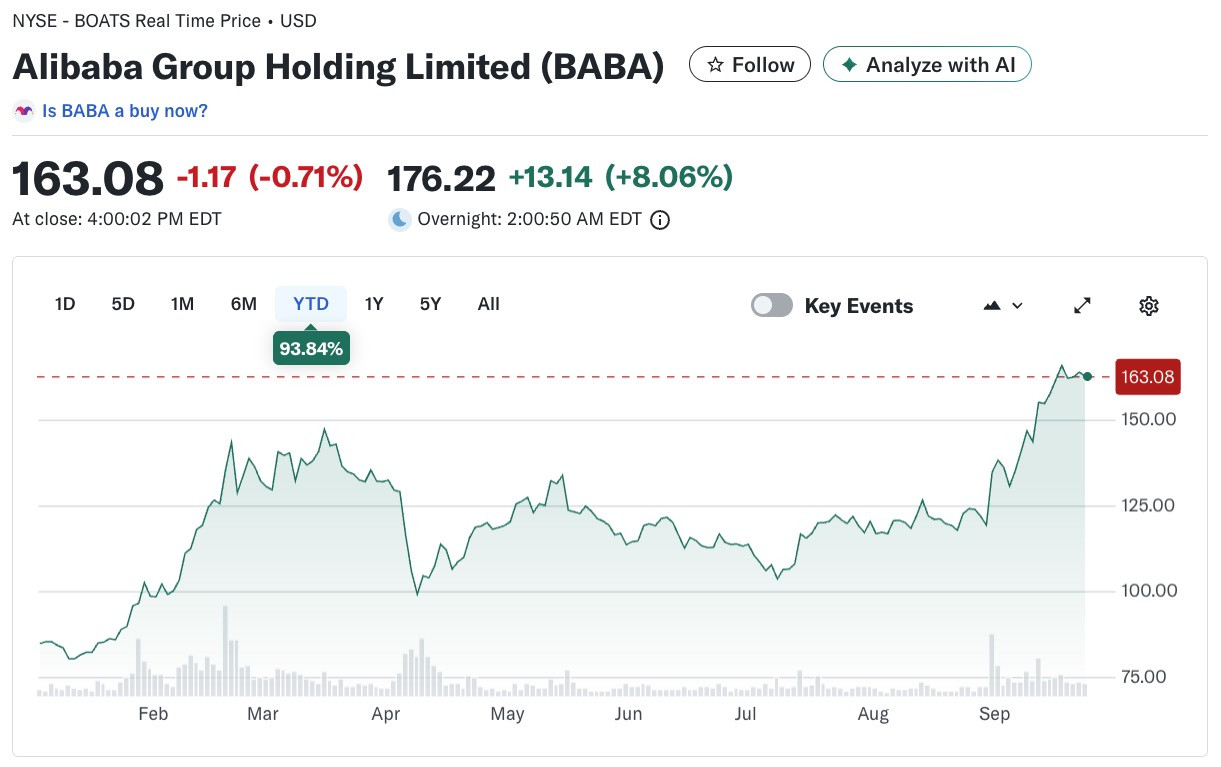
For the first time in four years, Cathie Wood has rebuilt a position in Alibaba, signaling a renewed appetite for Chinese tech stocks tied to artificial intelligence. The timing is striking: Alibaba’s U.S.-listed shares ($BABA) have nearly doubled in 2025, recently hitting their highest level since November 2021.
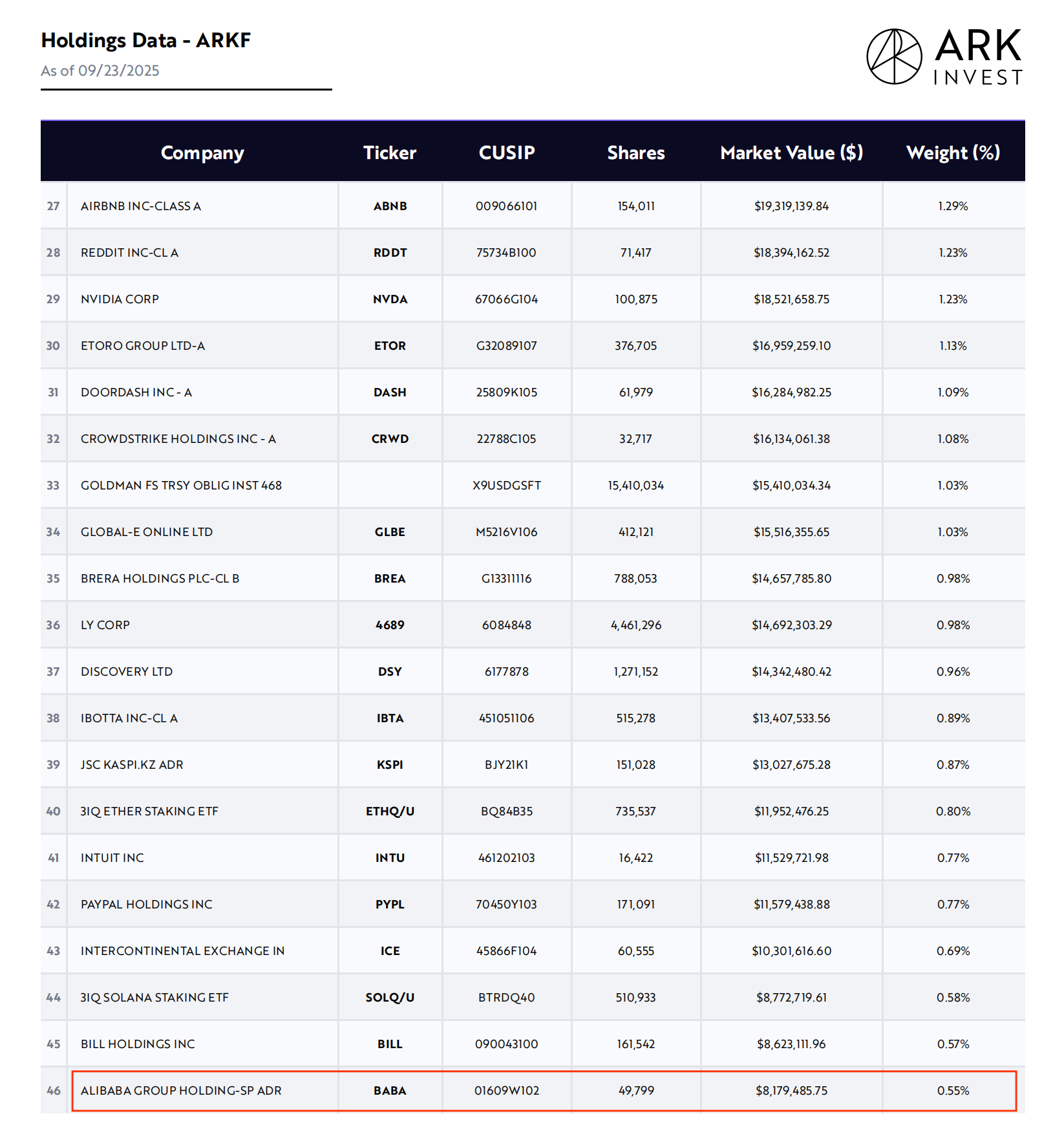
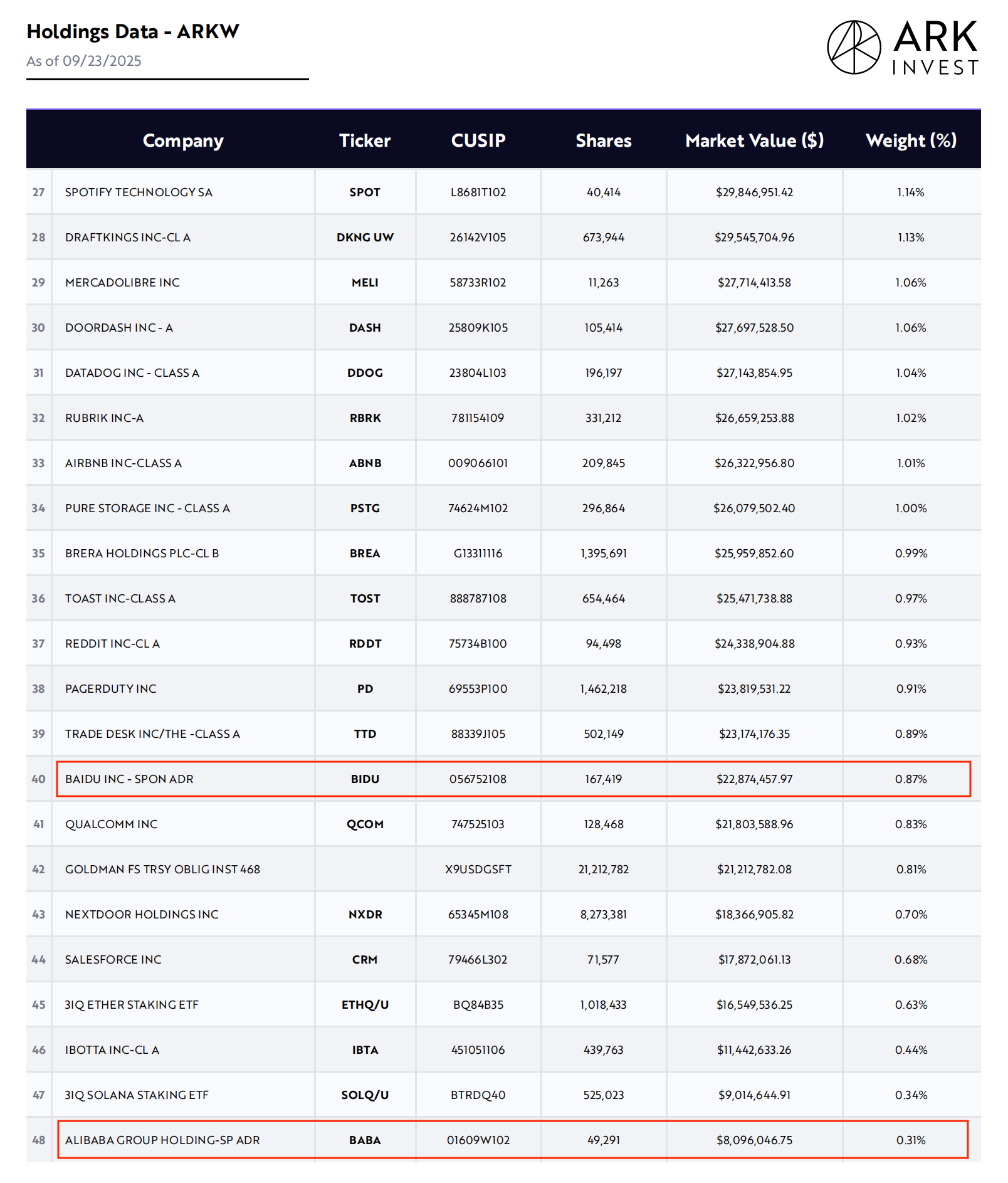
According to Ark Investment Management’s daily trading report, two of its ETFs — the Ark Fintech Innovation ETF (ARKF) and the Ark Next Generation Internet ETF (ARKW) — purchased roughly 99,090 shares of Alibaba ADRs, valued at about $16 million. This marks Ark’s first Alibaba trade since 2021, when the fund stopped reporting any investment or proxy activity related to the company.
Why Alibaba, Why Now?
Alibaba’s comeback story this year is less about its core e-commerce business — which continues to face stiff competition from rivals like Pinduoduo — and more about its AI and cloud ambitions. The company has been ramping up development of proprietary chips and large AI models, with the goal of reducing reliance on U.S. chipmakers like Nvidia. Recently, Alibaba introduced a high-performance processor designed for AI workloads, a move that positions it directly against Nvidia’s dominance in the China market.
Investors have taken notice. With AI optimism building globally, Alibaba has become a rare bright spot among Chinese tech names, its stock price nearly doubling year-to-date. For Wood, whose investment philosophy centers on disruptive technologies, the company’s AI focus provides a reason to re-engage.
Not Just Alibaba: Baidu and Beyond
Ark didn’t stop at Alibaba. The firm also boosted its position in Baidu ($BIDU), purchasing an additional 21,245 shares worth about $2.9 million, bringing its total Baidu holdings to roughly $47 million. Baidu has long positioned itself as China’s AI-first company, with projects spanning autonomous driving (Apollo Go), cloud services, and generative AI models.
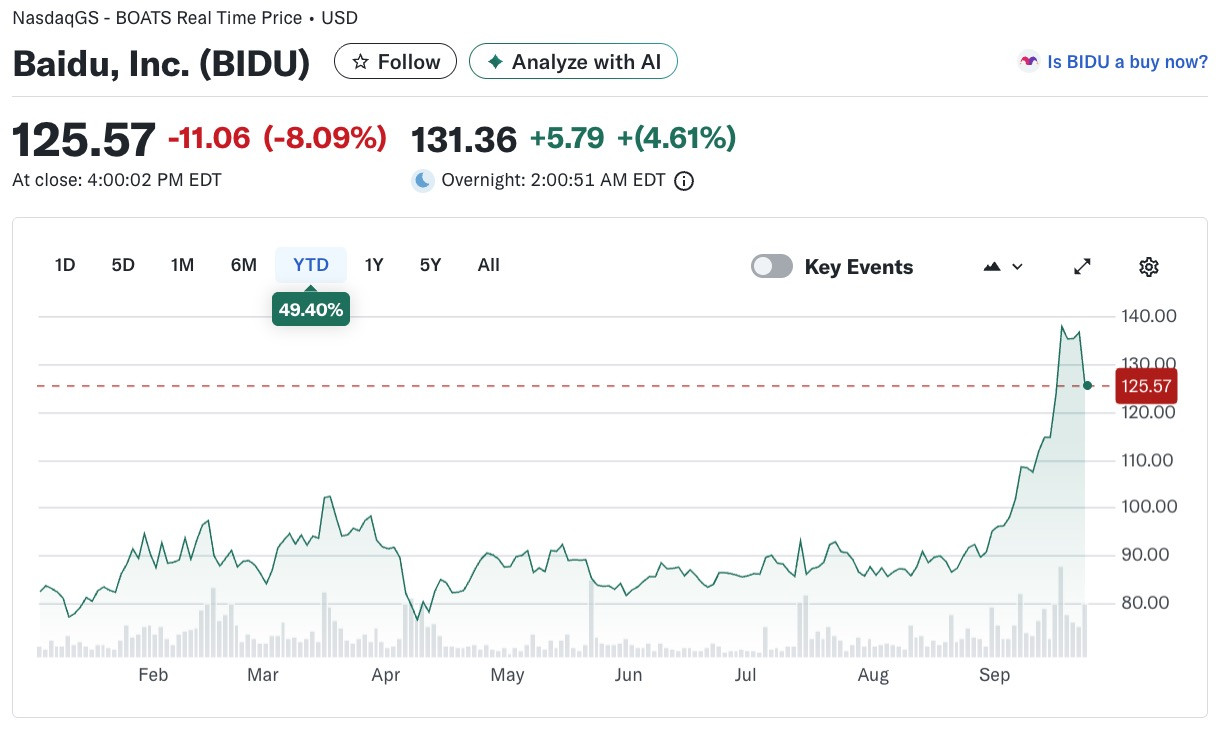
Meanwhile, Ark’s Autonomous Technology & Robotics ETF (ARKQ) also picked up shares in Pony.ai, an autonomous driving startup, worth about $2.1 million. The company is pushing into Singapore and the Middle East, aiming to commercialize self-driving taxi fleets. Smaller positions in BYD and JD Logistics round out the China-related bets.
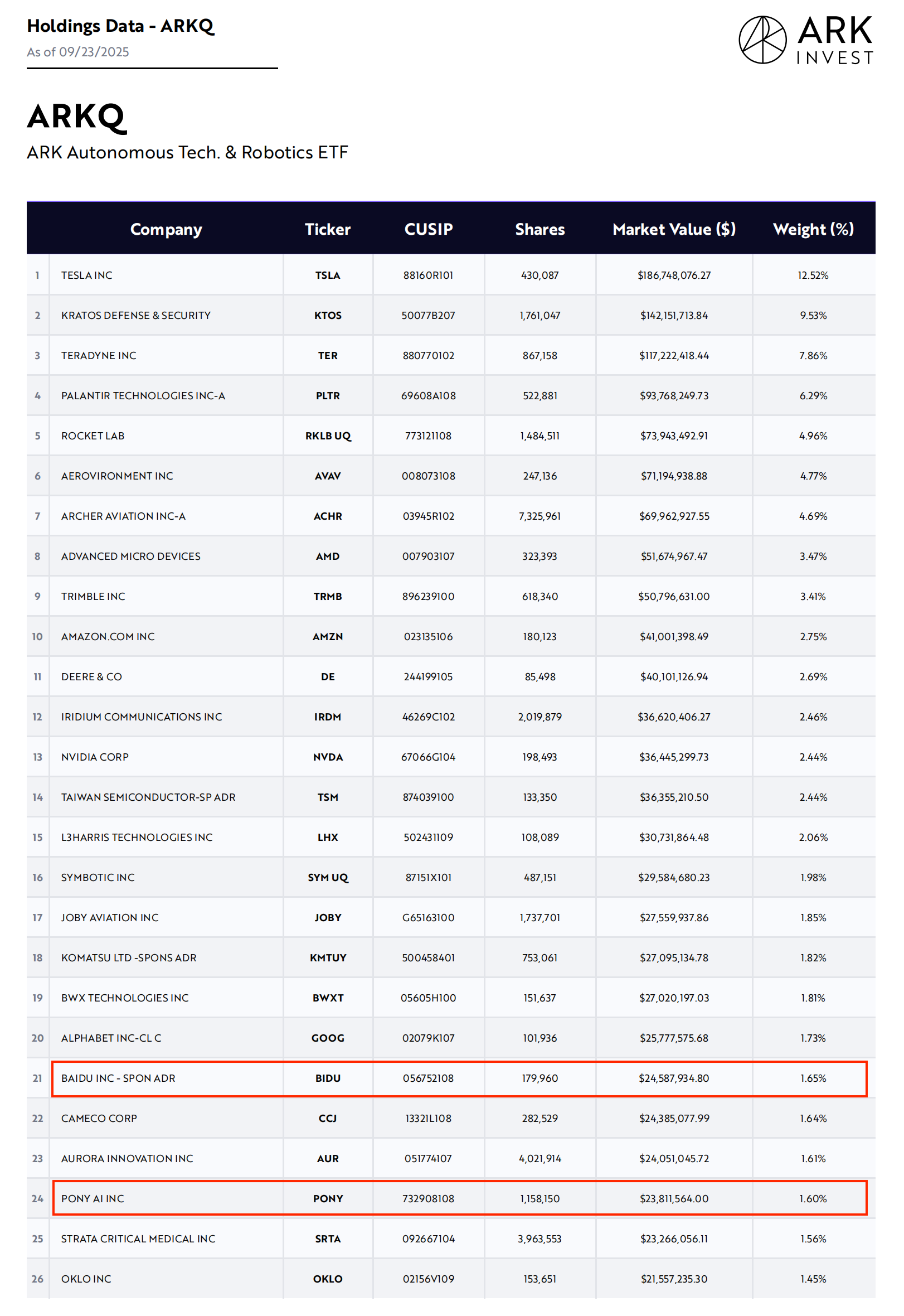
Altogether, Ark allocated roughly $21 million to Chinese stocks in this round of trades, showing a broader — if still cautious — tilt toward Chinese innovation plays.
A Shift in Strategy?
It’s worth remembering that Ark was once an active Alibaba shareholder, investing shortly after the company’s 2014 IPO. But by late 2021, amid rising regulatory pressures in China and a sharp decline in Alibaba’s share price, Ark had fully exited. The four-year hiatus reflected not only company-specific issues but also global investor sentiment, which turned cold on China assets through the pandemic and regulatory crackdown years.
This latest move may signal a recalibration. Rather than writing off China entirely, Wood is selectively re-entering where she sees alignment with Ark’s core theme: disruptive innovation. As Ark noted in a recent update: “AI is the next wave of innovation, and the leaders in this field could see exponential growth.”
Risks and Reality Check
Still, there are reasons for caution. While Alibaba and Baidu have made meaningful progress in AI, monetizing these investments remains uncertain. Unlike Nvidia, which sells hardware directly tied to AI demand, Alibaba and Baidu must prove that AI can boost revenues across cloud, advertising, and e-commerce services.
Geopolitical risks also loom large. U.S.–China tech tensions, export controls on advanced chips, and regulatory unpredictability in China all pose potential headwinds. These factors may explain why Ark’s allocations remain relatively modest compared to its U.S. AI bets.
Ark’s Performance Context
Ark’s Innovation ETF (ARKK) is up over 49% year-to-date, comfortably outpacing the S&P 500 and Nasdaq 100. Yet over a five-year horizon, returns are still negative. Investors remain skeptical: Ark funds have seen over $400 million in net outflows in 2025 despite strong year-to-date gains.
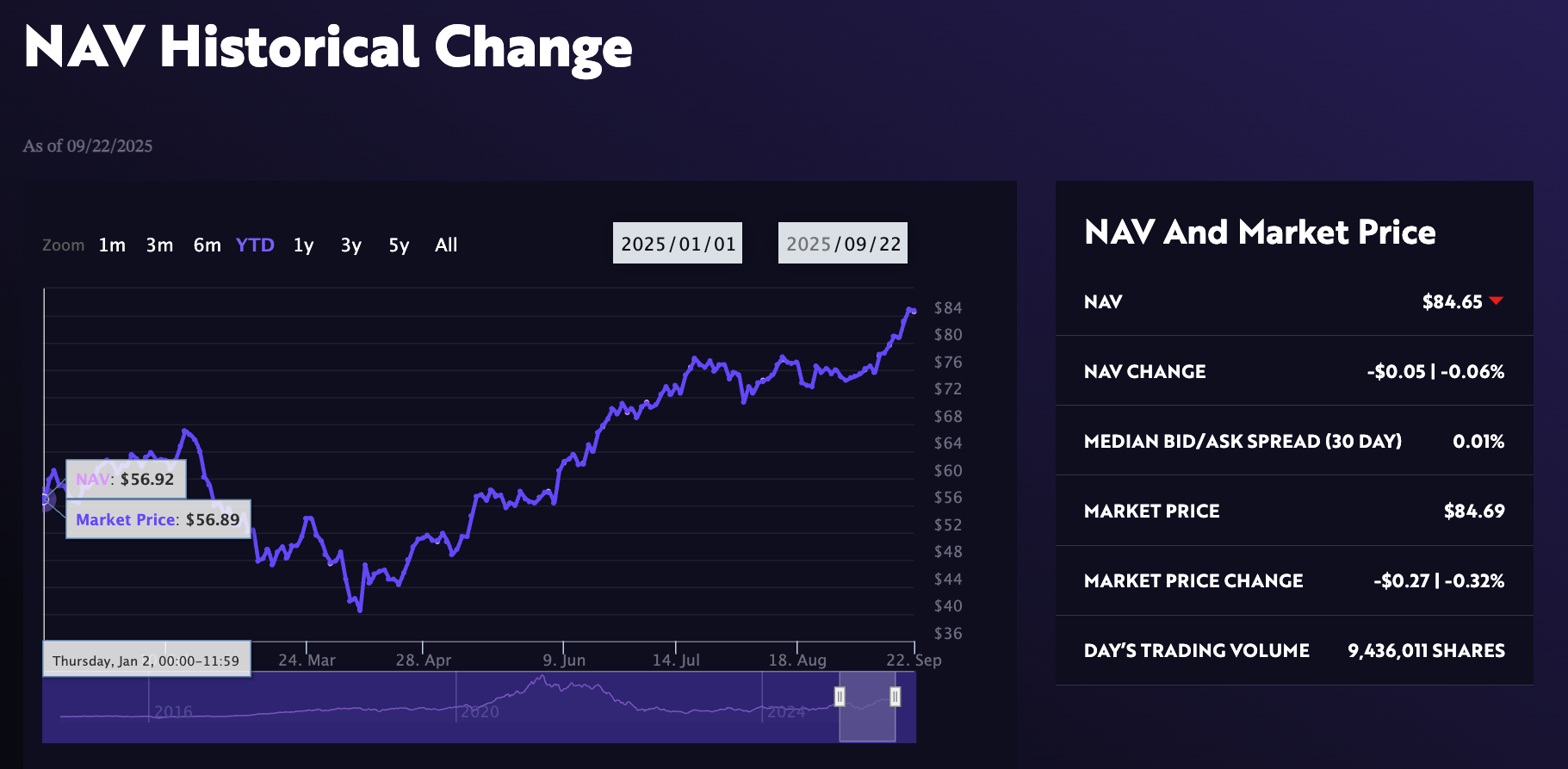
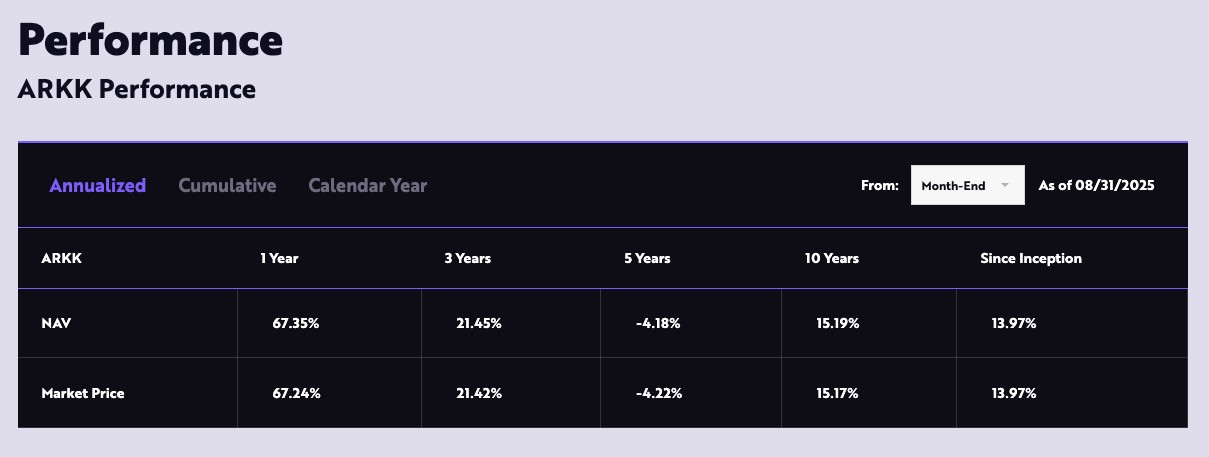
That backdrop makes the Alibaba move all the more interesting. On one hand, it shows Wood sticking to her disruptive-tech playbook. On the other, it may also be part of a broader attempt to refresh Ark’s narrative and demonstrate that it’s not just riding U.S. AI names like Nvidia and Tesla.
My Take
Wood’s re-entry into Alibaba feels less like a broad China endorsement and more like a surgical bet on AI momentum. She’s not buying banks, property developers, or traditional Chinese blue chips — she’s targeting companies that fit Ark’s disruption lens.
For Alibaba and Baidu, the real question is execution: can they translate AI hype into sustainable revenue streams? If they can, Wood may once again be early to a major growth story.
Either way, her return puts Chinese AI players back on the radar for global investors.
#Follow the Money: Where Are the Market Giants Investing#$Baidu Inc.(BIDU)#$Alibaba Group Holding Limited American Depositary Shares each represents eight Ordinary Shares(BABA)