
Who’s buying the battery boom: Is the U.S. going all-in on critical minerals?

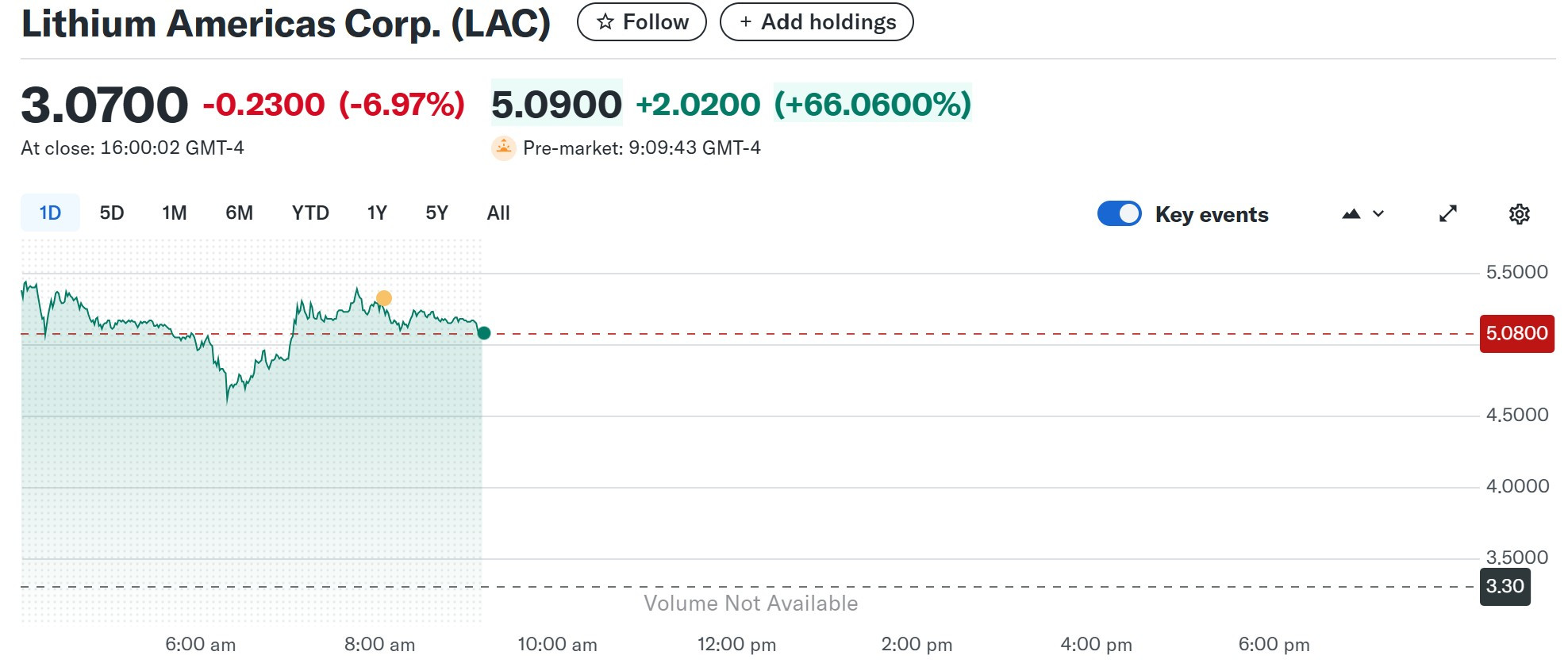
Lithium Americas (LAC) rocketed in premarket trading after reports that the U.S. government is seeking up to a 10% stake in the company tied to a renegotiated $2.26 billion Department of Energy loan for the Thacker Pass project.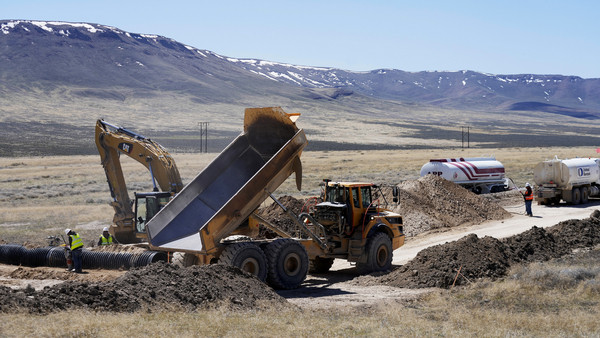
LAC jumped roughly 68% premarket on Sept. 24, after a night session rally above 80% the day before. The market reaction signals that a direct government equity move would materially re-rate the company’s financing risk and perceived project viability.
The Thacker Pass mine — a joint venture with General Motors (LAC 62%, GM 38%) — is slated to begin production in 2028 and is viewed by U.S. officials as a cornerstone for domestic EV battery supply.
With LAC expected to sit among the top global lithium producers by 2027, a government stake would accelerate financing certainty for one of the hemisphere’s largest planned lithium operations.
Key points
- Reported U.S. interest: up to 10% stake in Lithium Americas tied to renegotiating a $2.26bn loan for Thacker Pass.
- Market move: LAC surged ~68% premarket (after a prior night session rally >80%).
- Project timing and scale: Thacker Pass targeting 2028 start; LAC holds 62% of the JV with GM at 38%.
- Policy tools in play: the Department of Energy (DOE) loan, Defense Production Act (DPA), and Inflation Reduction Act (IRA) underpin recent interventions.
- Wider policy context: U.S. aims to reduce reliance on foreign processing, notably China’s dominant refining role across rare earths, nickel and lithium.
- Other notable targets of U.S. capital or support include MP Materials, Ioneer, TechMet (via DFC), Fortune Minerals, Lomiko Metals, Fireweed Metals, and Talon Metals — across rare earths, cobalt, graphite, tungsten and nickel.
Why is the U.S. moving from subsidies to stakes?
The shift from “soft” supports — grants, tax credits and loan guarantees — toward direct equity reflects a strategic judgment: certain critical-minerals projects are too capital intensive and geopolitically sensitive to leave to market forces alone.
Lawful authorities such as the DPA and IRA already provide loans, tax credits and procurement levers; equity stakes give the government greater influence over project direction, capacity timing, and supply-chain policy.
That levered approach also reduces private investor anxiety about financing shortfalls. When a government moves from creditor to part-owner, it signals a willingness to accept project risk in service of national security and domestic manufacturing goals — an attractive de-risk for corporate partners and markets.
Investor implications
A government equity stake changes the investment calculus. For companies like LAC, direct capital from Washington could accelerate permitting and construction, lower financing costs, and materially raise the probability of timely production. That can justify meaningful re-ratings — as markets already demonstrated.
But risks remain. Government ownership can bring policy strings, price protections, or constraints on commercialization and exports. Projects like Thacker Pass face permitting, timeline and community risks — and any sovereign investor will weigh public accountability. Investors should price both the balance-sheet upside of reduced financing risk and the potential for increased public oversight.
Which policy tools are being used and why they matter
The Biden and Trump administrations have both leaned on long-standing tools to shore up critical mineral capacity. The Defense Production Act (DPA) can authorize loans, purchases and equity support in national-security contexts; the Inflation Reduction Act (IRA) provides tax credits and incentives to onshore processing and recycling.
The DOE’s Advanced Technology Vehicles Manufacturing (ATVM) loan program and DOD procurement commitments further anchor demand for domestically produced minerals and processed components.
These instruments together form a multi-pronged industrial policy: demand guarantees, cost sharing, tax incentives and now, in some cases, direct ownership. That mix is intended to shorten the timeline for domestic refining and magnet manufacture, sectors where the U.S. has long lagged.
Who’s already in the mix and where government capital has landed
The U.S. has targeted several nodes across the battery and critical-minerals chain:
Lithium: Lithium Americas is the headline name, driven by Thacker Pass. Ioneer’s Rhyolite Ridge (U.S.) is another notable U.S.-focused asset.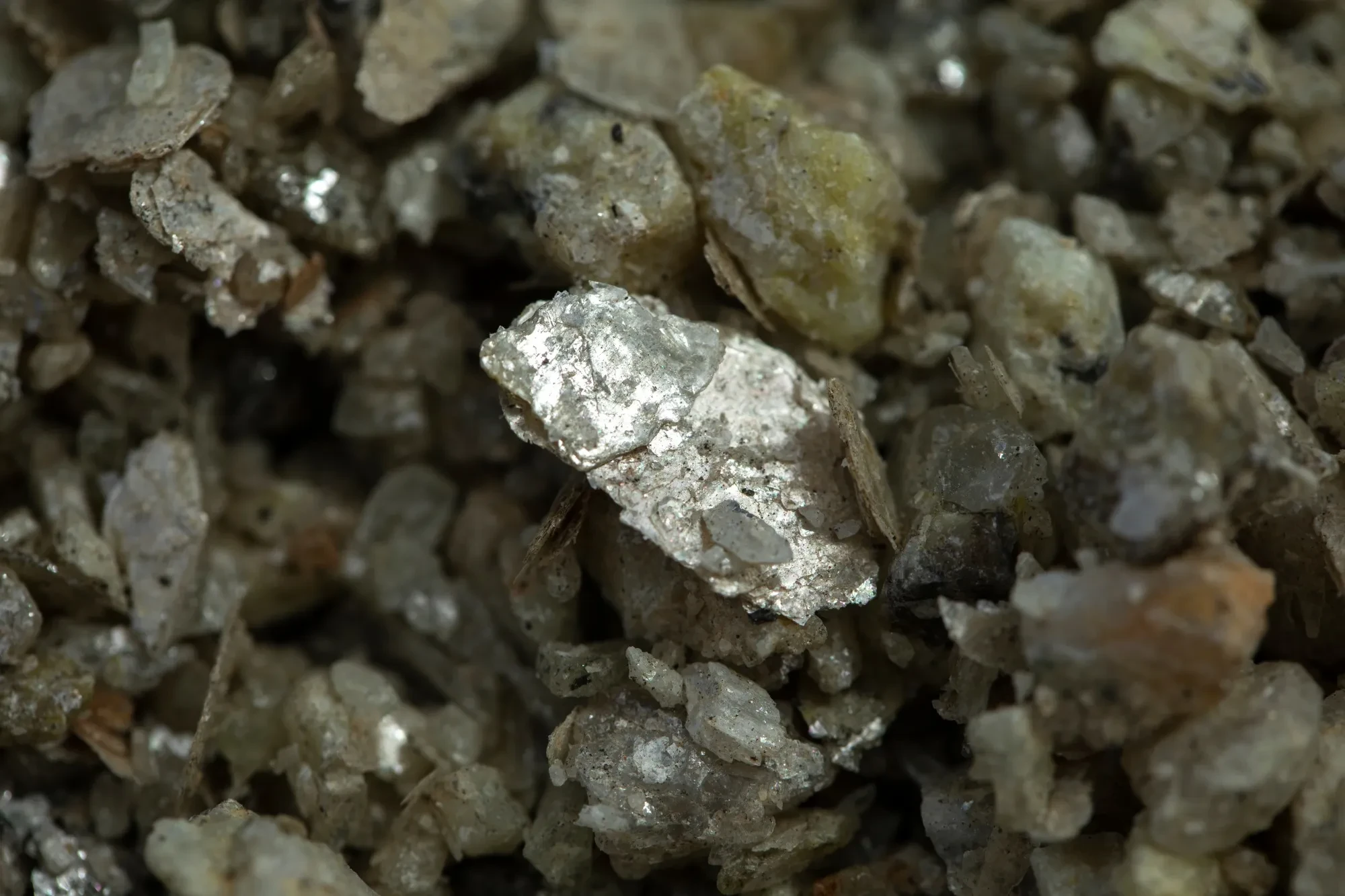
Rare earths and magnets: MP Materials (Mountain Pass) has attracted large DoD financing; a reported $400 million preferred-share subscription in 2025 would make DOD a roughly 15% holder and tie procurement commitments to domestic magnet supply. MP’s path is vital because rare earth refining and magnet production remain concentrated abroad.
Graphite and cobalt: Companies such as Lomiko Metals and Fortune Minerals received DPA-linked support; TechMet (via DFC equity) is backing nickel-cobalt projects in Brazil to diversify sources away from the DRC-centric market.
Tungsten and other metals: Cross-border co-investments (e.g., Fireweed Metals’ Mactung project) and joint financing with allies are part of a strategy to broaden the supplier base.
These interventions show a portfolio approach: finance projects across geology, geography and processing stages to reduce single-point dependencies.
What this means for market structure and geopolitics
Direct U.S. investment signals a reorientation of global mineral politics. The aim is not to replace global markets, but to ensure critical nodes — mining, refining, magnetic material production — exist within allied supply chains. With China controlling large shares of refining capacity, Washington’s stakes are as strategic as they are economic.
For investors, the choice is to view these interventions as risk mitigants for select names and an accelerant for a localized supply chain that could capture IRA incentives and long-term offtake deals. Yet the transition will be capital-intensive and politically fraught; timelines remain multi-year.
Investor checklist: what to watch next
- Official confirmation or filings about any U.S. equity stake in LAC and the final terms of the DOE loan renegotiation.
- Thacker Pass permitting and construction milestones toward a 2028 production start.
- DoD and DOE procurement commitments tied to domestic magnet and battery supply.
- Policy tweaks to DPA/IRA implementation that affect eligibility for loans, tax credits and equity support.
- Comparable moves in other companies named above (MP Materials, Ioneer, TecMet-backed projects), which could create a broader sector rerating.
Bottom line
The LAC episode is a high-visibility test of a broader strategy: use government capital to accelerate a domestic critical-minerals supply chain. Markets cheered the possibility of sovereign backing because it materially reduces project and financing risk. For investors, the moment offers both opportunity and complexity — potential upside from de-risked projects, balanced by new public-policy dynamics and execution risks that will unfold over years.