
Q4 Is Coming: Will U.S. Stocks Deliver Their Seasonal Strength Again?

Shearing sheep
September 25, 2025
GoGPT Summarizes Articles

As September winds down, investors are once again asking whether the so-called “September curse” will give way to brighter days ahead. Bank of America thinks it just might.
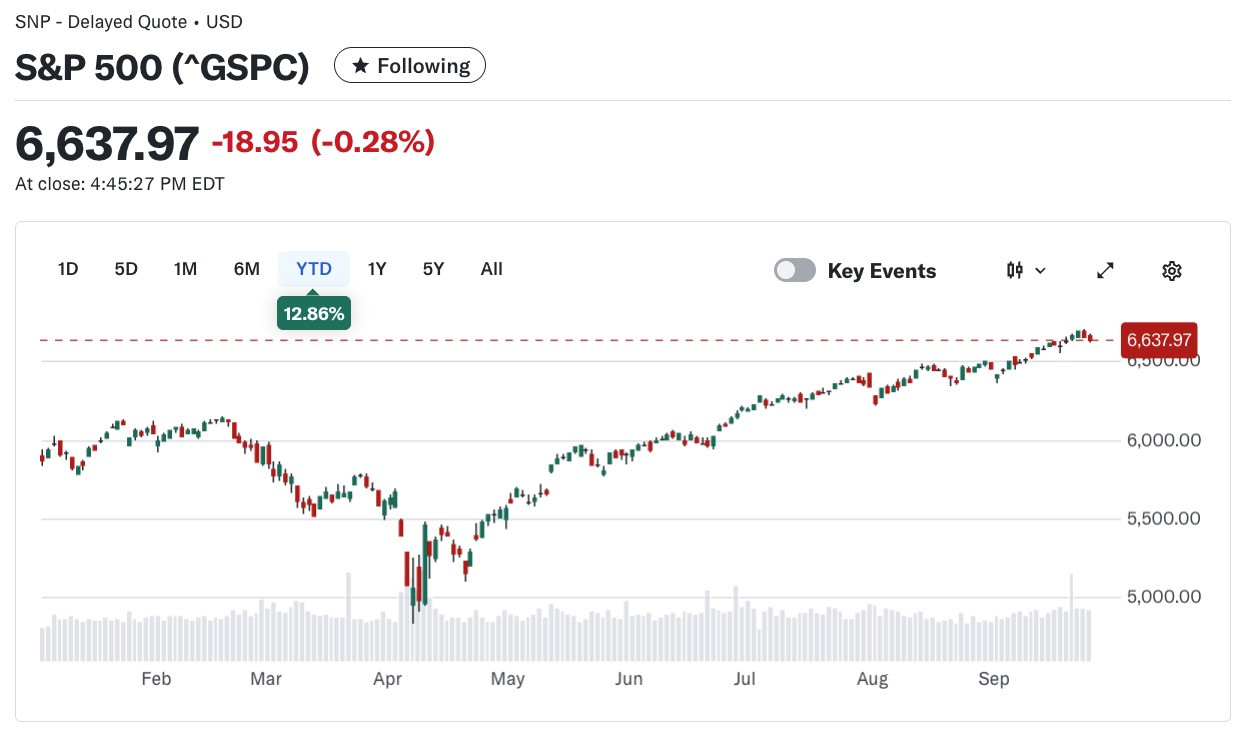
In a report published this week, its strategists reminded clients that the fourth quarter has historically been the strongest stretch of the year for U.S. equities. That seasonal optimism is now colliding with a market still digesting monetary policy shifts, corporate earnings trends, and cross-asset volatility.
Looking back across decades of data, the numbers are striking.
The S&P 500 has delivered an average gain of 2.8% in the final quarter, with gains in 74% of quarters. The Nasdaq 100 has fared even better, with an average return of 6.2% and gains 69% of the time, while small-caps in the Russell 2000 have averaged about 4.6% with positive returns in 76% of quarters.
The pattern within the quarter is also well-documented: October is often uneventful, November tends to bring stronger momentum, and December is when the “Santa rally” typically takes hold. It’s this rhythm that keeps investors hopeful that the year could finish on a high note, even after periods of turbulence.
Sector dynamics play a large role in shaping that seasonal outperformance. Technology stocks stand out as the consistent leaders, posting gains in 80% of fourth quarters with an average lift of more than 6%.
Other cyclical groups—consumer discretionary, industrials, financials, and materials—also tend to ride the wave. The laggards are more predictable too: energy and real estate usually trail, weighed down by weaker demand patterns or less favorable rate environments.
Beyond equities, Bank of America points out that U.S. Treasury yields often rise at the start of October before easing back into December, while commodities show their own cycles—oil prices weakening into late autumn even as precious metals like gold and silver strengthen toward year-end.
Of course, seasonality alone doesn’t make for an investment strategy. It’s more of a backdrop, and one that can be disrupted when the macro environment shifts.
The fourth quarter of 2018 is a good reminder: despite strong historical odds, that year ended with one of the worst December selloffs in decades.
This time around, the optimism rests on a few assumptions: that corporate earnings will hold up, that the Federal Reserve’s recent rate cuts will support growth without reigniting inflation, and that investor flows will broaden beyond the mega-cap leaders that have dominated recent rallies.
Already, there are signs of rotation, with some institutional money moving from large-caps into small-caps, hoping to catch a broader rally as borrowing costs ease.
Still, risks are not hard to find. Valuations remain elevated, especially in the most crowded corners of the tech trade, leaving little room for disappointment.
If yields were to spike unexpectedly or if earnings guidance falters, the seasonal playbook could quickly be rewritten. Geopolitical tensions and fiscal debates in Washington also hover in the background, adding potential volatility as the year winds down.
Yet despite the caveats, history does not lie entirely. The final quarter of the year has a way of rewarding patience, whether through steady gains or through sharp year-end bursts that catch under-invested traders off guard.
For long-term investors, that seasonal tailwind isn’t a guarantee, but it is a reminder that the market often writes its best chapters in the last act of the year.
#Breaking Macro Events: Market Impact & Analysis