
America’s Growth Surprise: Can Strong GDP Outrun Inflation and a Divided Fed?

The U.S. economy delivered its fastest growth in nearly two years, with second-quarter GDP revised up to 3.8% and consumer spending surging. But the celebration may be short-lived: inflation is proving sticky, and the Federal Reserve is openly divided over how far and how fast interest rates should fall.
Key Takeaways
- U.S. Q2 GDP growth revised to 3.8%, beating 3.3% expectations.
- Consumer spending revised higher to 2.5%, up from 1.6%.
- Core PCE inflation for Q2 revised to 2.6%, above prior estimates.
- Jobless claims fell to 218,000, lowest since mid-July.
- Fed Governor Stephen Miran calls for 150–200 bps cuts, diverging from Powell’s cautious line.
- Markets turned cautious: Nasdaq 100 slipped 0.7%, dollar and Treasury yields rose.
GDP Shocks Higher: What’s Driving the Upswing?
The Bureau of Economic Analysis delivered a surprise on Thursday: second-quarter GDP accelerated to 3.8%, outpacing both forecasts and previous readings.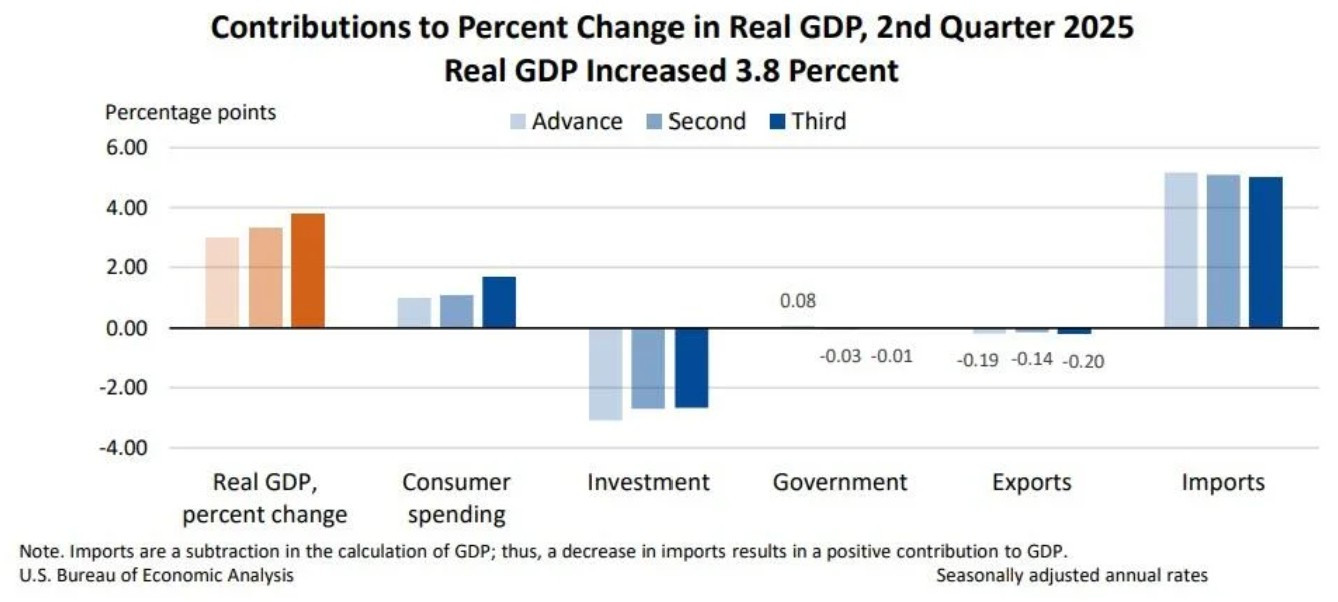
The upgrade was powered by stronger-than-expected consumer spending and robust business investment. Household consumption, long the U.S. economy’s engine, was revised up sharply to 2.5%, from 1.6%.
Businesses also flexed confidence. Nonresidential fixed investment grew 7.3%, above the prior 5.7%, reflecting appetite for equipment and structures. Residential investment was weaker, contracting 5.1%.
Can This Momentum Last?
Optimism abounds for the current quarter. The Atlanta Fed’s GDPNow model projects 3.3% growth for Q3.
But economists see headwinds emerging in Q4. A softer labor market could erode consumer resilience, and higher borrowing costs may eventually dampen investment appetite.
Longer-term, analysts expect growth to fade below 2%, constrained by demographic shifts, Trump-era tax policy sunsets, and only modest support from lower rates.
Inflation’s Sting: Is the Fed Really Free to Cut?
Buried in the GDP revisions was a detail investors cannot ignore: inflation was hotter than thought.
The Fed’s preferred gauge, core PCE, was revised up to 2.6% annualized in Q2. Economists expect August’s data to show nearly 3% year-over-year gains, underscoring that inflation pressures remain stubborn.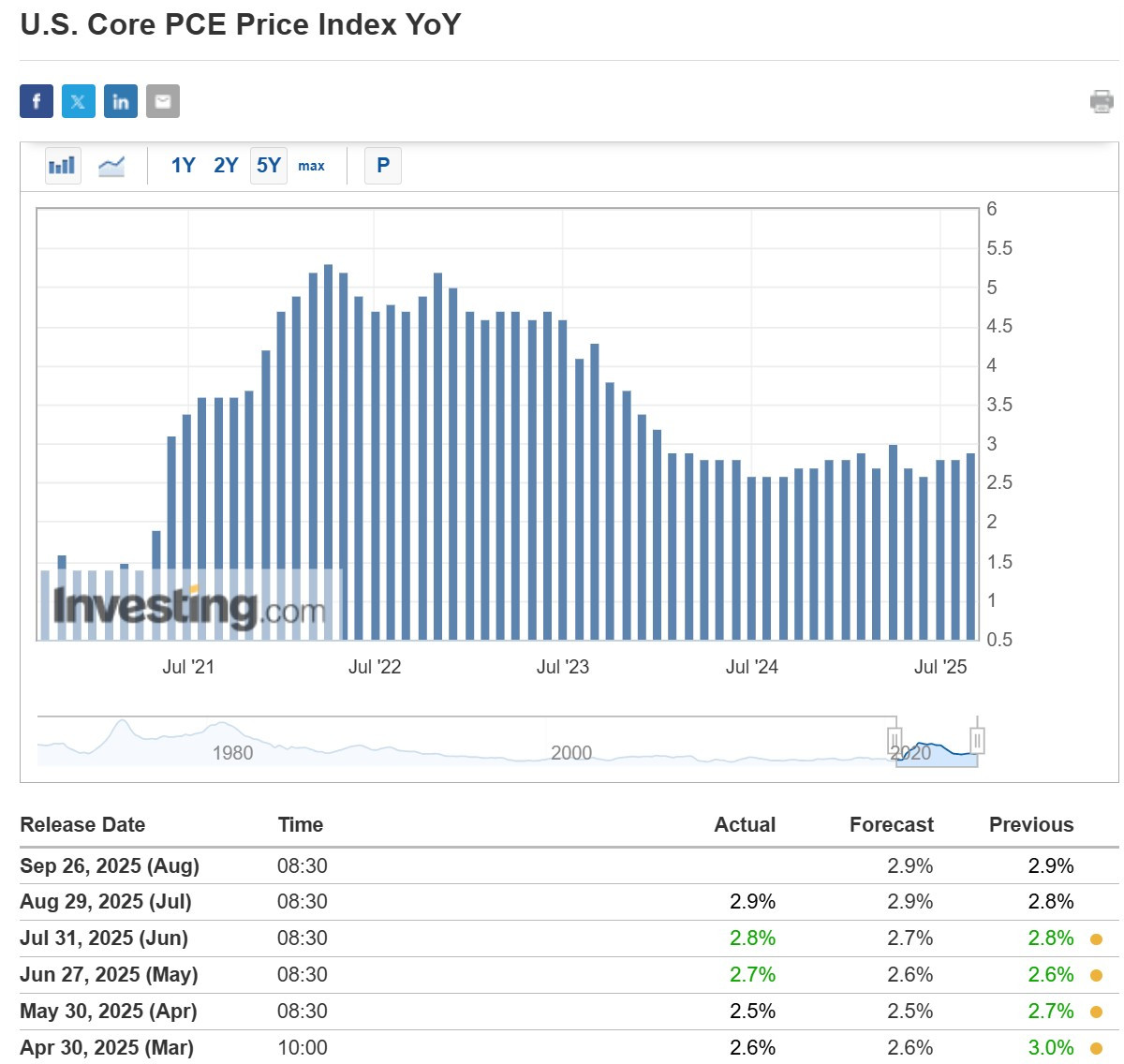
That complicates the Fed’s next steps. Although the central bank cut rates by 25 bps last week, higher inflation risks make further easing less certain.
Jobless Claims Fall: Does the Labor Market Still Have Legs?
Fresh weekly data added another twist. Initial jobless claims dropped to 218,000, the lowest since July 19.
The decline points to resilience in hiring, despite scattered signs of cooling. Markets interpreted the improvement as reducing the urgency for deeper Fed cuts—strengthening the case of those urging caution.
A House Divided: Can the Fed Find a Middle Ground?
The economic backdrop has widened fault lines inside the Fed.
Stephen Miran, a Trump-appointed governor, blasted the current policy stance as overly restrictive. With rates at 4.0%–4.25%, he argues the Fed is strangling growth.
In his view, the neutral rate—the level that neither stimulates nor restrains—is far lower, partly because immigration slowdowns reduce population-driven demand.
Miran’s Bold Prescription: 150–200 bps of Cuts?
In interviews, Miran has called for an aggressive sequence of 50 bp cuts, amounting to as much as 200 bp in total.
He argues that acting quickly would align policy with economic reality, allowing the Fed to then slow down. Prolonged caution, he says, risks leaving the economy exposed to sharper downturns.
His colleagues, led by Chair Jerome Powell, are less convinced. Powell has warned that tariffs and supply pressures could reaccelerate inflation, making caution the safer course.
Immigration, AI, and Growth: A Different Lens
Miran’s framework goes beyond interest rates. He emphasizes immigration as a structural force that lowers neutral rates: fewer new workers means less upward pressure on demand and wages.
He also highlights AI as a long-term driver of productivity and growth. Yet he cautions against overestimating its immediate impact, urging humility in forecasting.
On policy, he supports lighter regulation in energy and finance, arguing such moves could lift potential growth toward 3%.
Markets React: Optimism Fades Into Caution
Financial markets turned choppy after the data.
- Nasdaq 100 futures slid 0.7%, as traders digested the inflation surprise.
- The U.S. dollar jumped 20 points to 98.15, supported by higher rate expectations.
- Gold fell to $3,737/oz, pressured by stronger yields.
- 10-year Treasury yields climbed to 4.18%.
The reaction underscored how inflation revisions, even modest ones, can sway the path of both monetary policy and asset prices.
The Big Question: Is Policy Moving Too Slow or Too Fast?
The Fed now faces a dilemma.
On one side, stronger growth and falling jobless claims suggest the economy can withstand higher-for-longer rates. On the other, revised inflation data argue against aggressive easing.
Miran’s call for bold action reflects frustration with what he sees as slow-footed policymaking. But Powell’s measured approach points to deep institutional caution.
For markets, the stakes are high: every basis point could shift the trajectory of growth, inflation, and valuations.
Looking Ahead: What’s the Path Into 2026?
Most economists expect growth to cool below 2% in coming years. Tax expirations, demographic headwinds, and a less favorable rate environment will all weigh.
Still, policy choices matter. If Miran’s deregulatory and rate-cut agenda gains traction, potential growth could exceed expectations. If Powell’s caution prevails, inflation stability may come at the cost of momentum.
Either way, the next chapters of U.S. economic policy will be written against the backdrop of a still-uncertain balance: strong but slowing growth, sticky but moderating inflation, and a deeply divided Fed.