
$16 Billion Deal: Blackstone and TPG Team Up Again to Target Hologic

Recent reports from multiple foreign media outlets indicate that private equity giants Blackstone Group and TPG Capital have launched a second round of acquisition talks for Hologic, a global leader in women’s health diagnostics.

The deal could be valued at up to $16 billion, potentially making it one of the largest privatization transactions in the global healthcare sector in 2025.
In the PE world, Blackstone and TPG are old partners. Last year, they jointly bid $13-14 billion for Bausch + Lomb but ultimately backed out due to the complexity of the spinoff.
$16 Billion Offer: Blackstone and TPG Won’t Give Up
This isn’t the first time Blackstone and TPG have made a move for Hologic.
Back in May, the two PE giants submitted a joint acquisition offer of $70-72 per share, a 29-33% premium over Hologic’s stock price at the time. The offer was firmly rejected by Hologic’s board.
Now, with Hologic’s stock price pulling back, a CEO compensation clause tied to a “change of control” kicking in, and a valuation dip in the global diagnostics industry, Blackstone and TPG are back. They’ve restarted due diligence, aiming to pull off one of the year’s biggest healthcare acquisitions.
Based on Hologic’s closing price on September 17, a $16 billion valuation translates to an enterprise value/EBITDA multiple of ~14.5x, slightly above the medical device industry average of 12-13x. But given Hologic’s leadership in breast imaging and molecular diagnostics, along with its stable cash flow, the premium is seen as “reasonable and manageable.”
While Hologic rejected the May offer, the market speculates that the board’s stance may be softening due to key changes.
First, according to Hologic’s 2025 SEC proxy filing, a “change of control” would trigger over $40 million in stock and cash compensation for CEO Steve MacMillan.
Second, as of mid-September 2025, Hologic’s stock has fallen ~16.8% over the past 12 months, shrinking its market cap to $14.7 billion, well below its 2024 peak.
Third, investor pressure is mounting. Some institutional investors believe Hologic’s current valuation doesn’t fully reflect its technology platform’s worth, and privatization could offer more flexibility for transformation and acquisitions.
Sources say the parties have resumed due diligence, but a deal “won’t close within a month” and could still fall apart. Still, for Blackstone and TPG, this is a prime “deal negotiation” window.
Global Leader in Women’s Health, Top Three in Multiple Fields
Public records show Hologic, founded in 1985 and headquartered in Massachusetts, initially focused on DNA probe diagnostics.
A milestone came when Hologic gained FDA approval for DNA probes in clinical microbial testing, making it one of the few companies with molecular diagnostic capabilities at the time.
In 2003, Hologic launched the Selenia digital mammography system, entering the breast cancer screening market.
Since then, Hologic has heavily invested in breast health, developing the world’s first 3D digital mammography system, which now holds over 70% market share in the U.S. and over 50% globally.
Over the past decade, Hologic expanded through acquisitions, forming four core business segments and ranking top three globally in several areas:
- Breast Health: Hologic’s 3D mammography and contrast-enhanced mammography (CEM) technologies lead globally.
- Molecular Diagnostics: Its Panther system, HPV, and COVID-19 testing rank in the global top three.
- Gynecological Surgery: NovaSure endometrial ablation and MyoSure fibroid removal technologies lead in the U.S.
- Skeletal Health: Horizon DXA bone density scanners rank in the global top three.
Hologic’s financials are solid, with $1.12 billion in free cash flow in fiscal 2023 and a net debt/EBITDA ratio below 2.0, offering strong capital flexibility. In 2024, revenue reached $4.03 billion, with breast health and molecular diagnostics accounting for over 65%.
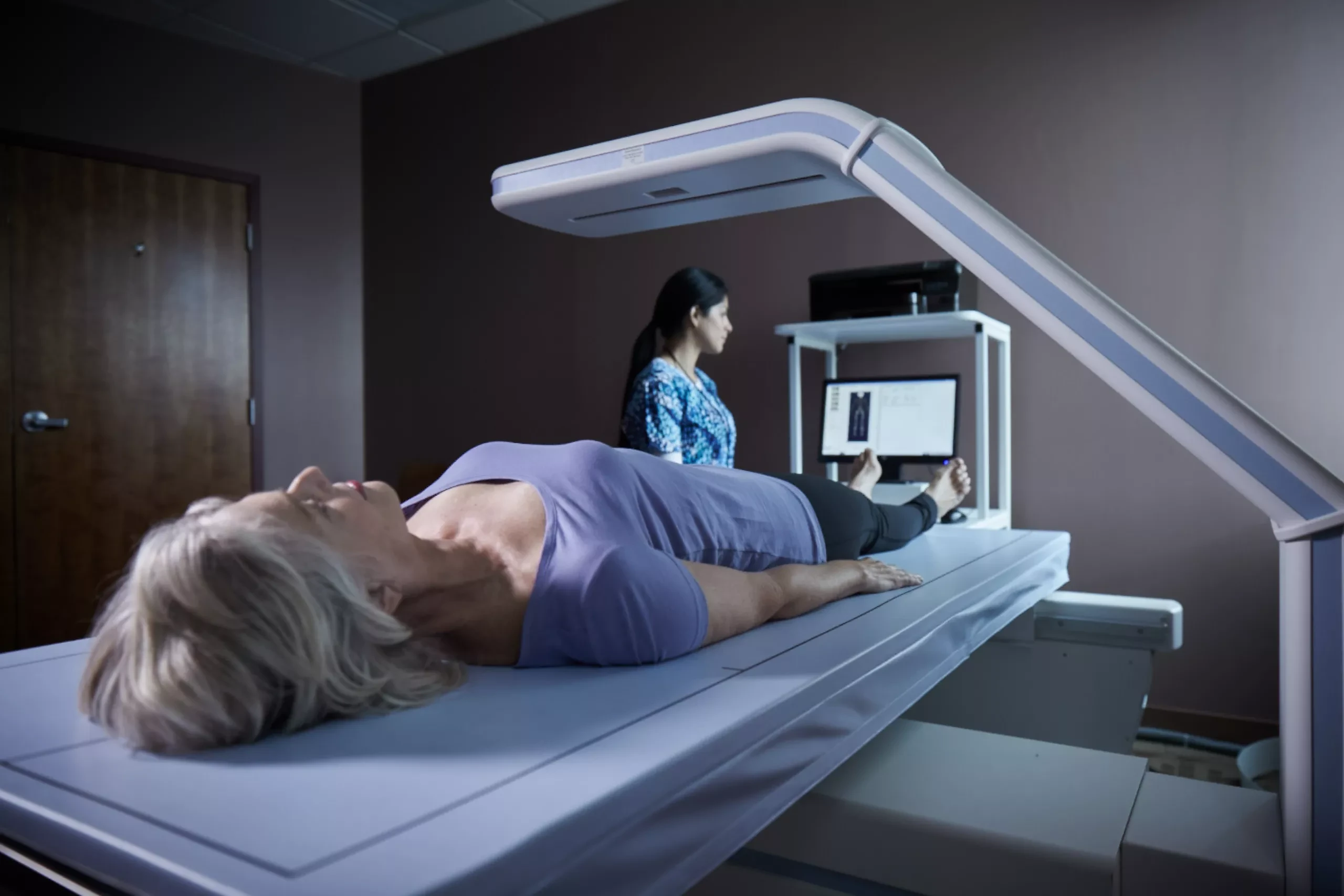
Hologic has been listed on Nasdaq since 1990, marking 35 years.
Separately, Blackstone manages over $50 billion in life sciences assets and has a new life sciences fund targeting over $5 billion, with $1.6 billion already committed, giving it ample firepower for deals.