
Can Man Group Revive Its Hedge-Fund Powerhouse?

Man Group’s computer-driven hedge-fund engine, AHL, has not collapsed — its models still run — but three years of weak returns from trend-following strategies have drained performance fees, knocked the share price down roughly 36% over the past year, and forced a stark strategic choice: double down on rebuilding hedge-fund performance or pivot further into slower-growing businesses that will not replace AHL’s lost profits.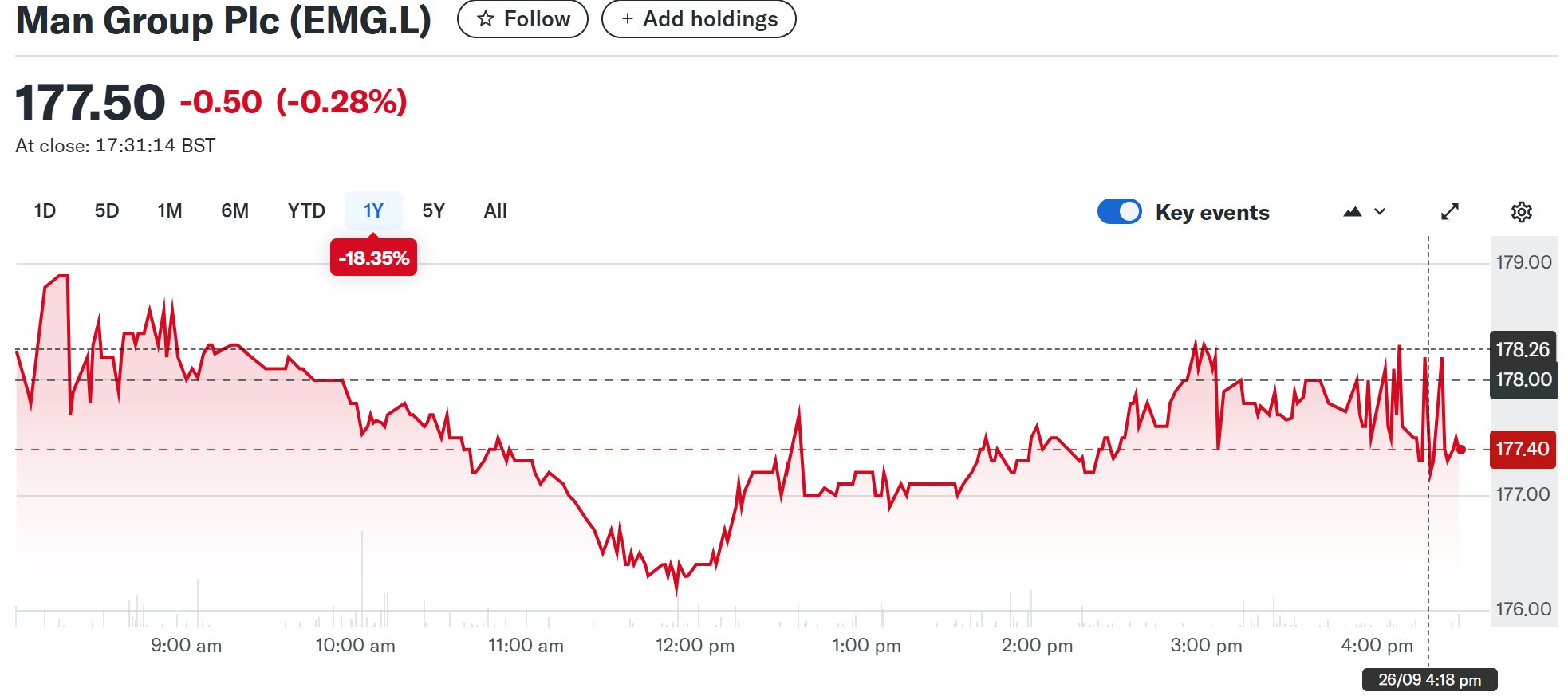
Key Points
- Shares down ~36% over the past year as AHL trend strategies underperform.
- Internal review: “nothing is broken”; slump blamed on an unfavourable trading environment.
- AHL remains the profit engine (historical performance fees materially larger than earnings from diversified units).
- Core tensions: dividend/buyback expectations vs. need to reinvest in quants, talent and trading capability.
What happened to AHL’s edge — and is “nothing is broken” enough?
AHL pioneered systematic trend-following decades ago and long powered Man’s performance-fee engine when markets trended.
Since about 2021, markets have become noisier and more episodic — policy shocks, geopolitical whipsaws and sporadic volatility have reduced the number of sustained trends to capture. Quants insist models and systems are intact and that the slump reflects environment rather than structural failure.
That conclusion calms immediate technical fears, but it does not solve the commercial reality: hedge funds are revenue engines. When the strategy’s edge evaporates, fee generation collapses, investor confidence falls, and a listed manager faces urgent capital-allocation dilemmas.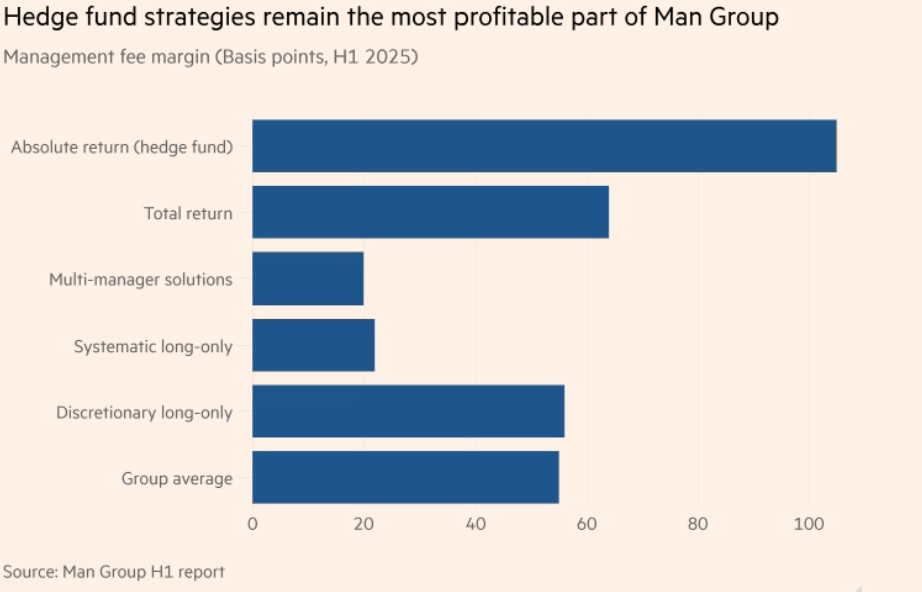
Can diversification replace AHL — and how should Man balance dividends with reinvestment?
Man has steadily diversified into long-only quant (Numeric), real assets (Aalto) and private credit (Varagon, Bardin Hill). These businesses provide steadier, more predictable income but have not produced AHL-level margins or performance fees.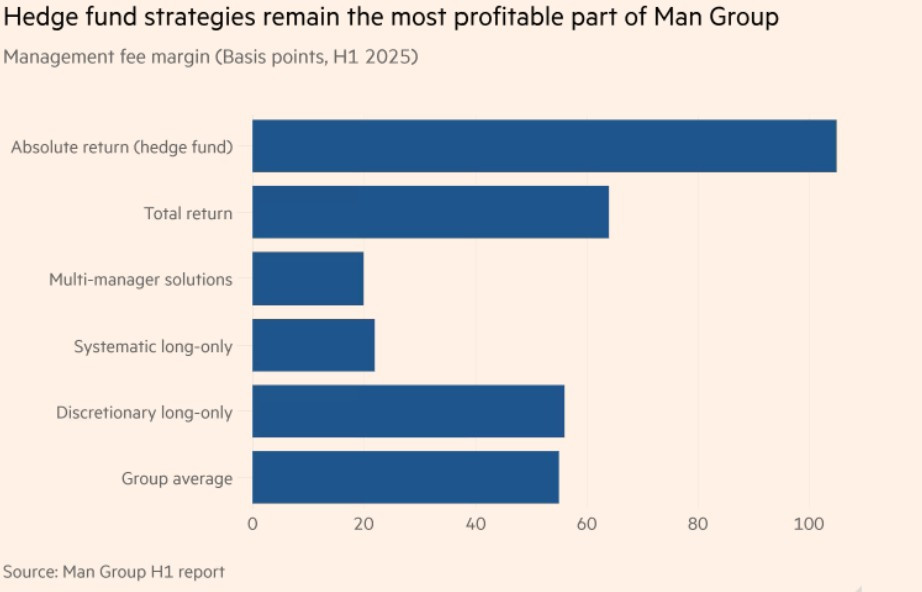 Man 1783’s $2.5bn gathering since 2020 trails newer rivals and underlines how slow the diversification payoff has been.
That gap feeds a core conflict: public shareholders prize immediate cash returns — buybacks and a dividend yield near 7% — while fund investors want the firm to reinvest in talent, systems and trading capability.
Executives fear that cutting payouts could spook the market and depress the share price; yet without meaningful reinvestment in hedge-fund capabilities, institutional redemptions remain a real risk.
In short: diversification smooths earnings but does not currently substitute for AHL’s historic profit engine, and capital allocation will determine whether Man bets on revival or steadying income.
Can Man win the quant talent war?
AHL’s revival hinges on people. Quant headcount is at a record and voluntary turnover sits relatively low, yet insiders acknowledge a pay gap with U.S. giants such as Citadel and Millennium. Several senior investing chiefs have left in the past year and non-compete terms were tightened — a tacit sign of talent fragility.
Management promoted Greg Bond to CIO in July to sharpen investment focus, but restoring world-class hedge-fund capability likely requires more aggressive compensation, targeted star hires and a culture that retains top performers — moves that could pressure near-term cash returns.
What do the numbers imply — and which strategic path should Man take?
AHL Alpha’s modest recovery (3% last year) converted into only ~$310m of fees; several core strategies remained negative into 2025 and the strategy was down YTD before a partial bounce.
Citi and others warn that continued poor performance risks large institutional redemptions. The share price staged about a 15% short-lived bounce as AHL clawed back losses, but market confidence is conditional on consistent improvement.
Man faces three strategic paths:
For a listed manager this is a structural tension: shareholder cash returns versus the reinvestment hedge funds require. AHL — not the ancillary businesses — remains Man Group’s defining profit engine. The quants say “nothing is broken.” The harder question is whether the market will accept that answer while waiting for the good years to return.