
Intel Reportedly in Talks with AMD for Foundry Partnership to Break Through Technological Lag

On Wednesday (October 1, 2025), news emerged during U.S. trading that Intel is in early-stage talks with AMD (Advanced Micro Devices) to explore having AMD become a client of its foundry services.
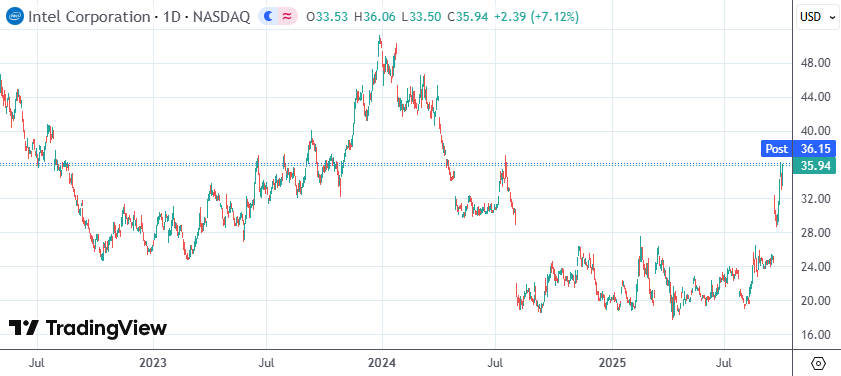
If realized, this development would be seen as another vote of confidence in the struggling chipmaker Intel. Boosted by the news, Intel’s stock surged over 7% by the close, reaching its highest level since April 2024.
Over the past seven weeks, Intel has secured investment and public support from the White House, Nvidia, and SoftBank, and is reportedly in discussions with companies like Apple for potential backing.
Sources emphasized that there’s no guarantee a deal with AMD will materialize. Currently, AMD’s chips are primarily manufactured by TSMC, and Intel lacks the technology to produce AMD’s most advanced, high-margin chips.
It remains unclear how much production AMD would shift to Intel if a deal is reached, or whether the agreement would involve direct investment from AMD (similar to other companies’ deals with Intel).
Previous reports indicated Intel has been discussing similar partnerships with potential clients and investors for months. The White House is actively supporting Intel, viewing it as critical to maintaining U.S. leadership in chip manufacturing.
Analysts say securing a major client like AMD would enable Intel’s foundry division to confidently invest in advancing its manufacturing technology and signal to other chipmakers that Intel can handle their business.
Once the world’s largest semiconductor company, Intel is now grappling with challenges, with its foundry business posting sustained losses in recent years, weighing on overall operations.
In August, the U.S. government agreed to acquire a 9.9% stake in Intel for approximately $8.9 billion, becoming one of its largest shareholders, with part of the funding from U.S. CHIPS Act subsidies.
Under the Trump administration’s preferences, several major U.S. companies have shifted some production (mainly lower-end chips) to Intel’s U.S. foundries.