
Bitcoin Breaks Records Again What Smart Investors Should Do Now

Bitcoin has just smashed through $125,700, setting a new all-time high — earlier and more dramatically than most on Wall Street expected.
But the real story isn’t just about price action. It’s about what this surge says about global trust, liquidity, and the future of safe-haven investing.
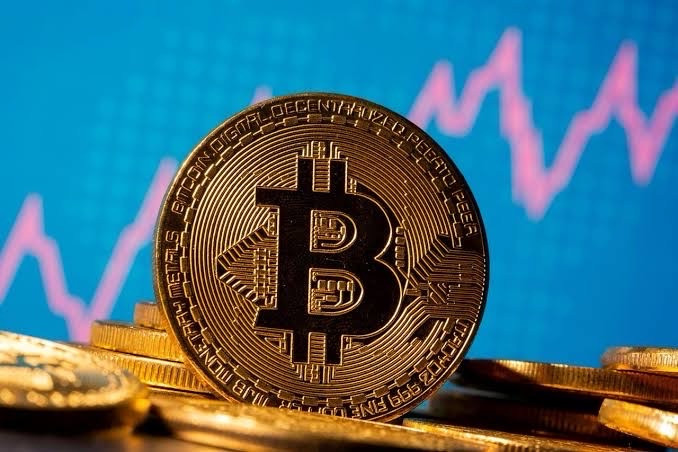
As capital around the world reshuffles in search of stability, Bitcoin’s rise is forcing investors to rethink where value — and safety — really lie.
The Return of the Safe-Haven Trade
If one word defines today’s global economy, it’s uncertainty.
The U.S. government is again flirting with a shutdown, fiscal negotiations are stuck, Europe is slowing, Japan’s yen keeps sliding, and geopolitical risks refuse to calm down.
Traditionally, gold would be the natural refuge in times like this.
Yet this time, gold and Bitcoin are rising together. Gold touched $3,876 per ounce, while Bitcoin broke all records.

That’s not coincidence—it’s evolution.
Gold remains a classic store of value, but it’s slow, hard to move, and heavily regulated.
Bitcoin, on the other hand, is borderless, decentralized, and instantly tradable—a perfect fit for a fragmented, digital era where investors want to hedge not just against inflation, but against systemic fragility itself.
Liquidity Is Quietly Repricing Every Asset
To call this only a “safe-haven rally” misses the deeper driver.
The real fuel is a global repricing of liquidity.
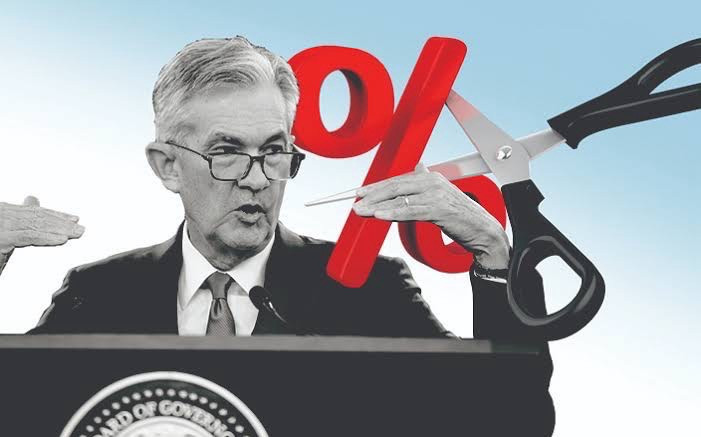
The Federal Reserve may still be holding rates high, but the market is already betting that by year-end or early next year, rate cuts will return to support a weakening economy and ballooning fiscal deficit.
Meanwhile, U.S. debt has crossed $35 trillion, and the cost of servicing it is climbing fast.
That leaves policymakers little choice but to inflate the debt away through easier money.
Capital reacts instinctively to that setup.
Money is flowing out of bonds and cash and into scarce assets—gold, Bitcoin, and select commodities.
That’s why Bitcoin ETFs like BlackRock’s IBIT and ProShares’ BITO continue to see strong inflows.
In a world of high debt and low growth, Bitcoin isn’t just a speculative asset—it’s becoming a beneficiary of monetary regime shifts.
The Migration of Trust from Dollars to Code
For much of the last decade, Bitcoin was dismissed as a speculative toy.
But the narrative is shifting fast.
Bitcoin now trades more like a barometer of institutional trust.
When government debt swells, monetary policy flips back and forth, and fiscal discipline erodes, markets begin to seek value anchors that don’t rely on government credibility.

That mirrors the gold bull run of the 2010s—only this time, the safe-haven is code, not metal.
For institutional investors, Bitcoin’s appeal lies in its non-sovereign nature.
It belongs to no government, depends on no nation’s solvency, and in a politically polarized world, that independence has become a rare and valuable feature.
This Is Not a Price Cycle but a Structural Turn
I don’t see this new high as another boom-bust episode.
It looks more like a structural turning point—the moment Bitcoin begins to shift from a speculative asset to a systemic one.
Three things support this view:
1. Institutional integration is accelerating.
With the SEC’s approval of Bitcoin ETFs, the asset has officially entered the mainstream portfolio mix.
2. Geopolitics and fiscal instability are turning “de-dollarization” from a theory into a multi-year investment theme.
3. Technology is maturing.
Layer 2 networks, payment channels, and custody solutions are expanding Bitcoin’s real-world utility beyond just trading.
Of course, risks remain—policy uncertainty, speculative excess, and algorithm-driven volatility can still spark sharp corrections.
But the broader shift is undeniable: Bitcoin is evolving from an asset class into an institutional option.
Investment Outlook Finding Balance in a New Cycle
At $125,700, Bitcoin’s rise signals more than a milestone—it’s a wake-up call that global capital is rewriting its hierarchy of trust.
In my view, we’re entering a new era where safe havens are no longer just gold or dollars, but algorithms and scarcity.
That said, chasing euphoria is never a good investment strategy.
Here’s how I’d approach the next stage:
Don’t chase highs; scale in.
Volatility will be brutal after record peaks. Institutional and long-term investors should consider gradual accumulation via vehicles like IBIT, GBTC, or regulated exchanges, using time to smooth out price risk.
Focus on the Bitcoin ecosystem, not just the coin.
The next growth wave may come from the infrastructure layer—payment networks, custody providers, Layer 2 scaling, and even intersections with AI and DeFi that unlock new utility.
Stay diversified and liquid.
Gold, long-term Treasuries, and select commodities remain valuable complements. Cross-asset diversification is essential in a world built on uncertainty.
Bitcoin’s long-term case is solid—but its short-term swings can be ruthless.
As institutional flows deepen, pricing will get smarter, but corrections will also become more complex and fast.
True investment wisdom isn’t about predicting the next surge.
It’s about understanding the structural shift underneath it.
Over the next decade, Bitcoin may evolve from an asset into a foundational variable in the global financial order.
And for investors, the real challenge isn’t catching the wave—it’s building a position strong enough to stay on it.