
$50 Billion, "Richest Consortium Ever" Snaps Up a Gaming Giant

If you’re a gamer, you’ve definitely heard of EA.
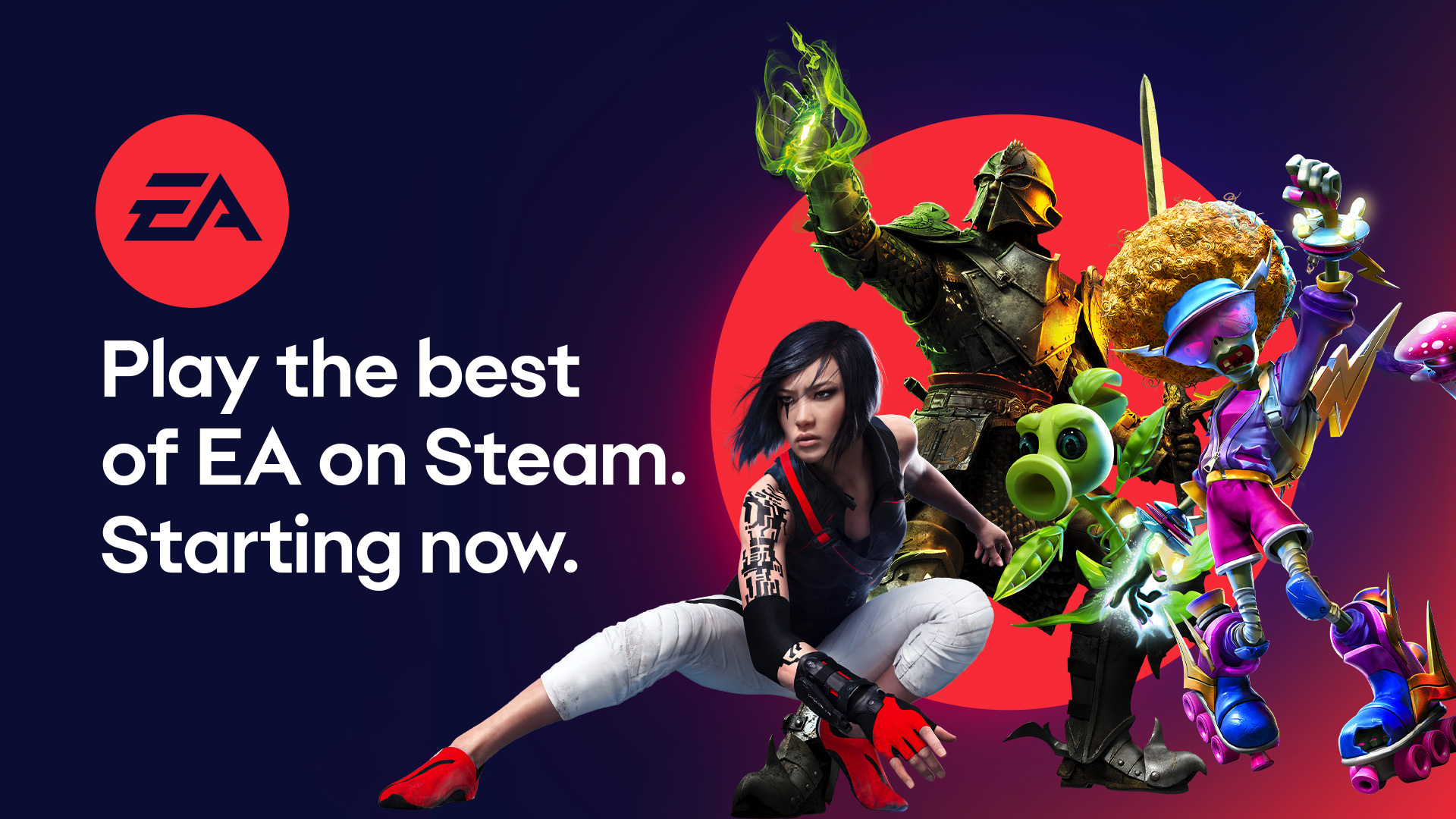
Founded in 1982, Electronic Arts is a legendary name in global video game development and publishing. Recently, this gaming titan made headlines with news of a potential acquisition.
According to The Wall Street Journal, EA was reportedly in advanced talks for a $50 billion privatization deal, with an announcement expected as early as the following week. By September 29, the deal was finalized: EA agreed to be acquired for $55 billion.
This marks the largest all-cash privatization deal in history. EA stated that the transaction will help accelerate its innovation and growth, shaping the future of the entertainment industry.
Behind this massive deal is a consortium of top-tier international investment firms. The key players include Silver Lake, a U.S. private equity firm focused on tech investments; Saudi Arabia’s Public Investment Fund (PIF), which has been highly active in global markets; and Affinity Partners, founded by Jared Kushner, son-in-law of U.S. President Trump.
Under the deal’s terms, the consortium will acquire 100% of EA’s shares, with PIF rolling over its existing 9.9% stake. EA shareholders will receive $210 per share in cash, a 25% premium over the unaffected stock price of $168.32. The deal, approved by EA’s board, is expected to close in the first quarter of fiscal 2027, when EA’s stock will delist from public markets.
Following the news, EA’s stock surged nearly 15% before the close, ending at $193.35—a record high—pushing its market cap from ~$43 billion to ~$48 billion.
As the developer of iconic sports games, EA’s future moves are closely watched by the gaming industry. The outcome of this privatization will soon reveal itself.
A $55 Billion Acquisition
The staggering $55 billion reflects the consortium’s precise valuation of EA’s unique position in the gaming industry and their long-term strategic bet.
Despite facing slower industry growth post-pandemic, with its latest quarterly earnings showing near-zero year-over-year growth, EA boasts over 700 million user accounts and blockbuster IPs like The Sims, Madden NFL, EA Sports FC, and Battlefield. These form an irreplaceable core asset.
EA’s annual sports game series, dubbed the gaming industry’s “money printer,” delivers steady cash flow, generating $7.4 billion in revenue last fiscal year with a 79.14% gross margin—making it a prime target for a leveraged buyout.
The consortium’s makeup reveals the deal’s strategic intent. Silver Lake, a private equity giant, has long targeted tech and entertainment, recently privatizing UFC parent company Endeavor, signaling confidence in gaming’s long-term value.
Saudi Arabia’s PIF, one of the world’s largest sovereign wealth funds, has aggressively invested in gaming, including a $3.5 billion acquisition of Pokémon Go developer via its Savvy Games Group and a 2022 plan to invest $13 billion in major gaming deals.
This aligns with Saudi’s “Vision 2030” to diversify from oil into knowledge-based economies. Affinity Partners, backed by Middle Eastern investors, adds a layer of geopolitical and financial complexity to the deal.
The consortium’s timing capitalizes on a pivotal moment in EA’s transformation. The gaming industry is shifting from traditional one-time purchases to live-service models, with EA already deriving ~75% of its net revenue from live-service games.
As a public company, EA faces Wall Street’s relentless scrutiny of quarterly results, which clashes with the long-term investment needed for transformation. Privatization will free EA from these short-term pressures, giving it room to adjust its business model—especially against competitors like Roblox and Fortnite with their free-to-play models.
The leveraged buyout structure reflects the consortium’s confidence in EA’s cash flow. Sources say JPMorgan has lined up over $20 billion in financing and is assembling debt orders. This debt-heavy deal hinges on EA’s stable cash flow to cover repayments.
An insider remarked, “This is the perfect time to strike. The market’s at a high, and demand for quality assets is huge.” If completed, the deal will surpass the 2007 $45 billion TXU privatization, setting a new Wall Street leveraged buyout record.
The consortium also sees EA’s potential to leverage privatization for tech transformation. With generative AI rising, which could lower the multi-hundred-million-dollar costs of game development, a privatized EA can invest freely in AI to cut costs and boost content efficiency—potentially a game-changer.
EA’s shift to long-term live-service games aligns with the consortium’s long-term investment philosophy, prioritizing strategic control over short-term liquidity.
The market reacted swiftly and positively, with EA’s stock jumping 15% to $192.83 after the news, up over 30% in 2025. This reflects both expectations of the acquisition premium and broader confidence in gaming industry consolidation.
Nearly two years after Microsoft’s $75 billion acquisition of Activision Blizzard, the gaming industry’s consolidation trend is intensifying, with capital fiercely chasing premium content IPs.
Gaming is no longer just about making games—it’s a battlefield for capital.
If EA delists, both major independent third-party publishers (EA and Take-Two) will be under consortium control, reshaping the gaming landscape and marking a shift from wild growth to meticulous cultivation.
EA’s Tough Times
Despite owning global hits like Madden NFL, Apex Legends, and The Sims, EA’s recent journey hasn’t been smooth—it’s fair to say the company’s been “having a rough time.” Behind the glossy financials, EA faces stagnant core product growth and internal restructuring challenges.
On the surface, EA’s financials look solid, with a 79.14% gross margin. But a closer look reveals cracks. In Q3 2025, revenue fell 3% year-over-year, and net bookings dropped 6%, largely due to underperformance of EA Sports FC 25 (formerly FIFA).
The soccer game started strong but fizzled out, with “mid-double-digit percentage declines” as some players stuck with the prior version and “game balance” issues hurt engagement.
Apex Legends, seen as EA’s future, hit a growth wall with declining net bookings. In single-player games, Dragon Age: The Veilguard, despite being called a “high-quality release” by CEO Andrew Wilson, “failed to resonate with a broad enough audience in a competitive market,” missing financial targets.
This collective slump shows in EA’s metrics: a 5% three-year revenue growth rate, with recent operating income and EPS dropping 3.99% and 26.19%, respectively.
To counter this, EA made internal adjustments. Early 2025, it cut 300–400 jobs (~2% of its workforce), heavily impacting Respawn Entertainment, developer of Apex Legends, with ~100 layoffs. Two early-stage Respawn projects were canceled, officially to “embrace bold ideas and creative risks,” but the industry sees this as a retreat from innovation.
EA is doubling down on core IPs, scaling back BioWare after Dragon Age’s weak performance and redirecting resources to the next Battlefield, set for 2026, hoping to avoid the disastrous Battlefield 2042 launch. This shows EA’s heavy reliance on its sports series and the upcoming Battlefield.
EA’s struggles partly stem from industry shifts. Post-pandemic growth has faded, and competition is fiercer. Traditional buy-to-play models face pressure from free-to-play, live-service games like Roblox and Fortnite. While EA’s live-service revenue is ~75% of net revenue, reigniting growth in this new landscape remains a challenge.
EA’s stock has been volatile. In early 2025, a weak earnings outlook triggered a 19% single-day drop—the worst since 1999. Despite a rebound driven by market sentiment and Trump’s tariff policies, technical indicators like an MACD bearish crossover signal short-term weakness. Compared to Take-Two’s 26% stock gain, EA’s performance has disappointed investors.
Analysts note that legacy publishers like EA struggle with live-service transitions, leaning on their IPs and history while “hoping for shortcuts” instead of deeply understanding market trends or innovating.
Amid these challenges, EA’s management is seeking a breakthrough. The company confirmed a 2026 Battlefield release and major Apex Legends updates. The privatization rumors, boosting the stock 15%, reflect both acquisition premium hopes and doubts about EA’s ability to transform as a public company.
If the deal goes through, privatization could give EA the flexibility it needs—potentially a critical step to turn things around after these “tough times.”