
Dollar on the Line: Is Washington Turning Currency Policy into a Political Weapon?

A recent move by the U.S. Treasury to provide swap-like financial support to Argentina — described publicly as a “swap” but argued by analysts to function like a discretionary loan — has startled markets and revived a thorny question: can U.S. fiscal power be used to advance a political end without undermining the Federal Reserve’s role as the global provider of dollar liquidity?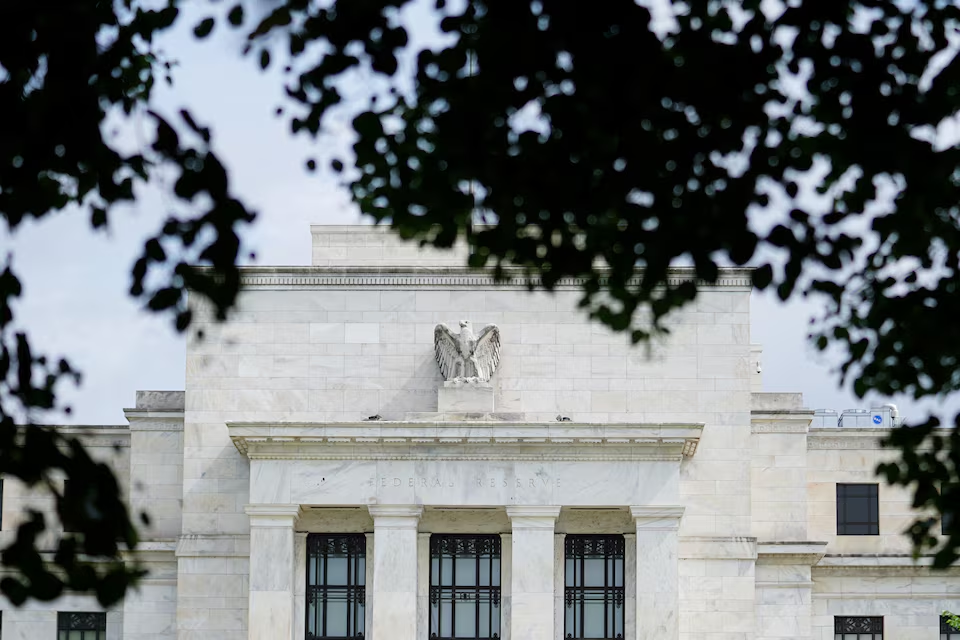
Investors and policymakers worry that blurring the line between Treasury action and central-bank emergency tools could politicize access to dollars, weaken the Fed’s credibility as a non-political stabilizer, and force reliance on imperfect alternatives such as the IMF.
Key takeaways — what you need to know first
- The Treasury’s assistance to Argentina was announced as a “swap” but appears, in substance, to resemble a loan from the Exchange Stabilization Fund (ESF), a discretionary fiscal tool.
- Treasury officials openly linked the operation to improving President Javier Milei’s political prospects, signaling political intent behind the support.
- Historically, dollar “swap lines” have been a non-political, central-bank tool used by the Fed to supply dollar liquidity to foreign central banks in crises.
- If political pressure prevents the Fed from providing swaps, the global system’s primary backstop could be impaired, leaving the IMF as the default alternative — but the IMF’s short-term liquidity tools are limited in scale.
- Separately, market strategists note the dollar remains resilient, but downside risks are growing amid U.S. government shutdown headlines and potential dovish signals in upcoming FOMC minutes.
What exactly happened — and why does the label matter?
The Treasury announced a financial support package for Argentina framed as a “swap.” Analysts caution the substance looks like a loan drawn from the ESF — taxpayer money disbursed at Treasury’s discretion, not a central-bank swap intended to deliver neutral, fast liquidity.
That distinction matters: a swap line from the Federal Reserve is a technical liquidity tool between central banks, designed to be apolitical and purely stabilizing. An ESF loan tied to political objectives undermines that neutrality.
Officials went further than usual. Treasury leadership publicly linked the package to improving President Javier Milei’s electoral prospects, an unusual, explicit statement of political motive for a financial assistance decision.
Markets and foreign officials that had treated Fed-backed swap lines as reliable crisis plumbing now face a new question: will access to dollar liquidity be subject to political calculations?
Why the Fed’s traditional role is at stake
For decades, the Fed’s swap arrangements — with the Bank of Canada, ECB, Bank of Japan, Bank of England and Swiss National Bank — have functioned as a quiet but crucial stabilizer.
In acute episodes, the Fed has provided vast quantities of dollars and calmed markets; a notable example cited in recent analyses is the Fed’s 2023 support to the Swiss National Bank during deposit runs. The credibility of that firewall rests not only on capacity, but on perceived independence from short-term political aims.
If Treasury actions set a precedent in which dollar support is tied to political ends, foreign central banks and markets could fear that future Fed support might be constrained by political pressure. That possibility would reduce the dollar’s role as an unconditional crisis backstop and raise the cost of volatility in emerging markets and beyond.
So what happens if the Fed says “no”?
This is no longer a hypothetical. Analysts ask what would occur if the Fed, under political pressure, opted not to offer swap lines to a country facing a liquidity shock. Other central banks can offer non-dollar support, but the dollar’s dominance limits those alternatives. Bilateral fiscal credits are slow and conditional.
The IMF is the most obvious fallback, and its Short-Term Liquidity Line (SLL) is functionally similar to swap lines in purpose — but it is capped by member quotas and therefore limited in scale.
There is one parliamentary route to make the IMF stronger: a 2024 agreement raised the technical possibility of expanding IMF quota-based tools, a move that requires U.S. congressional approval.
Without such congressional action, the IMF’s capacity remains constrained and markets could stare down a credibility gap if the Fed were perceived to be sidelined.
Markets, policy and the near term — why the dollar still matters
Market strategists note the dollar’s current resilience, even as downside risks build. Ongoing U.S. government shutdown headlines are delaying economic releases and increasing uncertainty.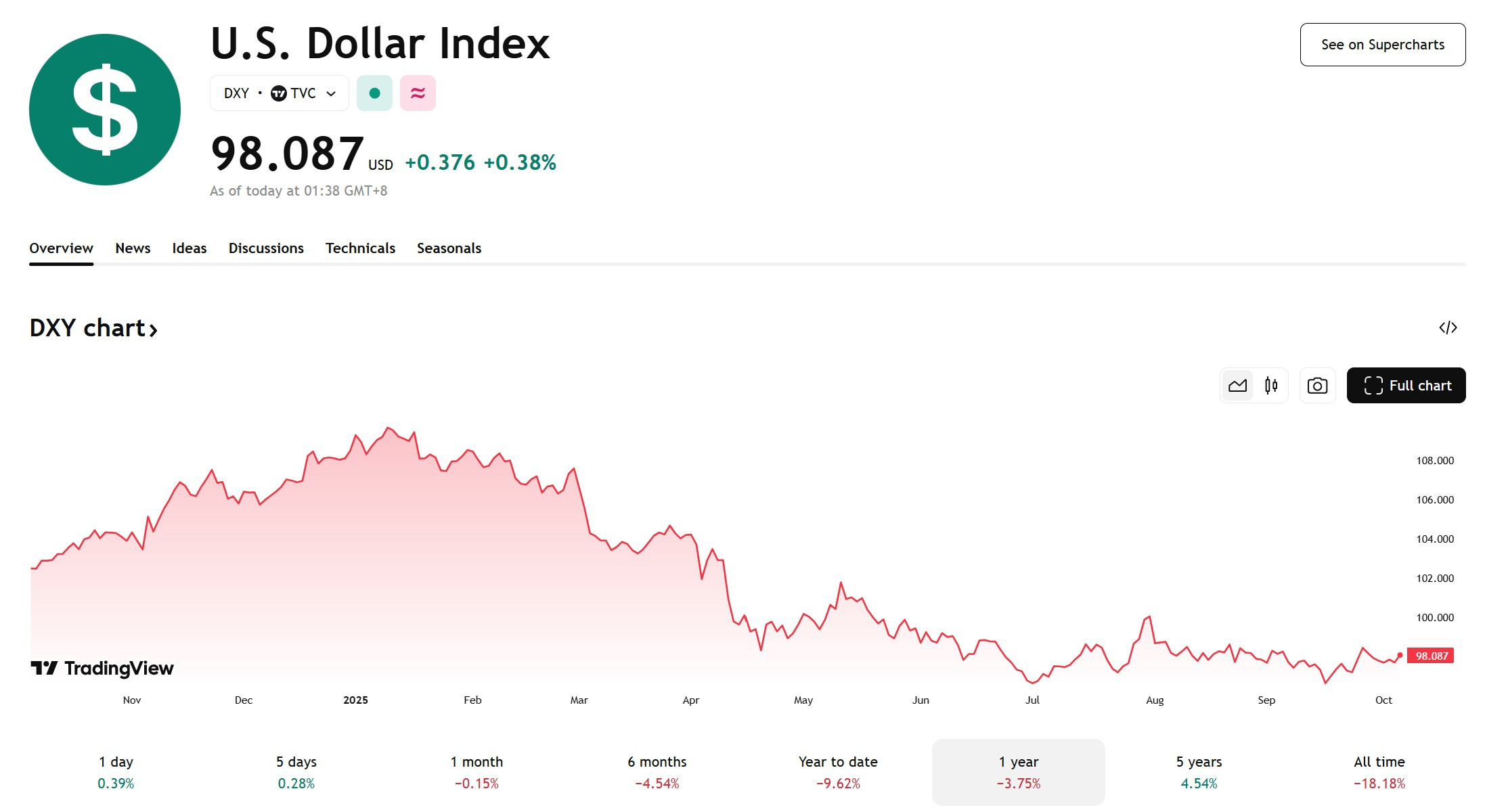 Investors await the FOMC minutes for signs whether Chair Powell’s cautious stance on further rate cuts is shared by the committee. A tilt toward dovishness in the minutes could weaken the dollar, compounding any political credibility shock from Treasury action. In short: policy signals and political maneuvers are intersecting at a sensitive moment for markets.
What policymakers and markets should be watching
Watch three signals closely. Any formal carve-outs or guidance that redefine ESF or Treasury usage — public rule changes would be a red flag.
The Fed’s public posture: clear reassurances of operational independence would help maintain confidence.
Congressional action on IMF quota adjustment — ratification would bolster an already discussed alternative to dollar swap dependence.
Absent these, a future crisis where dollar swaps are politicized risks sharper, costlier interventions by other institutions and more volatile capital flows — especially for dollar-dependent emerging markets.
Final word — credibility is the currency
The episode’s political framing is the real story: when ordinary fiscal instruments are publicly tied to electoral outcomes, it raises broader doubts about the neutrality of the U.S. financial safety net.
The Fed’s ability to act decisively in future crises depends just as much on perception as on balance-sheet capacity. If trust in that firewall erodes, global financial actors will look for alternatives — but current alternatives remain imperfect and limited in scale.
Maintaining a clear institutional firewall between political aims and central-bank crisis tools is not a technical nicety; it is the linchpin of dollar-centred stability.