
AMD and OpenAI The Deal That Could Redraw the AI Chip Map

On Monday, all eyes on Wall Street were on one stock — $AMD.
The chipmaker’s shares surged 34%, its biggest one-day gain in nearly a decade, after announcing a multi-year deal to supply AI chips to OpenAI.
This isn’t just another hardware order. It’s a turning point that could reshape the global AI landscape. For AMD, it’s a long-awaited ticket into the AI mainstream. For OpenAI, it’s a way to reduce its heavy dependence on NVIDIA.
What Exactly Is This Deal About
Under the agreement, AMD will provide hundreds of thousands of AI chips (GPUs) to OpenAI over several years — equivalent to 6 gigawatts of computing power.
To put that in perspective, that’s roughly the amount of electricity used by five million U.S. households.
The rollout starts in the second half of 2026, with OpenAI planning to build a massive 1-gigawatt data center powered by AMD’s next-generation MI450 chips.
But here’s the interesting part: OpenAI also gets the option to buy up to 10% of AMD’s shares at a symbolic price. So it’s not just buying chips — it’s betting on AMD’s future.
Why Did OpenAI Choose AMD
To understand why this matters, we need a bit of background.
Over the last two years, $NVDA has completely dominated the AI chip market. Every large-scale model — from ChatGPT to Google Gemini — runs on NVIDIA GPUs.
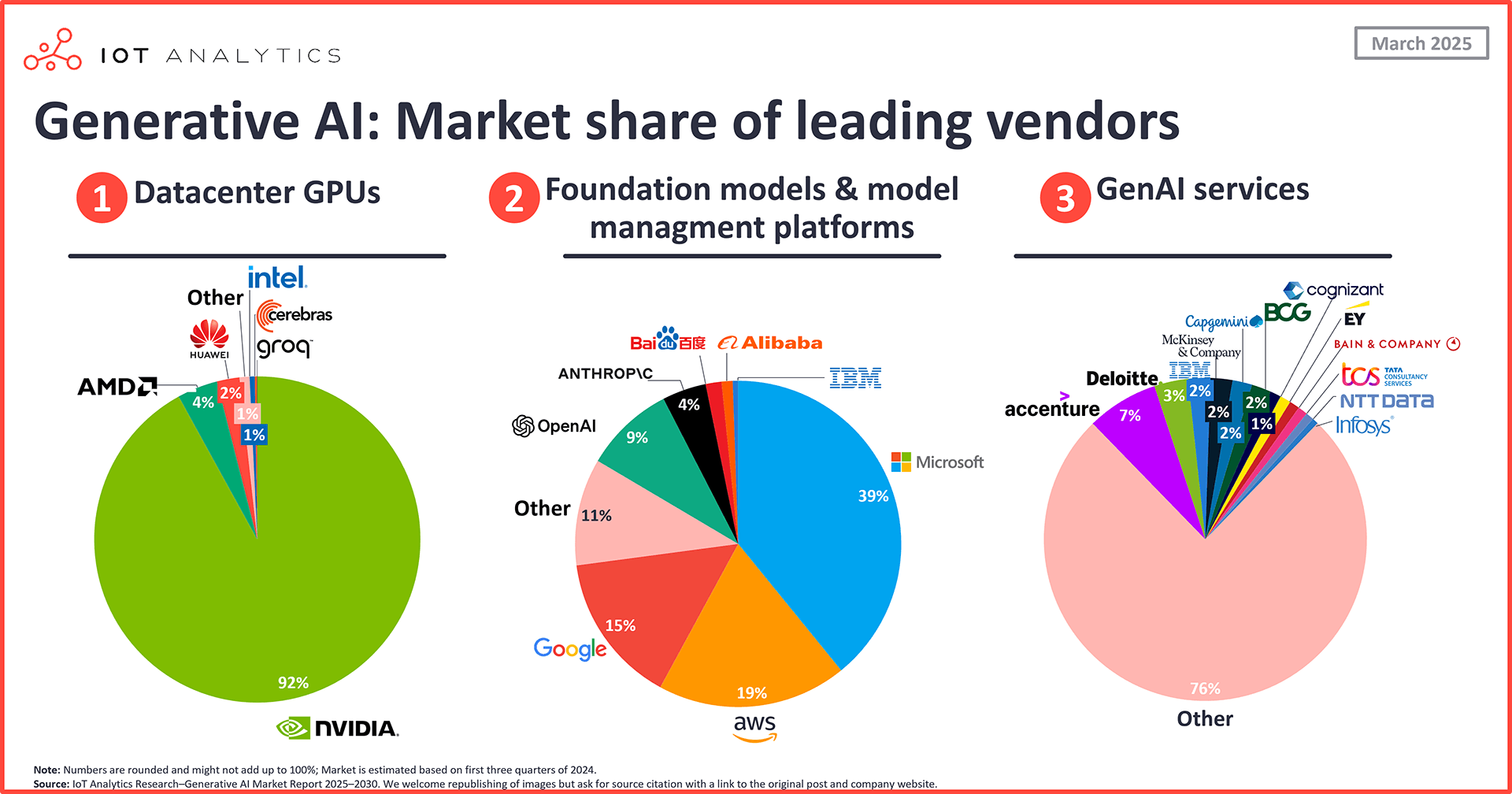
But that dominance created a problem:
-
Severe supply shortages — it can take months to get new chips.
-
Sky-high prices — one H100 GPU costs more than US$30,000.
-
Limited flexibility — NVIDIA controls the entire software stack.
OpenAI realized it couldn’t rely on a single supplier for its most critical resource — compute power.
AMD stepped in at the right time. Its new MI300 and MI450 series are slightly behind NVIDIA in performance, but more energy-efficient, cost-competitive, and easier to source.
For OpenAI, that means more computing stability.
For AMD, it means finally joining the core of the AI ecosystem.
What This Means for the AI Industry
This deal marks the beginning of a new era in AI hardware.
Until now, “AI chips” basically meant “NVIDIA.” But going forward, the market could evolve into three major forces:
-
NVIDIA — remains the king of high-end AI training.
-
AMD — gains ground in mid-range and inference workloads.
-
Big tech players — like OpenAI, $META, and $GOOGL — continue developing their own chips to cut costs and dependency.
In short, the AI chip world is becoming more decentralized — no single company will control all the computing power anymore.
And there’s a bigger picture:
In the AI age, compute power is the new oil.
Whoever controls the GPUs controls the pace of innovation.
How Investors Should Think About It
From an investor’s standpoint, this deal has three key takeaways.
1. AMD’s Long-Term Story Just Got Real
AMD’s AI revenue base is still small, which means huge growth potential.
If it can deliver on this deal, its earnings growth could outpace the market.
But remember — the stock’s 34% rally is mostly emotion. Real financial results won’t show up until 2026 or later.
2. The Entire Compute Supply Chain Benefits
This deal will ripple across the hardware ecosystem:
-
Manufacturing — TSMC and ASML stand to benefit as AMD ramps up production.
-
Server makers — like Super Micro and Inspur will see more demand.
-
Cloud providers — Microsoft, Google, and AWS will all expand GPU hosting capacity.
This “compute inflation” theme — rising demand for digital horsepower — is one of the strongest structural trends in tech.
3. Don’t Ignore the Risks
AI chip competition is brutal:
-
AMD still trails NVIDIA’s software ecosystem by years.
-
OpenAI is burning cash fast — over US$2.5 billion in the first half of 2025.
-
And if the AI spending boom slows, chip inventories could pile up fast.
So investors need to balance growth potential with cyclicality. These are high-beta assets — great for long-term conviction, risky for short-term chasers.
My Take on What Comes Next
In my view, AMD’s deal with OpenAI isn’t a “win,” it’s an entry ticket.
It doesn’t dethrone NVIDIA — but it puts AMD firmly in the game.
Over the next two years, the AI build-out will keep driving demand for chips. But once the infrastructure is built, the focus will shift — from hardware to software and applications that can actually monetize all that compute.
That’s why I see this phase as the early innings of a broader compute cycle:
-
Hardware leads in the short term.
-
Platforms and applications catch up later.
Final Thoughts
AI’s story is just beginning, but the power map is already shifting.
AMD’s partnership with OpenAI is both a high-stakes gamble and a strategic reset.
It reminds us that in the AI era, value doesn’t just come from ideas — it comes from the ability to power those ideas.
For investors, the real opportunity lies in spotting who supplies the energy for intelligence — not just today, but in the next computing cycle.