
Jensen Huang: “AI Demand Is Surging, My Only Regret Is Not Investing More”

Shearing sheep
October 9, 2025
GoGPT Summarizes Articles
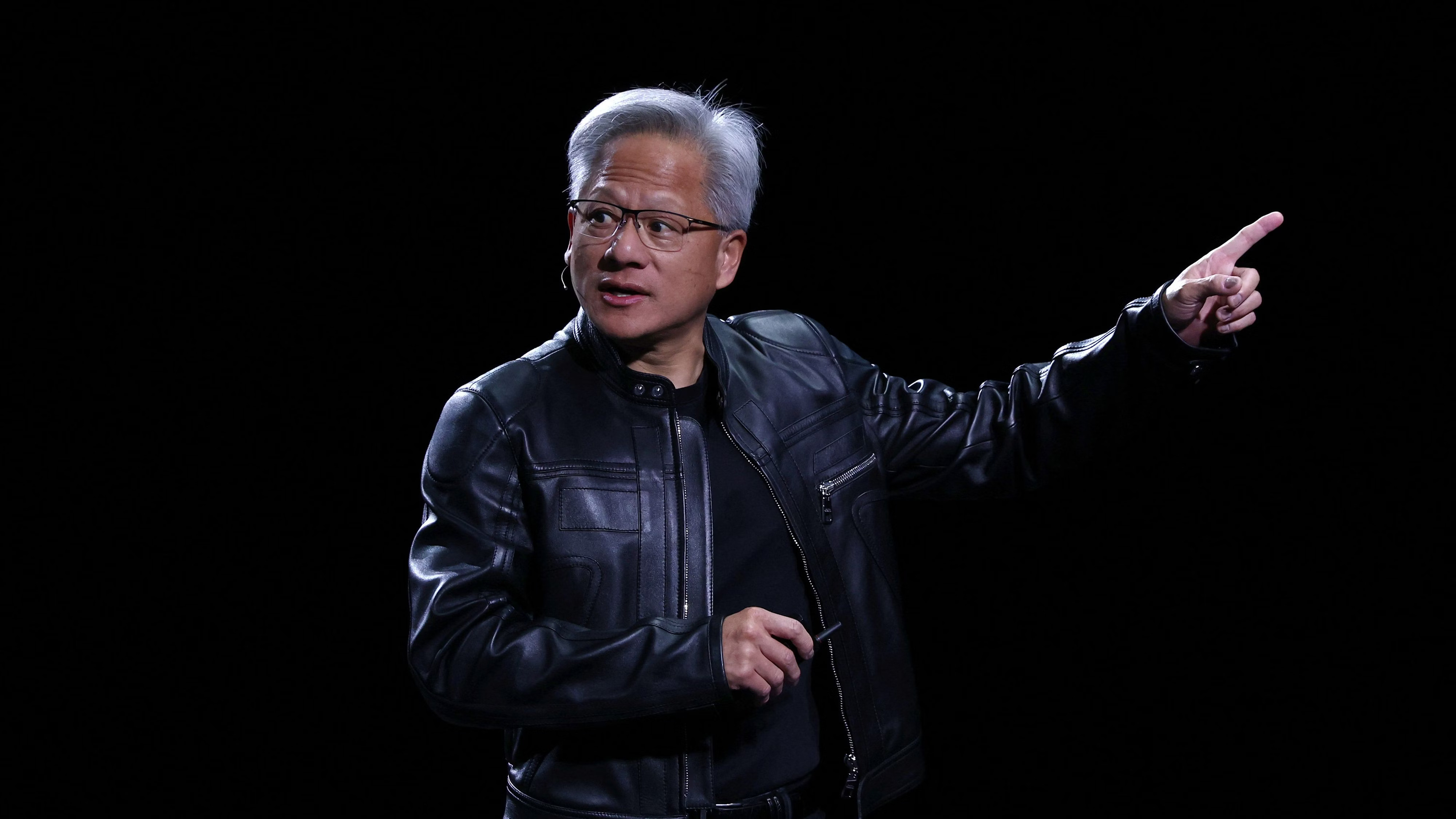
Nvidia CEO Jensen Huang is once again sounding bullish on AI — and this time, he’s putting his money where his mouth is. Speaking to media this week, Huang confirmed that Nvidia has invested in Elon Musk’s AI startup, xAI, and said his only regret is not putting in more capital.
Reports suggest xAI is seeking to raise around $20 billion, with Nvidia contributing $2 billion as part of the round. The financing reportedly combines about $7.5 billion in equity and up to $12.5 billion in debt, structured through a vehicle that purchases Nvidia chips and leases them back to xAI for its Colossus 2 project.
Huang praised Musk as “a builder of transformative companies,” adding, “Almost everything Elon’s part of, you really want to be part of as well.”
The Blackwell Boom
Huang said AI compute demand has “grown dramatically over the past six months,” driven by increasingly complex models that require exponentially more processing power. Nvidia’s latest Blackwell GPU — boasting 208 billion transistors — is reportedly in extreme shortage. “Demand is very, very high,” Huang said, calling it the start of “a new wave of infrastructure buildout — almost like a new industrial revolution.”
The comment helped lift Nvidia’s stock by more than 2% on Wednesday, snapping a three-day losing streak. Analysts estimate global AI infrastructure spending could hit $2 trillion by 2026, as models evolve from simple Q&A tools to systems with advanced reasoning and multimodal capabilities.
Huang’s Take on AMD and OpenAI
Huang also commented on AMD’s new deal with OpenAI, which has turned heads across the chip industry. AMD agreed to supply 6 gigawatts of chips — including its upcoming MI450 series — in exchange for warrants equivalent to 10% of AMD’s equity, or about 160 million shares.
It’s imaginative and unique — but also surprising,” Huang said. “They gave up about 10% of their company before the product is even out — still, it’s clever.
AMD’s stock has surged roughly 35% this week on optimism that it could challenge Nvidia’s dominance in AI chips.
For Nvidia, the story is different. The company recently committed up to $100 billion in hardware investment to support OpenAI over the next decade, helping it build data centers with 10 gigawatts of power capacity — roughly equivalent to the annual energy use of 8 million U.S. homes.
But even there, Huang admits some regret: “Our only regret after investing in OpenAI was not investing more.”
China’s Energy Advantage
When asked about the AI race between the U.S. and China, Huang’s answer was surprisingly candid. He said the U.S. is “only slightly ahead,” and noted that China is “moving very fast in power construction” — a key advantage in supporting large-scale AI.
“China is moving very fast in power construction,” Huang noted. “The AI industry will need new power generation capacity, possibly including natural gas and nuclear, to protect consumers from rising electricity costs. Data centers generating their own power will move faster than relying on the grid.”
My Take
Huang’s remarks capture the essence of today’s AI economy: massive ambition colliding with massive constraints.
Nvidia isn’t just selling chips anymore — it’s shaping the entire AI industrial ecosystem, from compute supply to power generation. And Huang knows that capital, not just silicon, will decide who wins.
His praise for Musk and his regret over OpenAI also reveal something deeper: even industry leaders feel a touch of FOMO in this new AI gold rush.
With $2 trillion in AI infrastructure spending on the horizon, the question now is whether Nvidia’s dominance will deepen — or if rivals like AMD can finally carve out their space.