
Nvidia’s Investment Frenzy: $9.2 Billion in 7 Days, Jensen Huang Goes All-In

Nvidia’s external investments are accelerating again.
According to Crunchbase, from 2020 to 2024, Nvidia invested in 2, 10, 9, 47, and 56 startups annually, and 2025 is its most active year yet. In mid-September, it announced five deals in just one week, totaling over $9.2 billion.
And that’s not including the $100 billion investment in OpenAI.
Five Bets on AI Infra and Robotics
Among the five, the biggest is the $5 billion investment in Intel, which has been widely analyzed—no need to rehash. From a business standpoint, it helps Nvidia reduce reliance on TSMC, and collaboration with Intel could spark new product synergies.
After all, Intel’s products and brand have strong reputations with many enterprise clients.
Additionally, Nvidia spent $900 million to acquire U.S. AI networking chip startup Enfabrica in a full buyout, bringing founder and CEO Rochan Sankar and the core team on board, along with key technology licenses.
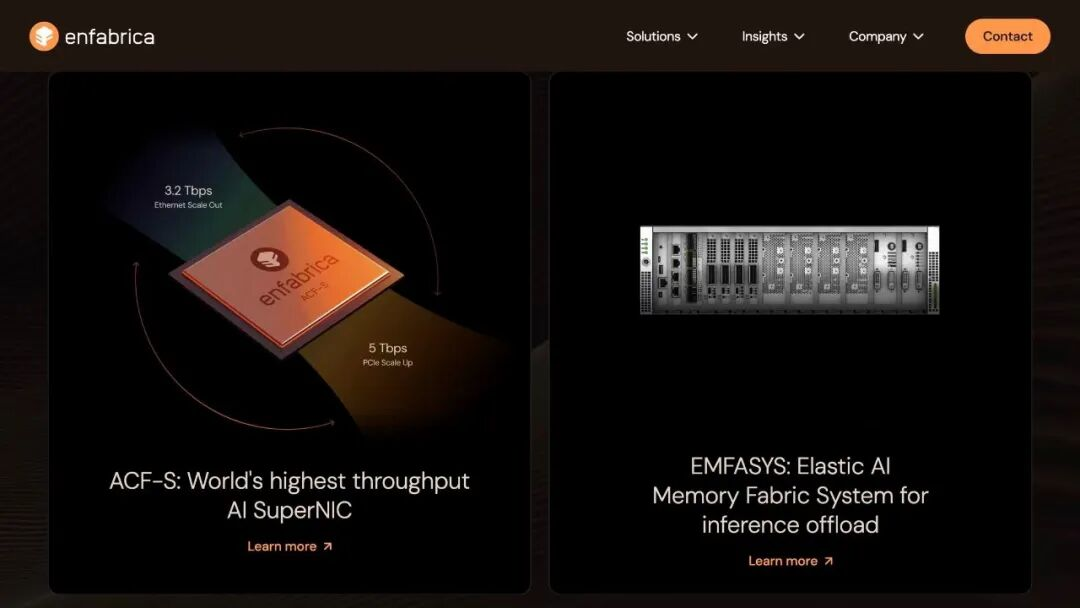
In 2020, Nvidia acquired networking giant Mellanox for $7 billion, filling a gap in high-speed interconnects. Five years later, it’s again targeting networking chips to address current AI memory bottlenecks.
Enfabrica’s products offer innovative solutions for industry pain points, achieving both “cost reduction” and “efficiency gains,” especially for memory-intensive scenarios like long prompts, large context windows, and multi-AI agents.
The company’s founders, Rochan Sankar and Shrijeet Mukherjee, are industry heavyweights with deep backgrounds at Broadcom and Cisco, respectively. This rare combo of tech innovation and industry pedigree explains why Nvidia snapped up the entire team without hesitation.
The other two investments were tied to the same backdrop: In September, Jensen Huang visited the UK and pledged £2 billion (~$2.6 billion) to boost the country’s AI startup ecosystem.
During the trip, Huang named eight UK startups, including Revolut, AI video firm Synthesia, and autonomous transport group Oxa, telling each: “I’ll invest in your next round.”
But the first picks were autonomous driving company Wayve and AI infrastructure firm Nscale.
Wayve said Nvidia will join its next $500 million strategic round, with a term sheet already signed. This isn’t Nvidia’s first investment in Wayve; it participated in the $1.05 billion Series C in May last year.
Public records show Wayve, founded in 2017, stands out for its self-learning rather than rules-based autonomous driving software, attracting investor attention. It’s used Nvidia systems since 2018, and Huang sees it as a “next trillion-dollar company.”
In contrast, Nvidia’s relationship with Nscale seems less smooth. It calls itself a “hyperscale computing platform designed for AI,” and just days ago, the two-year-old Nscale announced an $11 billion Series B led by Norway’s Aker, with Nokia and Nvidia among the participants.
Per PitchBook, Nscale’s round is the largest VC deal in the UK this year and the second-largest in Europe, behind Mistral AI’s €1.7 billion (~$2 billion) Series C earlier this month.
Combined with prior news, Nvidia invested $683 million in Nscale, with the bigger goal of expanding UK GPU capacity to 60,000 by 2026. Hardware will deploy in Nscale’s data centers, and the company recently announced plans to build the UK’s largest supercomputer with Microsoft.
Just two years ago, Nscale wasn’t even independent. In May last year, it spun out from crypto mining infrastructure provider Arkon Energy to meet surging AI data center demand.
Like U.S. firm CoreWeave, Nscale repositioned its crypto roots for AI infrastructure, combining massive data center capacity, high-density power, and thousands of GPUs with client software. It started with AMD hardware but shifted to Nvidia GPUs as partnerships deepened.
These two UK investments show Nvidia prioritizing funding its most promising clients, with clear industrial goals.
Nvidia’s New Problem: Too Much Money
It’s not just in the UK and U.S.—Nvidia is forging alliances worldwide, turning leaders in various fields into close partners. A key prerequisite? Nvidia has plenty of cash.
FactSet estimates Nvidia generated $72 billion in free cash flow over the past four quarters, projected to near $100 billion by fiscal year-end—surpassing all large tech firms except Apple this year.
Having money is one thing; putting it to work is another.
For instance, Nvidia repurchased nearly $50 billion in stock over the past four quarters and added $60 billion to its buyback program recently.
Even with R&D spending doubling in two years, Nvidia’s R&D is only ~9% of revenue over the last four quarters, meaning orders are so overwhelming that this expense seems negligible.
The tsunami of revenue growth is becoming Nvidia’s sweet burden. On one hand, how to spend this cash; on the other, how to sustain order growth? Or a bigger question: how to capture AI’s rewards?
Broad investments and small acquisitions seem the answer to both.
As mentioned, Nvidia’s startup investments ultimately lead to partnerships, so it’s cherry-picking talent across AI fields and regions this year.
This isn’t impulsive—it’s deliberate, with historical precedent. Analysis shows for every $10 billion Nvidia invests in OpenAI, the company spends $35 billion on Nvidia chips.
Short-term, this may dilute profits, but it secures ongoing demand and gives startups a lifeline—a no-brainer deal.
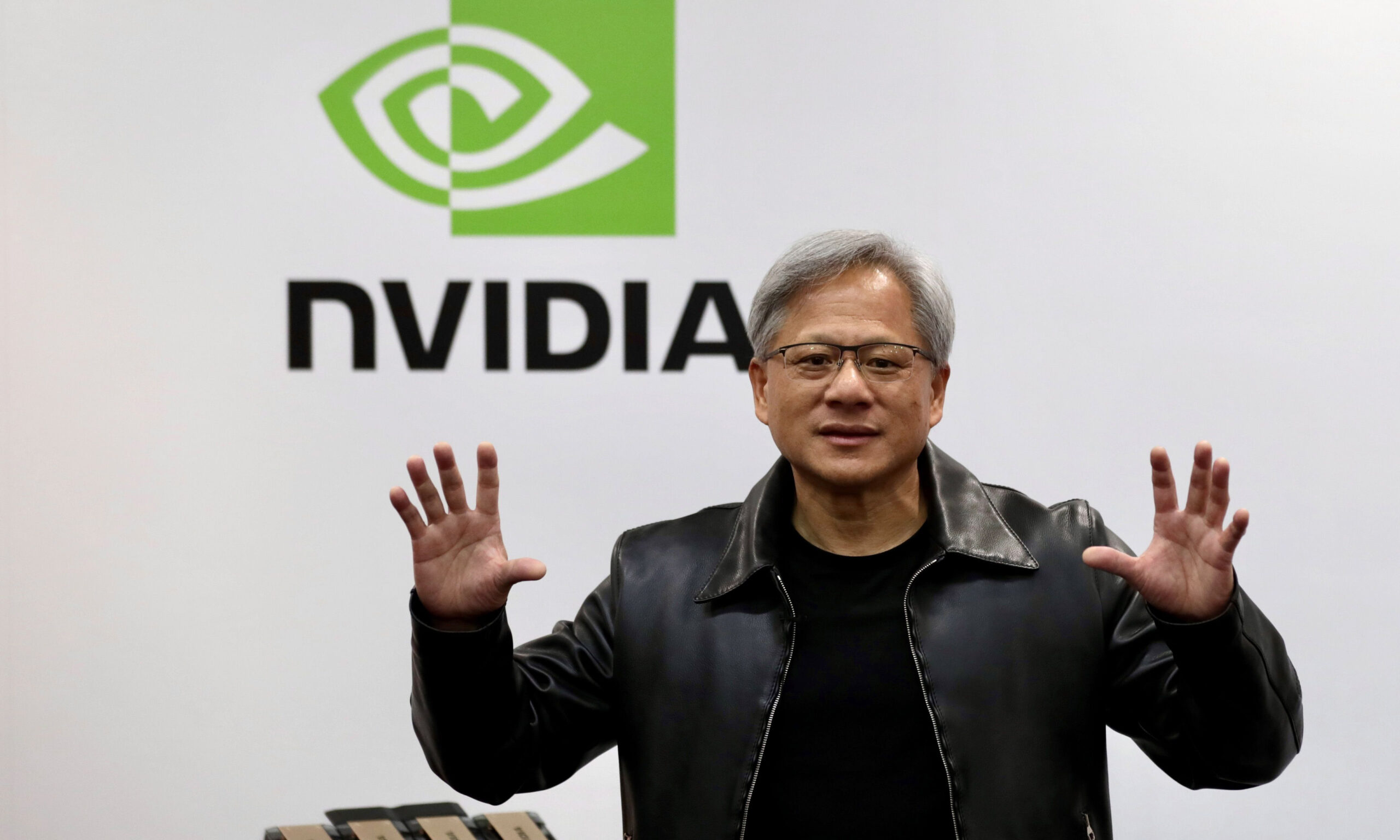
Huang said Nvidia’s role has evolved beyond chips to the entire AI infrastructure, seeking collaboration in various forms. He joked, “We don’t ask anyone to buy everything from us. My only request is to buy something from us.”
Beyond industrial investments, Nvidia is also remedying regrets and avoiding misses.
In a recent interview, Huang reflected on his relationship with OpenAI, admitting deep regret over an early investment call. When OpenAI invited Nvidia to invest early, “we were too poor to go all-in. I should’ve given them everything.”
Who wouldn’t want to back a potential trillion-dollar company?
As for small acquisitions, any large deal faces strict regulatory scrutiny, so this is the only viable path.
Huang prefers flat organizations with many direct reports, making small, complementary buys more appealing than mega-deals—like the Enfabrica case.
This year, Nvidia’s global hunt for clients and markets includes pushing “AI factories” for industrial use and sovereign AI infrastructure in multiple countries, ensuring sales channels for next-gen chips.
It’s lonely at the top.
For a $4 trillion Nvidia, the challenges aren’t just tech, clients, or growth—they’re about mastering the art of capital allocation and utilization.