
Earnings at the Edge: Are AI Cuts and Tariffs the Market’s Breaking Point?

The U.S. third-quarter earnings season opens next week amid two tests: can companies justify $SPX ’s sharp rally with real profit growth, and will renewed tariff talk sap margins already strained by trade costs?
Analysts peg $SPX Q3 profit growth at 7.4%, and investors appear ready to punish any misses.
Key takeaways
- Analysts expect $SPX Q3 profits +7.4% year-over-year; investor tolerance for misses is low.
- Tariff rhetoric has resurfaced; Deutsche Bank estimates tariffs shaved about 1 percentage point from S&P Q3 profit growth.
- AI capital expenditure is the market’s growth engine; UBS projects global capex up 67% this year to $375 billion.
- Banks start the season; tech follows — investors will parse guidance on tariffs, AI budgets, and labor closely.
Make-or-break: what the market will punish and reward?
Wall Street’s rally since April has pushed expectations high. With $SPX up roughly 11% year-to-date and about 32% from April lows, investors want immediate proof that earnings back the move. CFRA’s Sam Stovall warns that investors will not be lenient with misses or fuzzy guidance.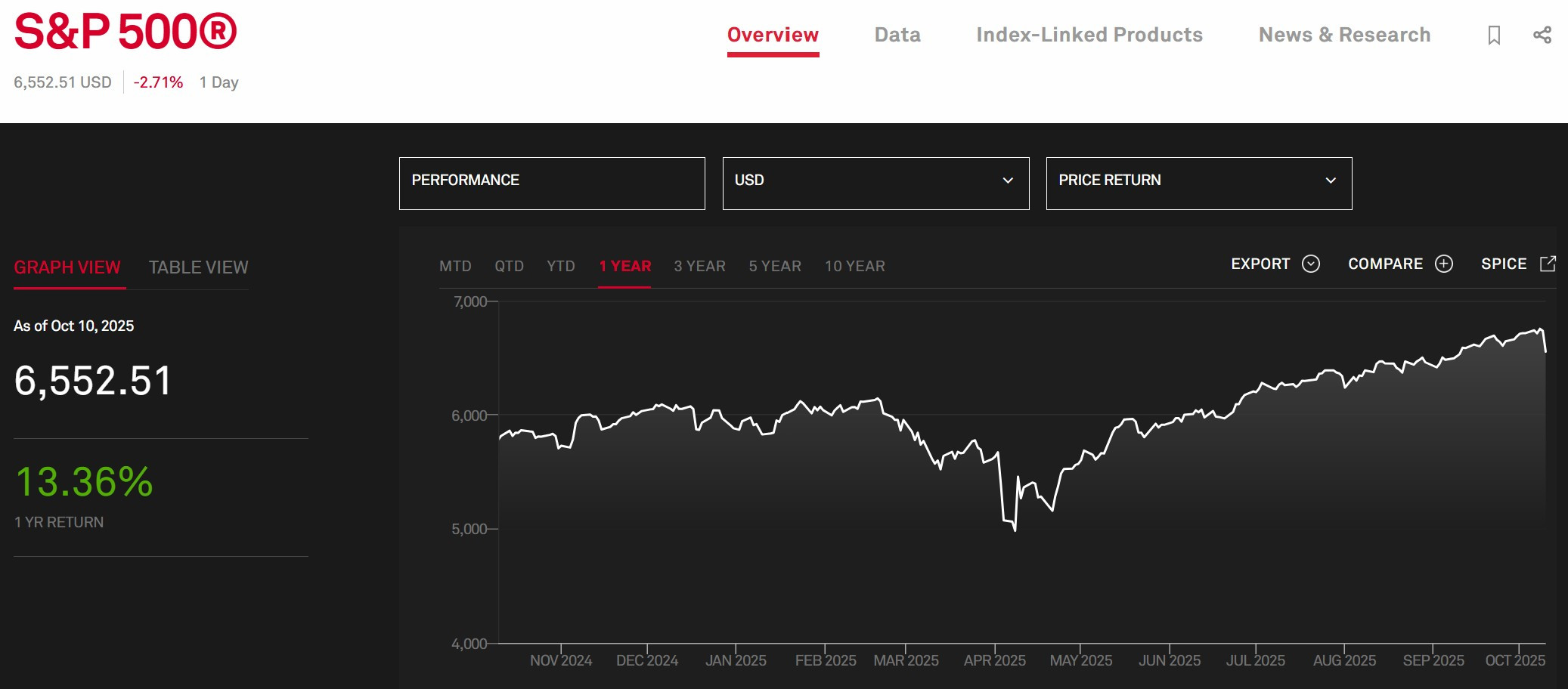
Companies that provide clear, quantifiable disclosure on tariff exposure, AI spend, and hiring plans should fare better. Those that offer vague language or downgrade guidance risk sharp price reactions as traders take profits and reweight portfolios.
Tariffs and AI: dual stressors for profits and capex
Recent political comments about tariffs have revived trade worries and may compress margins. Deutsche Bank’s work suggests tariffs reduced $SPX profit growth by around one percentage point; firms that were previously granted leeway on tariff guidance may find investor patience exhausted now.
At the same time, AI spending has lifted a cohort of chipmakers, cloud providers, and infrastructure plays. UBS’s capex forecast and other data show heavy investment into AI.
But the concentration of expectation is a vulnerability: a visible pullback in AI projects would undercut demand for chips and services and trigger rapid profit-taking among high-fliers.
Earnings cadence and labor signal risks
Earnings season begins with large U.S. banks, including JPMorgan, providing early reads on credit, trading, and consumer finance. Tech giants—whose capital-spending commentary will be treated as macro signals—report later in the month.
With some official data flows impaired and government shutdown risks looming, corporate disclosures about staffing gain outsized market influence.
Rapid layoffs or cautious hiring language would be read as signs of consumer weakness, amplifying pressure on retail, restaurants, and discretionary sectors.
Where currency and regional effects matter?
Currency moves are a mixed bag. A softer dollar through Q3 has helped many U.S. exporters and boosted translated overseas profits. LPL Financial suggests a weaker dollar combined with AI capex could lift profit expectations further.
Conversely, a firm euro has pressured European exporters this quarter. Analysts note that some downward revisions for European profits since March already embed these trade and currency headwinds, so investors will watch regional FX exposure in filings.
What to watch in company reports?
Investors should listen for three clear things in calls and filings: explicit tariff exposure and timeline; concrete AI budgets and near-term project schedules; and clear statements on hiring plans or headcount trends.
Managements that offer precision — figures, timelines, and quantifiable sensitivity to tariffs or capex changes — will reduce uncertainty and likely face less severe repricing.
Banks’ reports will be parsed for credit trends and consumer resilience. Tech calls will be scanned for the cadence of AI spending and supply-chain constraints. Together these cues will shape whether the rally was demand-driven or narrative-driven.
Market mechanics: why investor reaction could be quick and sharp?
The market’s embrace of AI has concentrated gains; that concentration raises downside gamma if guidance disappoints. JonesTrading’s Mike O’Rourke likens a pullback in AI spend to “an emergency brake” — fast and painful for the most extended winners.
Similarly, with tariffs once again in headlines, margin risks can show up immediately in gross margins and near-term guidance. Given high multiples on many AI beneficiaries, modest downward revisions can rapidly translate into double-digit share declines.
The practical read for investors
Short term, earnings season is a stress test of credibility. Hedge funds and active managers will use any hint of weakness to rebalance exposure away from richly valued AI beneficiaries and toward more defensive or value-oriented pockets.
Long-term investors should focus on which firms demonstrate durable AI monetization and those with clear tariff mitigation strategies.
Companies that combine transparent guidance on trade costs, explicit AI project spending, and sensible workforce plans should have the best chance to withstand scrutiny and justify elevated valuations.
Closing: an evidence season, not a narrative season
This reporting cycle will reward precision and punish ambiguity. Investors are asking whether gains were driven by durable business investment in AI — and whether firms can navigate renewed trade risks without sacrificing margins.
With banks opening the season and tech set to follow, the coming weeks will determine whether the market’s recent gains rest on sustainable earnings or on an elevated narrative that must now be converted into numbers.