
A Wild Night for Bitcoin and a Test of Market Nerves

Last week, the crypto market went through a roller coaster. In just 24 hours, roughly $19 billion worth of positions were liquidated as Bitcoin plunged and panic swept across the market.
The trigger was simple—one sentence from Donald Trump. During a speech, he said he was considering new tariffs on all Chinese goods. Within minutes, global risk assets sold off, U.S. stocks dipped, and crypto took the hardest hit.
Bitcoin’s violent reaction wasn’t random. It’s one of the most leveraged assets in the world, and when prices drop fast, margin calls trigger a chain of forced liquidations. It’s the crypto version of dominoes—once it starts, it doesn’t stop.
It Felt Like March 2020 All Over Again
For many veterans, this crash brought back memories of March 12, 2020—when Bitcoin collapsed from $8,000 to $3,158 in a single day during the global market meltdown, the infamous “Black Thursday.”
Back then, the Federal Reserve stepped in with massive liquidity easing, or simply put, printed money to save the market. Risk assets exploded upward, and Bitcoin went on to hit nearly $70,000 within three years.
This time, the backdrop feels oddly familiar. The Fed has just begun a new rate-cutting cycle, and liquidity is slowly improving. The recent drop wasn’t caused by any internal crypto issue—it was a macro panic.
That’s why some analysts believe this sell-off might actually give smart money a new entry point.
After Panic Comes Calm
When Trump softened his tone a few days later, markets quickly stabilized. Bitcoin rebounded and erased most of its losses.

A poll from one major trading platform showed that most investors chose to “buy the dip” rather than sell. In other words, despite the chaos, long-term holders haven’t lost faith.
Washington in Chaos Again
Meanwhile, U.S. politics added another twist. Congress failed to reach a budget deal, forcing another government shutdown that put thousands of federal workers on furlough.
This shutdown also froze progress on a crucial crypto regulation bill that would define how the CFTC and SEC split oversight of digital assets. With key advisors now on hold, legislative work has slowed down.
That means new crypto ETFs, market supervision frameworks, and institutional guidance papers will likely be delayed until the government reopens. Still, insiders say the Senate Banking Committee plans to hold hearings later this month to keep the issue alive.
Institutions Stay Bullish
Despite the short-term panic, institutional sentiment toward crypto remains upbeat.
Cathie Wood’s ARK Invest still views Bitcoin, Ethereum, and Solana as the “three pillars” of the crypto ecosystem. Wood sees Bitcoin as:
-
The foundational asset of the global digital monetary system.
-
A layer-1 blockchain that has never been hacked.
-
The root asset from which the rest of crypto has evolved.
Meanwhile, Bitwise CIO Matt Hougan expects record-breaking inflows into Bitcoin ETFs this quarter for three reasons:
-
Major financial institutions like Morgan Stanley and Wells Fargo are starting to let advisers allocate crypto for clients.
-
Wall Street is betting on the “debasement trade,” buying scarce assets to hedge fiat depreciation.
-
Many expect Bitcoin to hit a new all-time high by year-end.
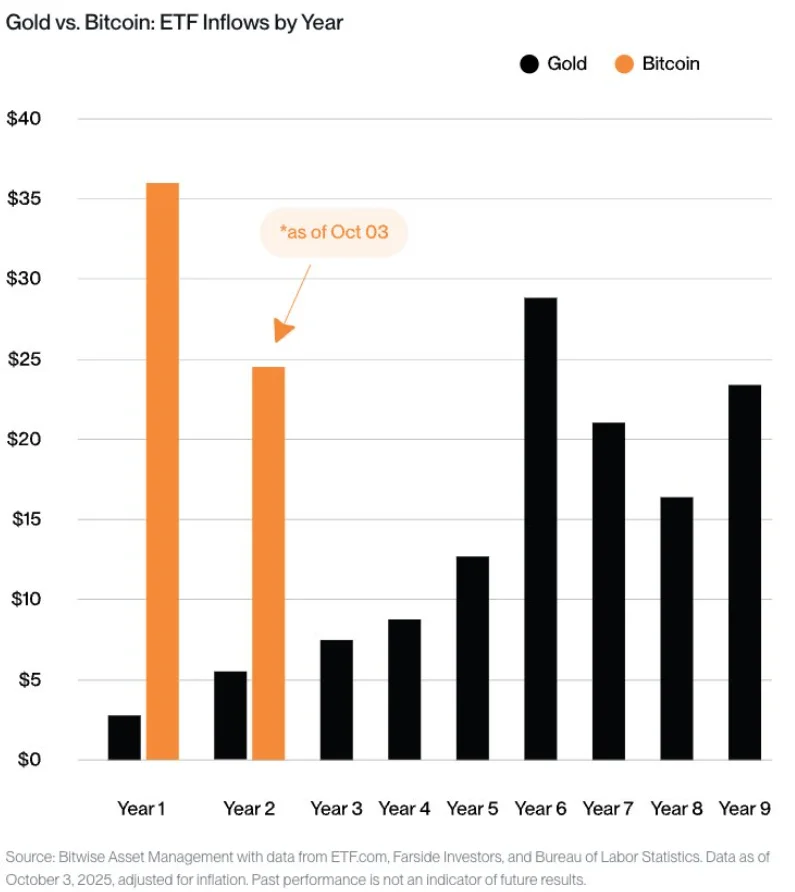
Even J.P. Morgan has made an interesting argument: stablecoins could actually strengthen the dollar’s dominance, not weaken it. Since most stablecoins are backed by dollars or U.S. Treasuries, every new token effectively increases demand for U.S. assets—potentially by trillions over the next few years.
Bitcoin as the New Corporate Reserve
Corporate Bitcoin holdings are rising fast. U.S. companies now hold around 950,000 BTC, worth more than $115 billion.

MicroStrategy remains the boldest player, with nearly $8 billion worth of Bitcoin on its balance sheet—rivaling the cash reserves of tech giants like Amazon and Google. Founder Michael Saylor has become something of a corporate evangelist for Bitcoin.
Even SpaceX reportedly holds around $1 billion in Bitcoin.
This is starting to look a lot like the old days when companies piled into U.S. Treasuries. Only this time, Bitcoin is becoming the “new corporate safe haven.”
My Take
This crash felt less like a collapse and more like a stress test for market confidence. Short-term fear flushed out overleveraged traders, but serious capital is still positioning quietly.
From a macro view, the Fed’s rate-cut cycle signals a return of liquidity. In that kind of environment, scarce assets like Bitcoin tend to benefit first.
So maybe what we’re seeing isn’t the end of the cycle—but the messy, emotional start of the next one.
It just happens to begin with a scare.