
Global Smartphone Q3 Shipments Rise 3% YoY, Apple Sets Record for Strongest Q3 Performance

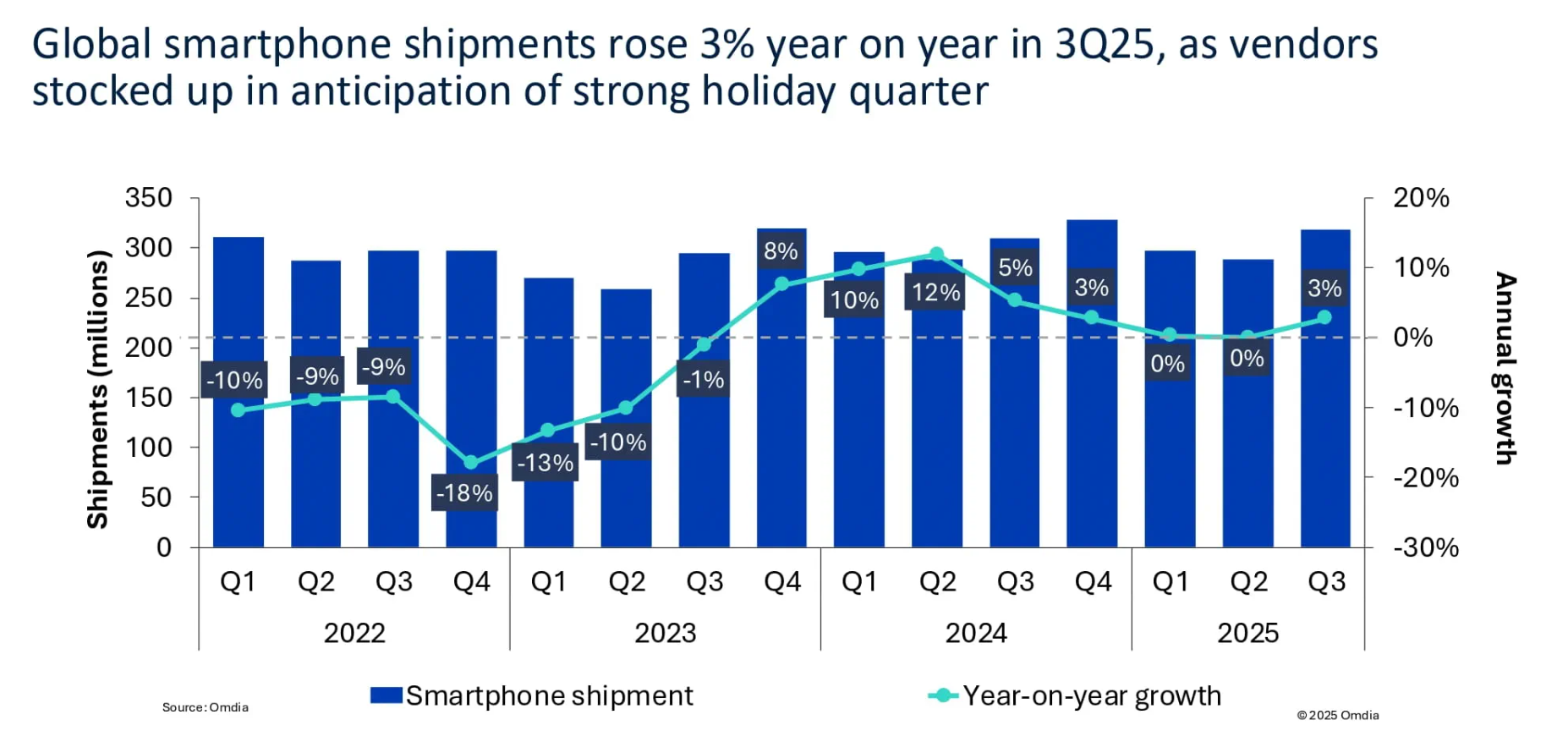
On Tuesday Eastern Time, Omdia, a leading global technology research and consulting firm, reported that the global smartphone market grew 3% year-over-year in Q3 2025, signaling a return to growth driven by strong demand for device upgrades spurred by major product launches this quarter.
Robust Growth in Global Smartphone Shipments
In Q3 2025, global smartphone replacement demand was strong, with multiple vendors preparing inventories across channels ahead of the busy Q4 sales period. These factors drove robust shipment growth in the global smartphone market.
Samsung maintained its leading position for the third consecutive quarter, capturing a 19% global market share, fueled by sustained sales strength in its Galaxy A series and an upgraded seventh-generation foldable product lineup.
Apple’s iPhone shipments grew 4% YoY, achieving its strongest Q3 sales performance ever. Strong initial demand for the iPhone 17 series helped Apple secure an 18% global market share.
Xiaomi had a steady quarter with a 14% market share, while Transsion Holdings and vivo each held 9%, rounding out the top five vendors for the quarter.
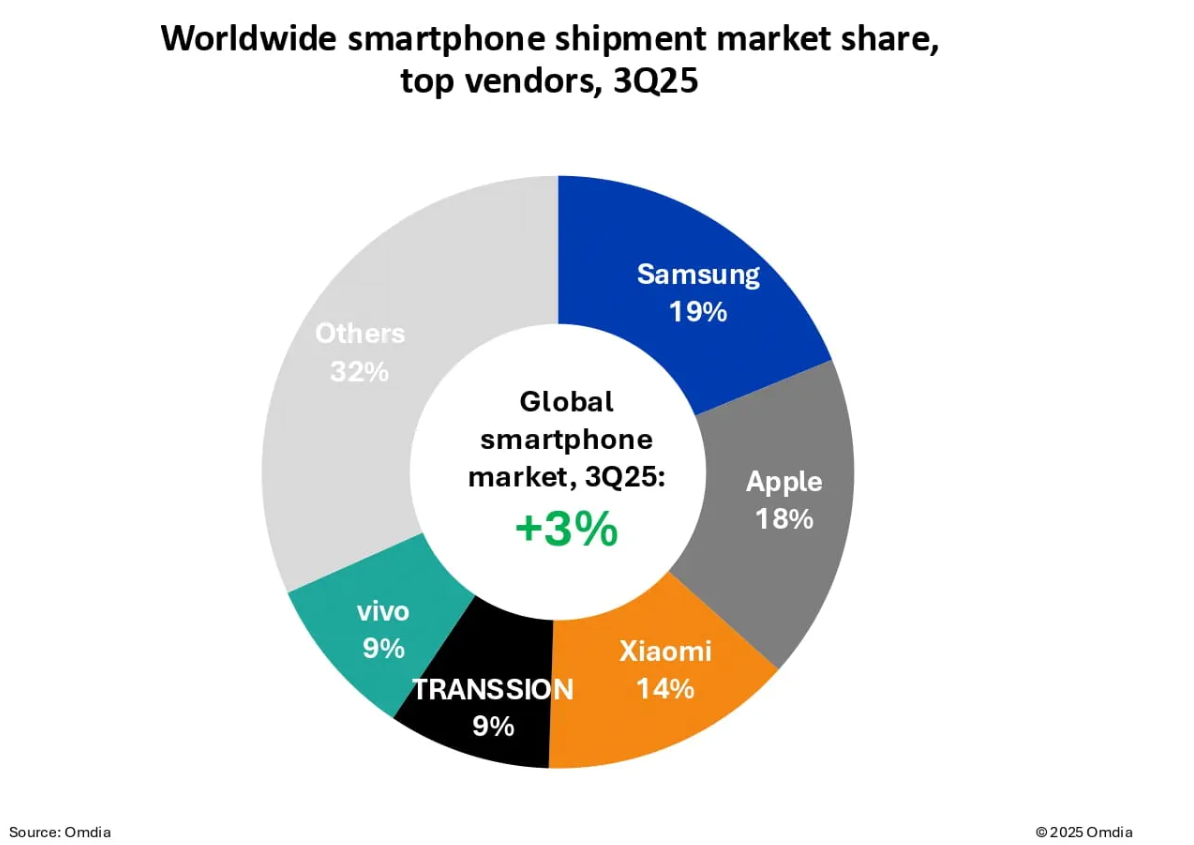
Global Smartphone Market Share Distribution
Rising Consumer Demand for Smartphones
Omdia Research Manager Le Xuan Chiew said: “As market instability from earlier this year subsides, consumer demand for smartphone upgrades and replacements is rebounding, driving market growth. Data from the top five vendors shows growth compared to Q3 last year.”
“The response to the industry’s largest launch events has been positive, as leading vendors struck a good balance between hardware and software. This quarter’s hardware highlights—foldable screens, ultra-thin designs, vibrant colors, and back-cover displays—drew attention. Some vendors raised production targets compared to prior quarters as initial demand exceeded expectations.”
Le Xuan Chiew noted that resurgent consumer demand underscores the importance of effective product differentiation, with the iPhone 17 series standing out.
Specifically, in Q3, the base iPhone 17 model offered upgraded storage at the same price, exceeding expectations in tier-one markets, while the iPhone 17 Pro and Pro Max continued to attract global consumers. The iPhone Air had lower shipment volumes but delivered strong marketing impact, serving as a key platform for Apple to test core technologies, potentially laying the groundwork for future device innovations.
“Many vendors used the slower first half of 2025 to adjust inventories, optimize operations, and strategically time launches, and they’re now reaping the benefits of reinvigorated consumer demand,” Le Xuan Chiew added.
However, global economic concerns and uncertainties continue to impact vendors’ strategic planning, forcing many to cautiously balance scale, profitability, and revenue goals.
“Facing upcoming challenges, vendors remain cautious, but short-term success will hinge on identifying clear opportunities with effective marketing and promotion strategies.”
Intense Competitive and Cost Pressures
Omdia Senior Analyst Runar Bjørhovde said: “The current market is highly competitive, with many vendors facing significant profitability challenges.”
“For instance, rising material costs are intensifying the tension between competitive pricing and profit margins. Semiconductor products, including storage and memory, are under immense (upward) price pressure as smartphone makers compete for capacity amid rapid growth in data center and AI investments.”
The reality is that competitive pressures and brand management costs won’t ease in the short term, so major smartphone vendors must seize more opportunities to boost revenue and competitiveness. Subscription services, accessories, bundled products, and ecosystem upsells have become key focus areas for strengthening consumer propositions and planning profitable paths.
Omdia noted that implementing these strategies in emerging markets, where entry-level devices dominate, will be particularly challenging. Offering financing solutions to avoid price wars can make business models more sustainable while keeping devices accessible to consumers.$AAPL