
Wall Street Fear Gauge Rises Signaling Market Caution

After an unusually calm summer, Wall Street’s “fear gauge” has spiked, signaling that investors are starting to brace for potential turbulence. The Cboe Volatility Index, or VIX, climbed to 22.76 on Tuesday, its highest intraday level since May. The VIX is widely seen as a measure of how worried traders are about the possibility of a sudden market drop. Long-term averages sit just below 20, making this a meaningful threshold: above it, the market begins to show tension.
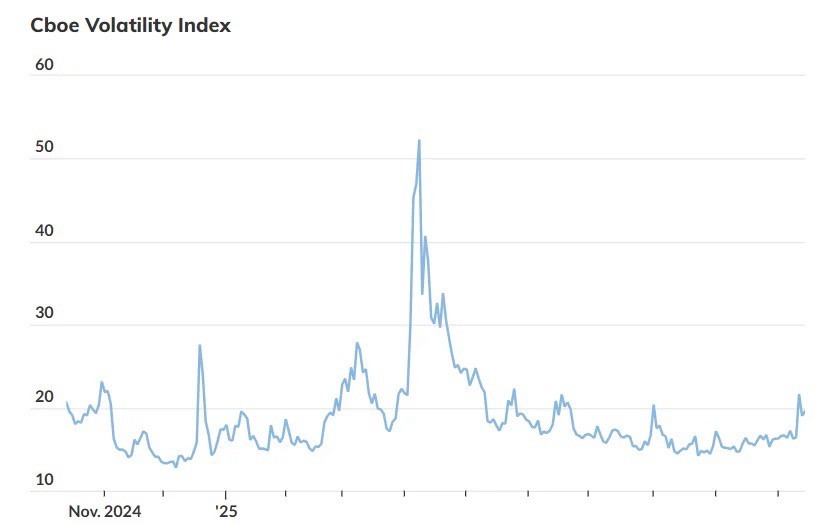
For those unfamiliar, the VIX is calculated using options contracts tied to the S&P 500 that expire in about a month. If VIX rises, it generally indicates that traders expect bigger swings ahead. Conversely, a low VIX reflects confidence and calm in the market.
The Illusion of Summer Calm
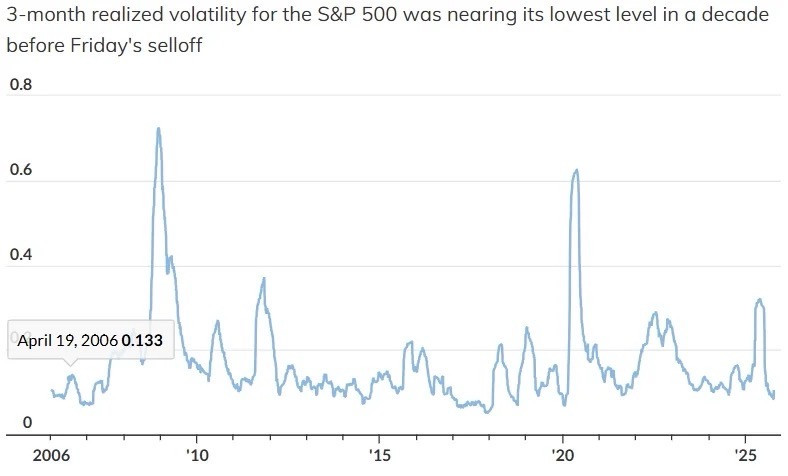
This past summer, stocks climbed steadily with few interruptions, giving the impression of a smooth ride. In fact, the S&P 500’s three-month realized volatility, which measures actual recent market swings, dropped to its lowest level since early 2020. For a while, the VIX followed suit, decreasing alongside realized volatility. But after Labor Day, the two began to diverge.
Portfolio managers see two possible explanations. First, some investors may be using call options instead of buying stocks directly to bet on further gains. Call options pay off if the index rises above a set level by a certain date, allowing for leveraged exposure with lower upfront cost.
Second, other investors may be buying put options, which act like insurance against potential declines. After a record-setting rally earlier in the year, some want to hedge downside risk while keeping their stock positions intact to avoid missing further gains. This activity can push the VIX higher even if the market itself remains up.
Trade Tensions With China Add Fuel
Another factor behind the rising VIX is renewed U.S.-China trade friction. President Trump threatened 100% tariffs on all Chinese goods imported into the U.S. in response to Beijing’s tighter controls on rare-earth exports. Beijing subsequently sanctioned U.S. subsidiaries of a South Korean shipping company, triggering a brief global market selloff that largely reversed by the close.
Investors, however, seem familiar with this pattern of escalation followed by de-escalation. The market has learned to anticipate the rhythm of trade threats, negotiations, and temporary reprieves, making these tensions less destabilizing than they might appear.
Credit Market Risks Pose a Bigger Threat
Experts warn that the bigger risk to market calm may lie in the credit market. Jamie Dimon, CEO of JPMorgan Chase, recently flagged potential trouble after losses on a loan to bankrupt subprime auto lender Tricolor. Similarly, BlackRock and other institutional investors pulled funds from a Jefferies-managed investment vehicle after the bankruptcy of auto parts supplier First Brands Group led to significant losses.
Problems in the credit market can ripple through the financial system. Banks, funds, and companies are interconnected, so defaults or liquidity pressures can quickly impact broader markets. Compared to trade tensions, which often have a temporary and predictable impact, credit shocks can be less visible and more sudden.
Key Takeaways for Investors
1. Expect short-term volatility
A rising VIX means the market anticipates swings. Investors should prepare for fluctuations and avoid knee-jerk reactions.
2. Diversify and manage risk
Volatility comes not just from trade disputes but also from credit risk and global economic uncertainty. Focus on companies with solid cash flow and balanced risk profiles.
3. Follow policy and information closely
Trade negotiations, tariffs, and credit developments are all variables that can move markets. Understanding the context behind announcements is more valuable than just reacting to numbers.
4. Use protective tools wisely
Options can be used to hedge downside risk while maintaining upside exposure. For investors comfortable with these instruments, they provide a strategic way to navigate volatility.
Perspective on Market Calm and Risk
Periods of market calm can be more dangerous than obvious turmoil because they create a false sense of security. The recent spike in VIX is a reminder that risks are never fully gone, and the market is quietly bracing for potential shocks. Investors who stay alert, monitor credit conditions and policy shifts, and balance risk with opportunity will be better positioned to navigate both volatility and opportunity.
In short, short-term swings may be coming, but the long-term story remains intact. Those who can read the signals, manage risk, and act with discipline are likely to emerge stronger in the face of market uncertainty.