
Bitdeer Shares Soar 30% as AI Pivot Drives Excitement

Bitdeer Technologies has been on a tear lately, with its stock jumping roughly 25 percent following its September update and peaking at around 30 percent. The move highlights how Bitcoin miners, long tied to crypto cycles, are increasingly seen as strategic players in the AI infrastructure boom.
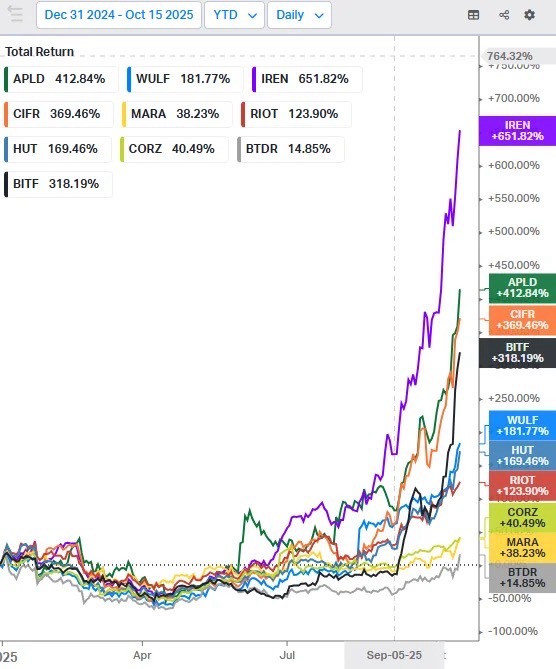
Even with headlines about U.S.-China tensions dominating markets, mining stocks like Bitdeer and IREN continue to reach new highs, showing that “power plus sites” can be quickly repurposed for AI computing.
September Update Shows Strong Growth
Bitdeer’s latest operational update revealed several key points:
1. Mining Production and Hashrate Expansion
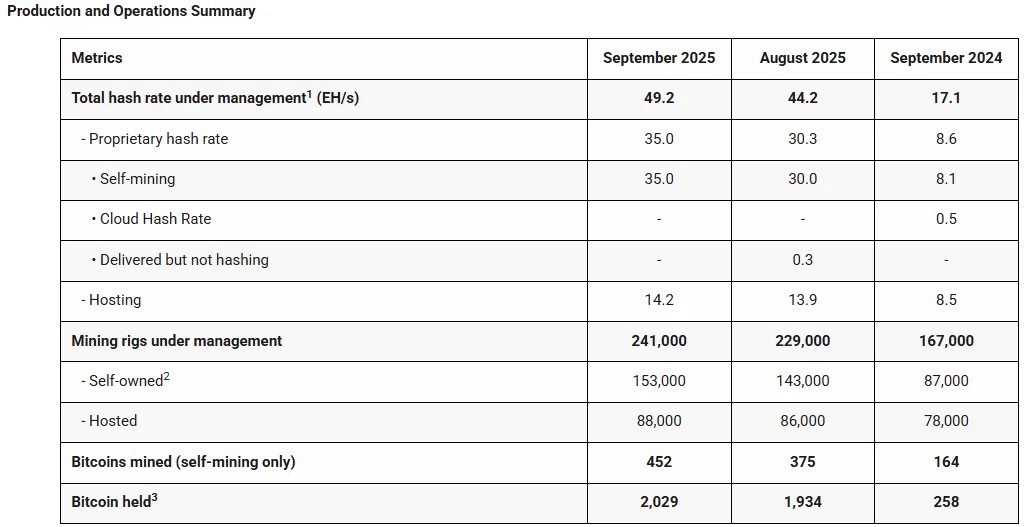
In September, Bitdeer mined 452 BTC, up 20.5 percent from August. Self-mining hashrate reached 35 EH/s (exahashes per second), with guidance to hit 40 EH/s by late October. Including hosted mining, total managed hashrate stands at 49.2 EH/s, with 153,000 self-owned machines. Older third-party rigs are being phased out to improve efficiency and margins.
2. In-House Miner and Chip Development
The A3 miner series is now in mass production, available in both air- and liquid-cooled versions, with efficiency ranging 12.5–14 J/TH for air and 12.5–13.5 J/TH for liquid, and peak performance up to 660 TH/s. The next-generation SEAL04 (A4) chip has been taped out, with early samples achieving under 10 J/TH at the chip level, aiming for 5 J/TH long term.
3. Power and AI Data Center Expansion
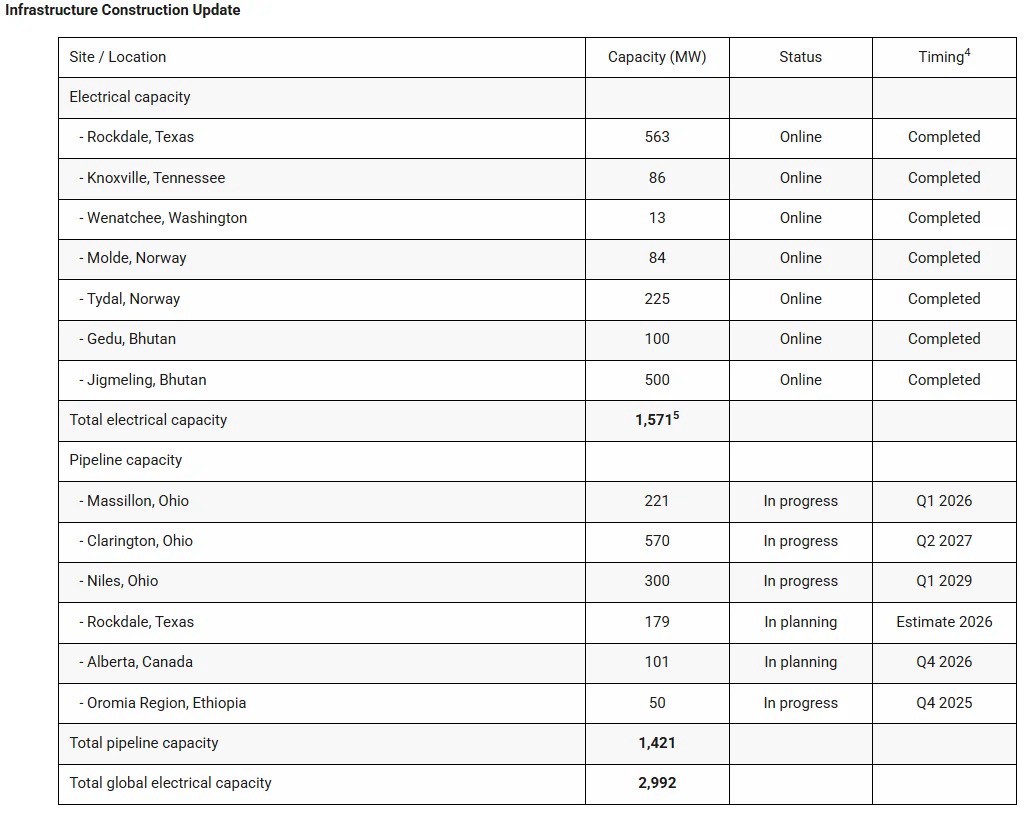
Bitdeer secured power delivery for its 570 MW Clarington, Ohio site by Q3 2026—significantly ahead of schedule. The company also plans to convert Norway’s Tydal Phase II (175 MW) and Wenatchee, Washington (13 MW) into AI-focused data centers. By the end of 2026, Bitdeer expects over 200 MW of AI IT load, mostly owned. In a “full GPU fleet” scenario, the company sees annual recurring revenue (ARR) exceeding $2 billion.
4. AI Cloud Footprint Taking Shape
Bitdeer.AI currently runs at roughly $8 million ARR for September, with 584 GPUs installed at around 86 percent utilization. The company aims to reach 1,160 GPUs by year-end and is negotiating with GB300/B300 platforms for further expansion.
Two Paths for AI Transformation
Bitcoin miners have two main strategies to pivot into AI infrastructure:
1. Light-Asset Hosting Model
Here, customers bring their own GPUs while the miner provides power, space, operations, and networking. Revenue comes from kilowatt or rack fees plus services. CapEx is lighter and cash flows resemble utility-style returns, but revenue per MW is lower. Bitdeer’s AI-ready site design targets this flexible approach.
2. Heavy-Asset GPU Cloud Model
The miner purchases GPU clusters (GB300/B300) and runs them as cloud or cluster leasing infrastructure. Revenue per MW is highest, but upfront investments and supply challenges are substantial. Bitdeer’s 200+ MW goal aligns with this model. IREN is pursuing a similar approach, aiming for roughly 23,000 GPUs by 2025, exemplifying the “miner-to-AI” trend.
Why Bitcoin Miners Are Valuable in the AI Era
The AI boom is creating unprecedented demand for electricity. Morgan Stanley estimates the U.S. will face a 45 GW data-center power shortfall from 2025 to 2028. Even with gas and nuclear power, the gap is significant.
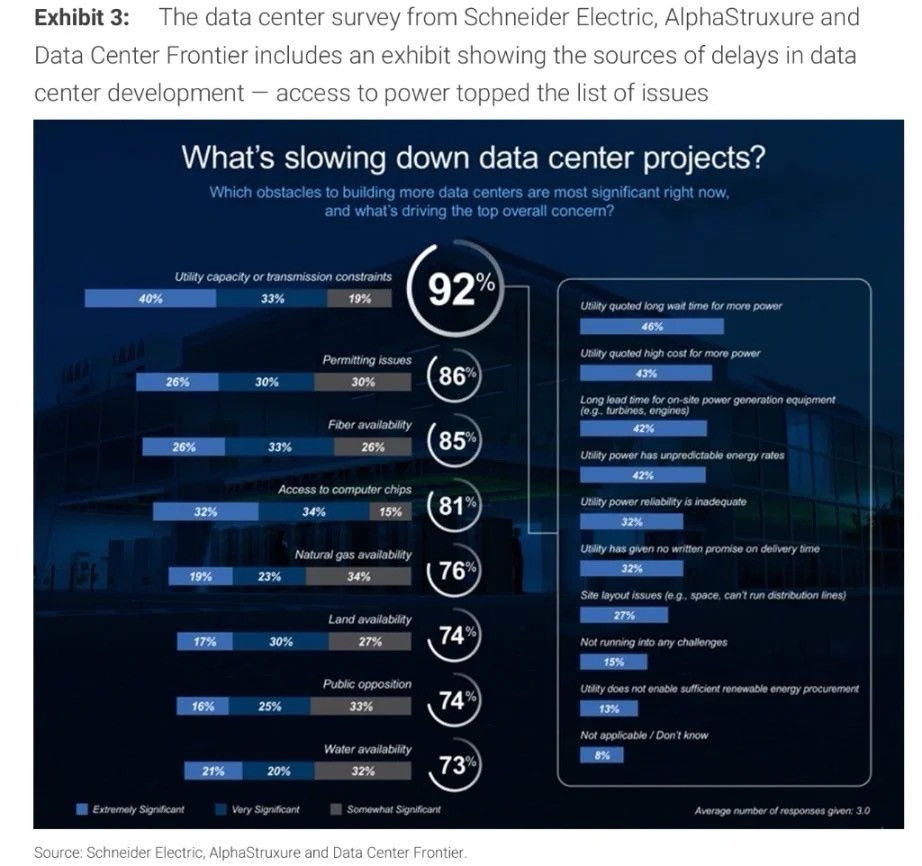
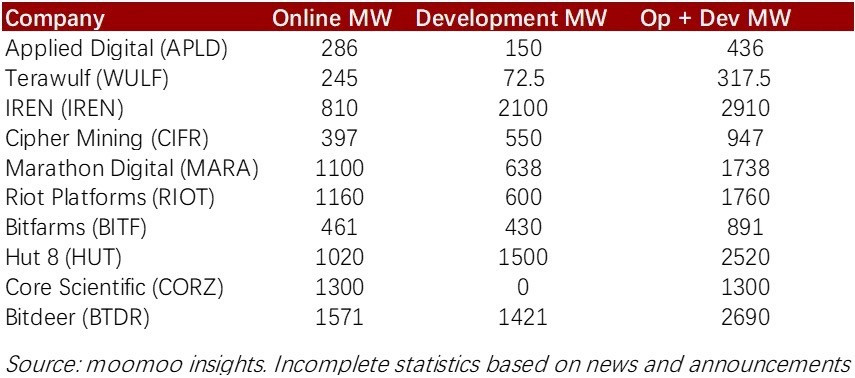
Unlike greenfield data centers, Bitcoin mining campuses are already grid-connected, making them fast, low-risk power sources for AI workloads. In the U.S., roughly 6.3 GW of miner-operated power is online, with another 2.5 GW under construction.
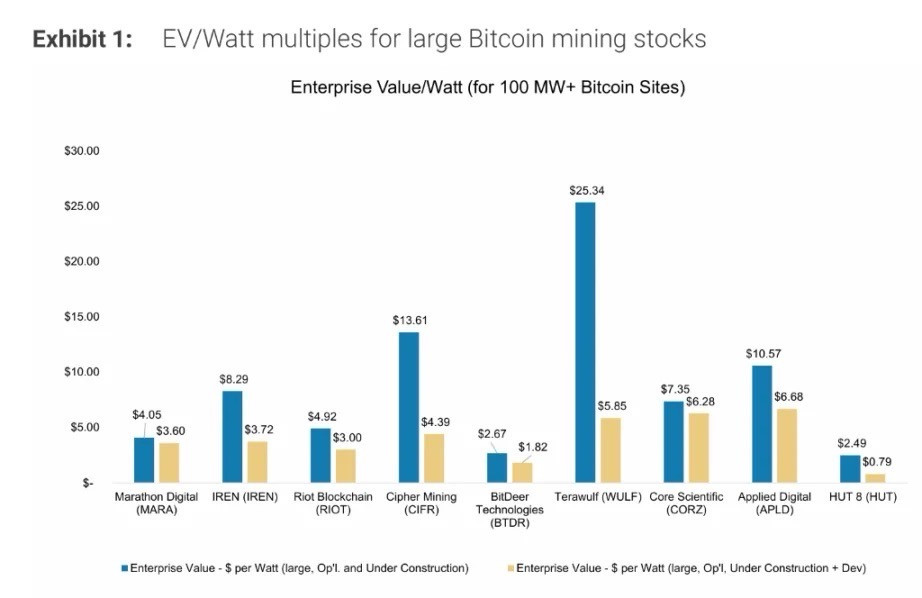
Current valuations of many mining stocks still reflect traditional crypto logic, leaving EV/Watt multiples relatively low. Converting a mining site into an HPC-ready “powered shell” for long-term leasing could, according to Morgan Stanley, generate $5–$8 in equity value per watt—far higher than many miners’ current trading levels. For a 100 MW site:
• A hyperscaler tenant could create roughly $519 million in equity value ($5.19/W).
• A Neocloud tenant could generate around $781 million ($7.81/W).
Risks and Considerations
The AI pivot has driven near-term stock surges, but the sector remains crowded and volatile. Successful transitions require technical expertise, GPU supply access, and client integration capabilities—factors that not every miner can replicate.
For investors, Bitdeer’s stock move underscores a broader lesson: the value of Bitcoin mining operations is no longer only tied to crypto cycles. With smart management of power and real estate, miners can unlock new growth in AI infrastructure, potentially delivering far more predictable and scalable returns than mining alone.