
Oracle’s Big Bet: Can 50,000 AMD Chips Break NVIDIA’s Hold?

$ORCL announced at AI World 2025 that it will deploy 50,000 $AMD MI450 accelerators in $ORCL Cloud starting Q3 2026, a deal Reuters/announcements put at about $4.5 billion in hardware.
Paired with OpenAI’s recent agreement to pay for some chips with $AMD stock, markets are asking: will these deals really translate into cash and chips for $AMD — and can $AMD actually deliver?
Short answer up front: yes — but with important caveats. $ORCL doesn’t have to pay the full amount up front; deployment is phased, which spreads cash out.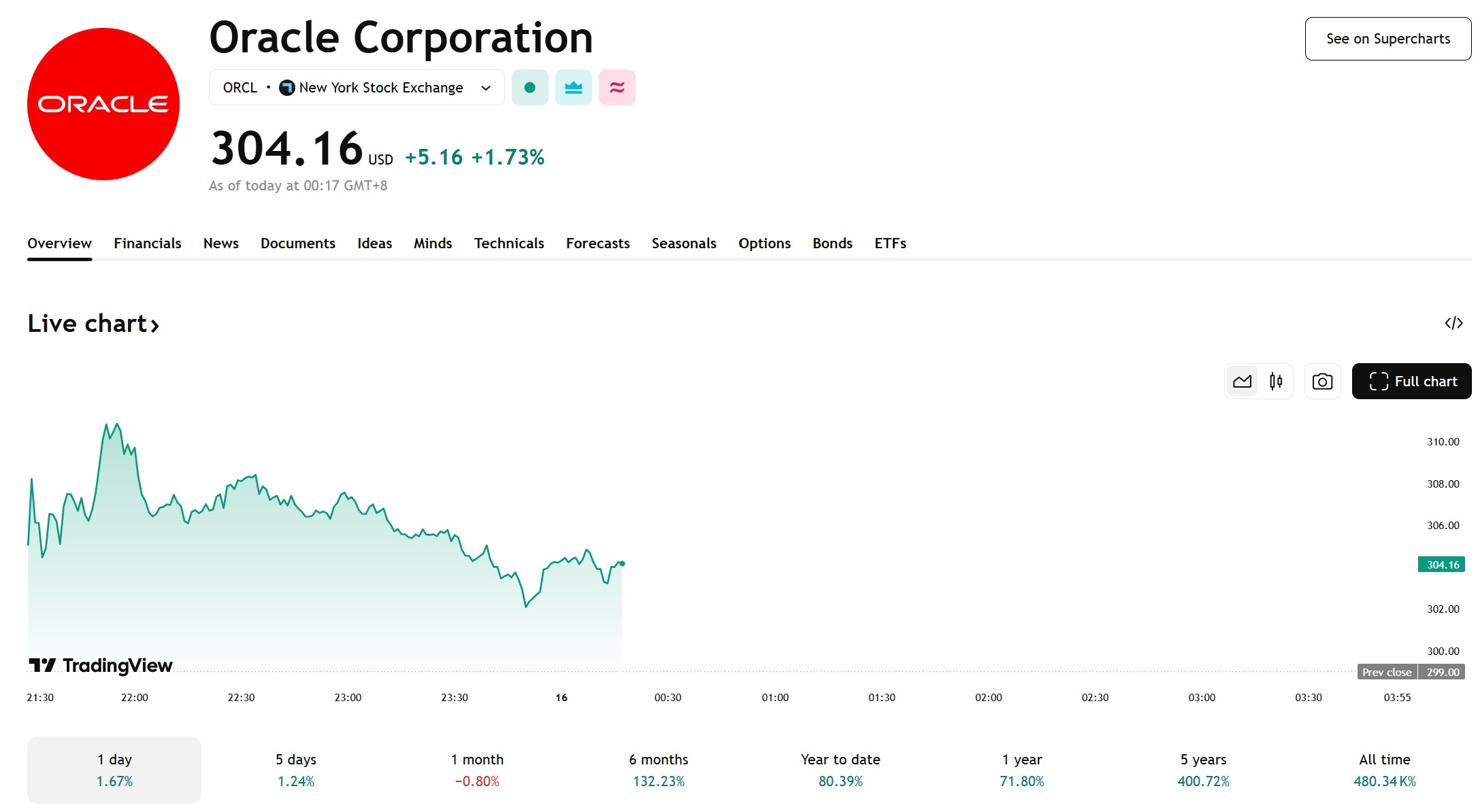
$AMD ’s ability to deliver at scale hinges on $TSM capacity for bleeding-edge 2nm wafers and on milestone-based rollouts. And OpenAI’s equity-for-infrastructure moves raise legitimate questions about circular funding and near-term profitability for $AMD .
Quick facts: what really happened?
- Oracle will deploy 50,000 AMD MI450 GPUs starting Q3 2026 (order value ≈ $4.5B).
- OpenAI agreed to pay part of its chip purchases with AMD stock.
- Oracle cash ≈ $10.445B (Aug 31, 2025); it has committed >$300B to cloud/GPU expansion and reported ~$317B of increased future contract revenue (largely from a ~5-yr, ~$300B OpenAI deal).
- AMD says the MI450 uses TSMC 2nm (core) and N3P for supporting dies.
- TSMC 2nm capacity is tight (reports say Apple reserved >50% of 2026 capacity); capacity and yields are the main delivery risk for AMD.
- The Oracle/OpenAI orders signal vendor diversification vs. NVIDIA, but raise circular-funding and near-term cash/timing questions.
Where the money comes from: is Oracle able to pay?
Oracle has cash, but not enough to write a single lump-sum check for every future GPU line item. The practical answer lies in contracts and cash flow mechanics.
Oracle’s cloud investments are structured around phased rollouts and milestone payments. The company can amortize purchases, sign long-term supply and service contracts, and finance hardware through multiyear commitments to cloud customers (including OpenAI).
That lets Oracle spread cash out across quarters and monetize GPU deployments as paid cloud capacity rather than one-time inventory purchases.
So, while $10.445B of on-hand cash doesn’t cover a headline $4.5B order in isolation, contractual staging, vendor financing, and OCI revenue make the deployment financially plausible — provided Oracle’s larger investment program and its OpenAI-linked commitments remain intact.
Can AMD deliver at scale? TSMC’s factory calendar is the bottleneck
The MI450 is described as a 2nm design for the XCD core, with peripheral dies on TSMC’s N3P. That puts AMD squarely into the most contested slice of TSMC’s roadmap.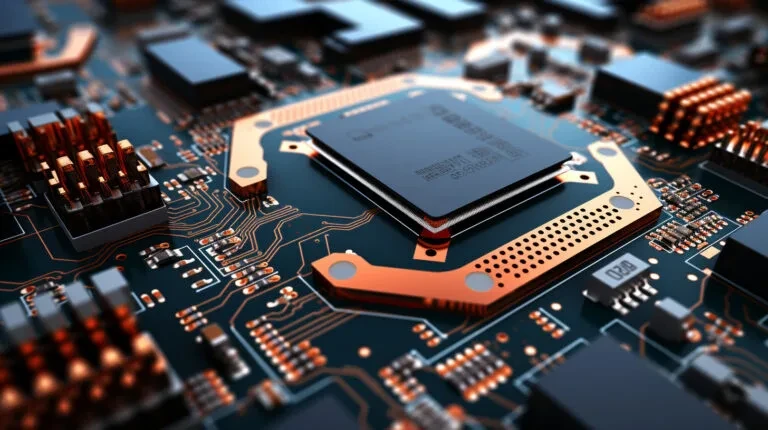
TSMC has signaled heavy demand for 2nm capacity, and reports suggest Apple has reserved a substantial share of 2nm output for 2026.
TSMC’s CEO has emphasized site expansions in Hsinchu, Kaohsiung and U.S. Arizona, and noted roughly 30% of advanced 2nm capacity will be in Arizona — but that does not mean immediate spare wafer lots.
Two immediate risks for AMD: prioritization (which customer gets first silicon and ramp priority) and volume yield (can 2nm reach the wafer yields needed for mass shipments?).
Even with a design tape-out, ramping to tens of thousands of accelerators across OEM module assembly, board partners and cloud-scale integration is a many-quarter process.
The Oracle timeline (Q3 2026 rollout) is aggressive but not impossible — contingent on TSMC prioritization, yield curves and AMD’s own systems-integration speed.
Is this a circular financing problem — or strategic market capture?
Critics call the OpenAI ↔ Oracle ↔ AMD triangle a circular financing loop: OpenAI leverages cloud capacity, Oracle books big contract revenue with OpenAI, and part of the chip payment comes back to AMD partly via stock considerations. That loop raises two concerns.
Near-term earnings: if material volumes are paid in stock or deferred across long contracts, AMD’s GAAP cash receipts may lag the headline order values.
Systemic risk: dependence on one or two hyperscale customers — especially those burning capital fast — can create demand volatility if policy, energy or regulation shifts.
But viewed differently, the arrangement is a market-share play. OpenAI’s willingness to take equity exposure helps AMD win reference designs and software validation (ROCm) against NVIDIA’s entrenched stack. That validation can generate follow-on orders from other cloud providers and enterprise buyers who prefer a multi-vendor GPU supply.
Why AMD still stands to gain?
Even with these caveats, AMD’s strategic upside is tangible.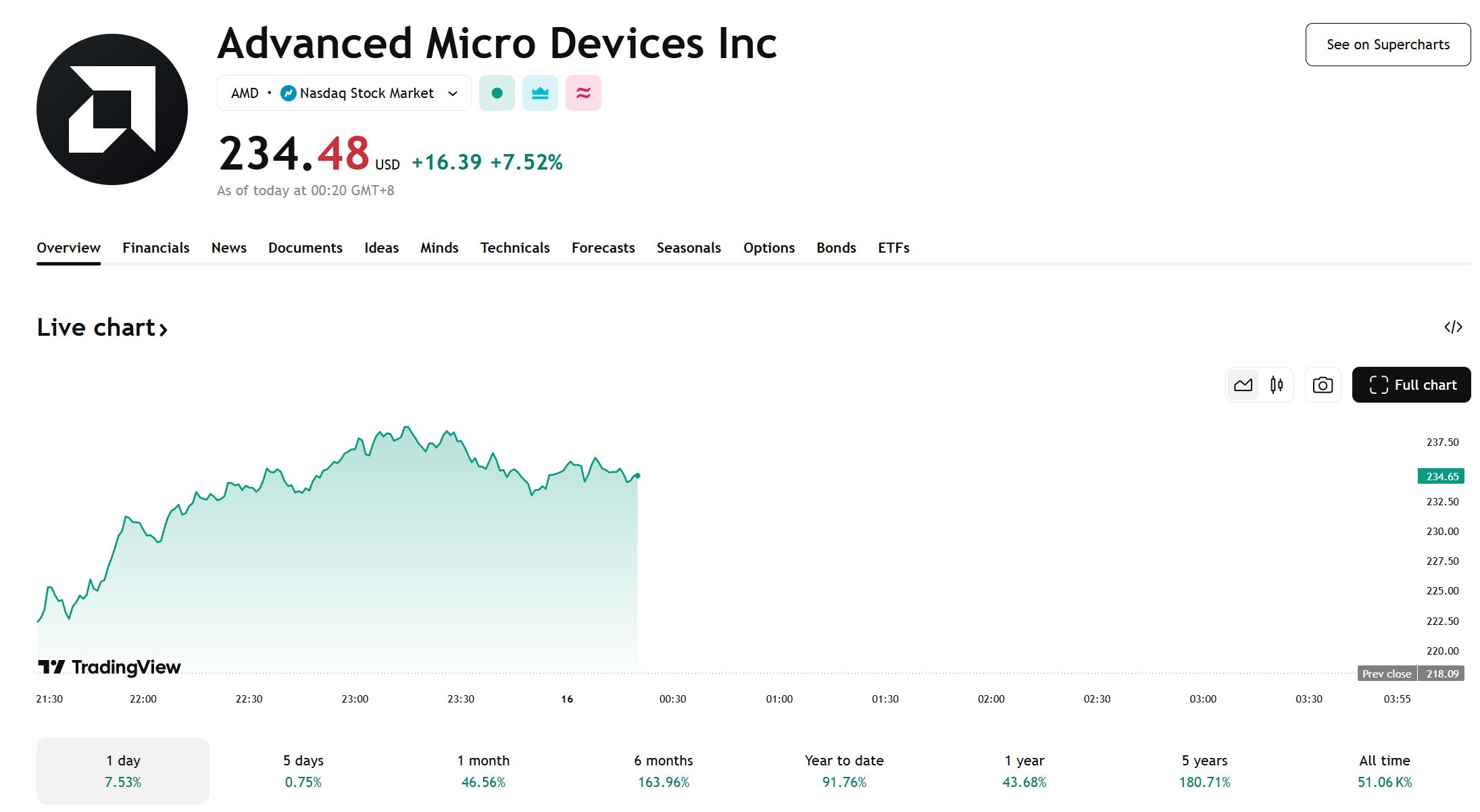
Performance per dollar matters to many cloud buyers. The MI450’s architecture plus an open software stack (ROCm) make AMD a credible alternative to NVIDIA on price/perf and portability.
Reference deployments at OpenAI and Oracle act as high-profile proofs of capability — a classic “if it runs here, it can run there” sales lever.
Diversifying hyperscaler relationships reduces single-vendor fragility in the AI stack and can accelerate competition on price and features.
If AMD executes wafer supply, module assembly, and software stability, the Oracle + OpenAI spool could be the beachhead that chips away at NVIDIA’s dominant share.
What to watch next?
- Oct 16, 2025: TSMC earnings / guidance call — watch comments on 2nm capacity, yield progress and allocation.
- Nov 4, 2025: AMD Q3 earnings and management commentary — look for supply guidance, MI450 yield updates and timeline confirmation.
- Oracle milestones: Oracle announcements about Helios cluster trials, first-rack installations or milestone invoices will be decisive for cash timing and validation.
- First on-cloud sightings: proof-of-performance benchmarks and ROCm compatibility notes from independent testers will indicate whether AMD’s stack is ready for hyperscale AI loads.
The meme, briefly: “AMD YES” and what it signals
“AMD YES” started as a fandom refrain when AMD shifted from challenger to contender in CPUs and GPUs. This moment recycles that meme: it’s about credibility, price/perf and momentum, not about instant jackpot profits.
The MI450-Oracle-OpenAI axis is a test of supply chains, contract structuring, and software maturity. If AMD crosses these technical and logistical hurdles, the meme will feel more like strategic reality than cheerleading.
Bottom line: Oracle’s 50,000-unit MI450 commitment is meaningful proof that hyperscalers are willing to diversify their AI accelerators. But converting headline dollar amounts into near-term cash and mass shipments depends on phased payments, TSMC’s 2nm ramp and AMD’s ability to hit enterprise software and yield milestones.
The result could be a genuine multi-vendor AI stack — or a cautionary tale about optimistic timelines. Either way, investors and engineers should watch TSMC and AMD’s next earnings and trial announcements closely.