
U.S. Regional Banks Hit Hard as “Credit Cockroaches” Emerge — Safe Havens Surge Again

Shearing sheep
October 17, 2025
GoGPT Summarizes Articles
It seems Jamie Dimon’s warning couldn’t have been more timely. Just two days after the JPMorgan CEO used the now-famous “cockroach” analogy to describe hidden risks in the U.S. credit market, Wall Street was hit by a fresh wave of panic. Two regional banks — Zions Bancorp ($ZION) and Western Alliance ($WAL) — revealed unexpected loan losses and even potential fraud, triggering a sector-wide sell-off and sending investors fleeing to the safest corners of the market.
Financial Stocks Sink, Safe Havens Shine
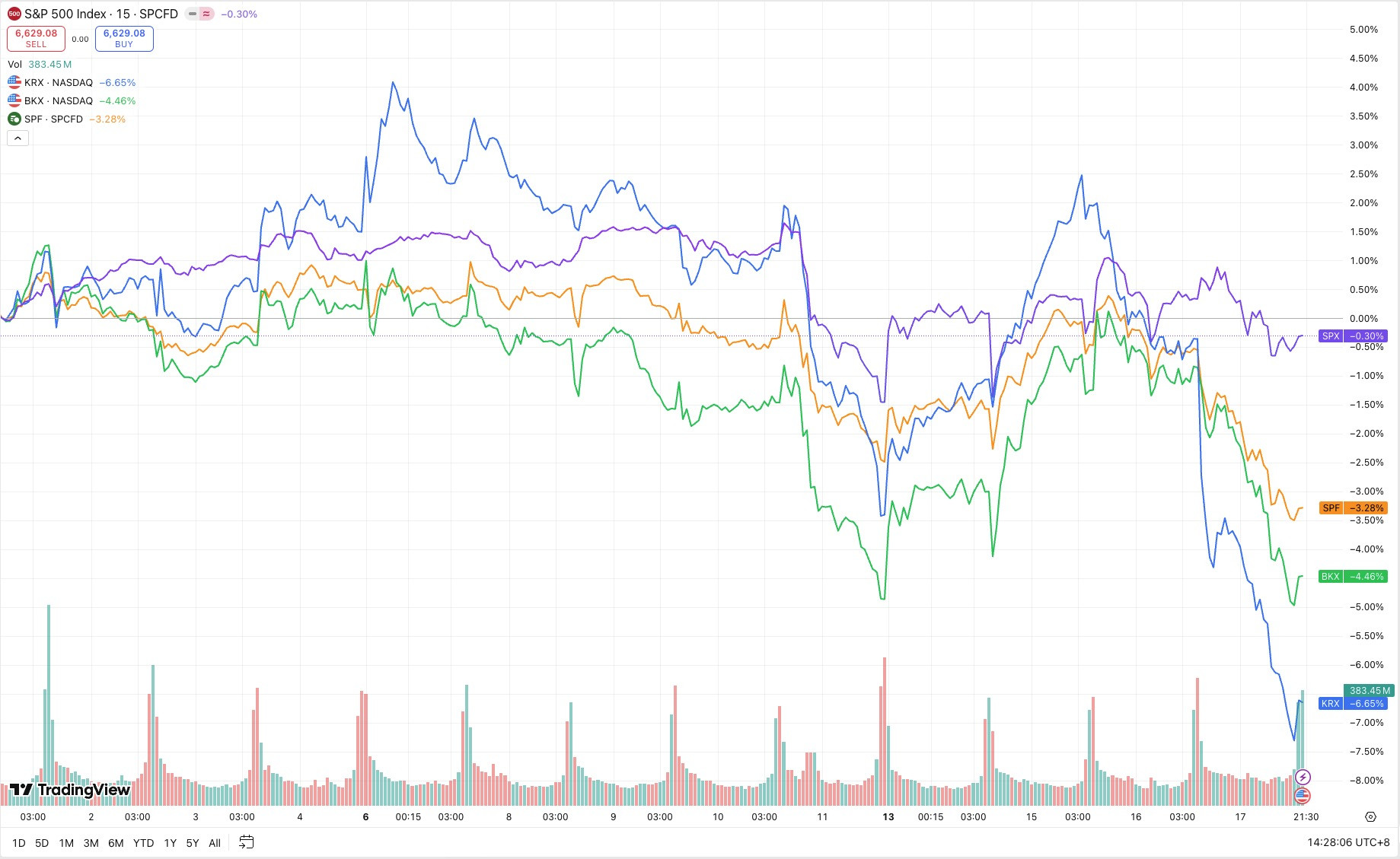
The reaction was swift and brutal. On Thursday, U.S. bank stocks were hammered across the board. The KBW Regional Bank Index slumped 6.3%, and the broader KBW Nasdaq Bank Index dropped 3.6%, both marking their worst performances since April. The S&P 500 also fell sharply, with the financial sector leading losses — down 2.75% for the day.
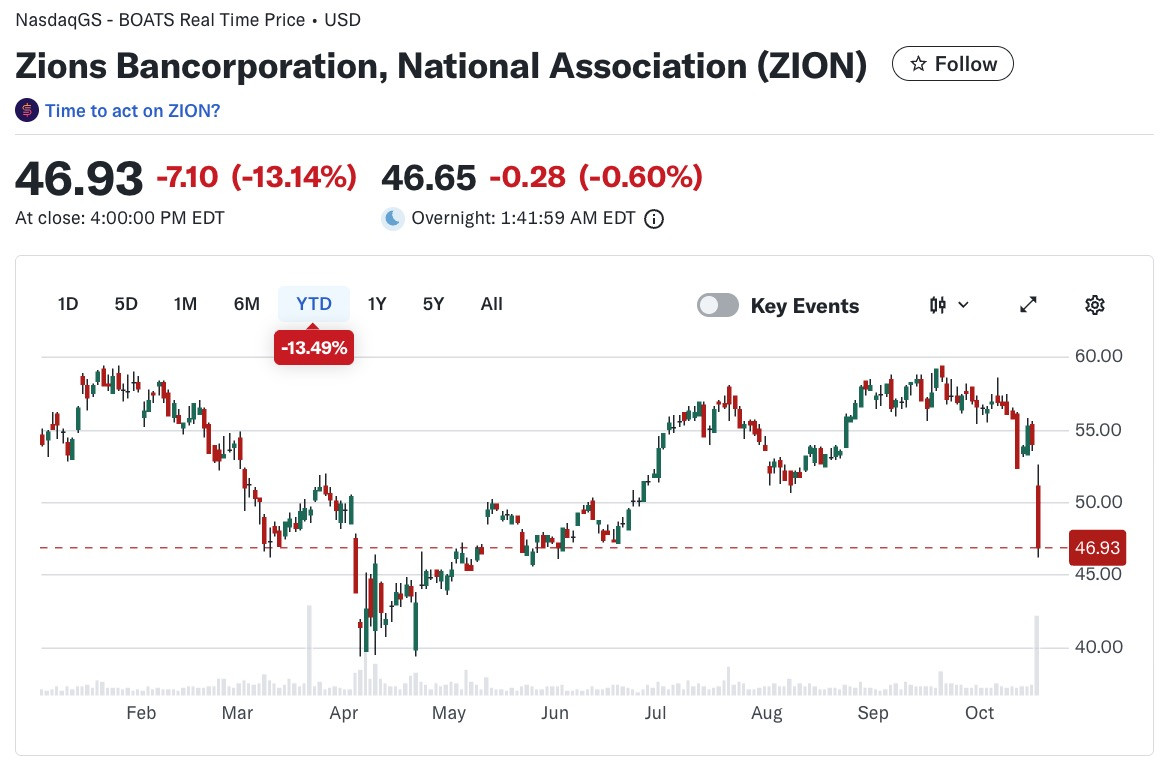
Zions Bancorp’s shares plunged 13% after the bank disclosed two problematic commercial loans in California, forcing it to set aside $50 million in loan loss provisions.
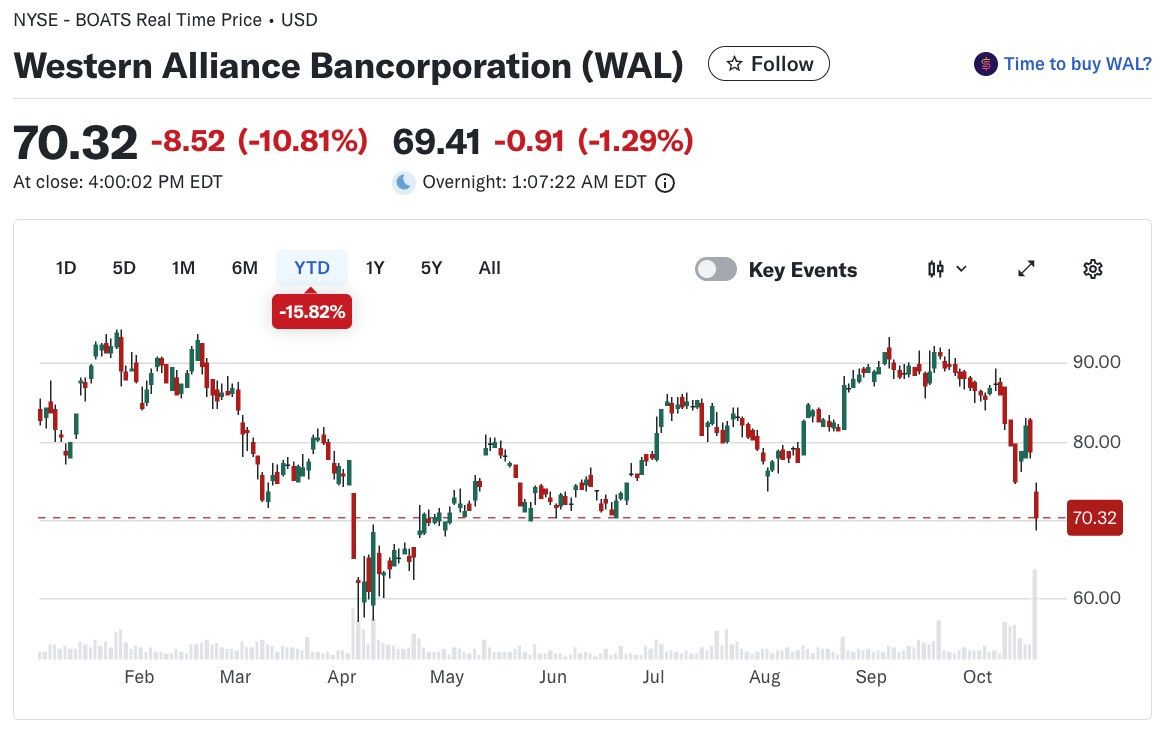
Western Alliance followed closely, tumbling over 10% after filing a lawsuit against a borrower accused of fraud on a $100 million credit line.
These revelations couldn’t have come at a worse time. Investors were already uneasy about rising trade tensions and a weakening U.S. economy. The new wave of credit concerns simply tipped the balance — and the market quickly shifted into risk-off mode.
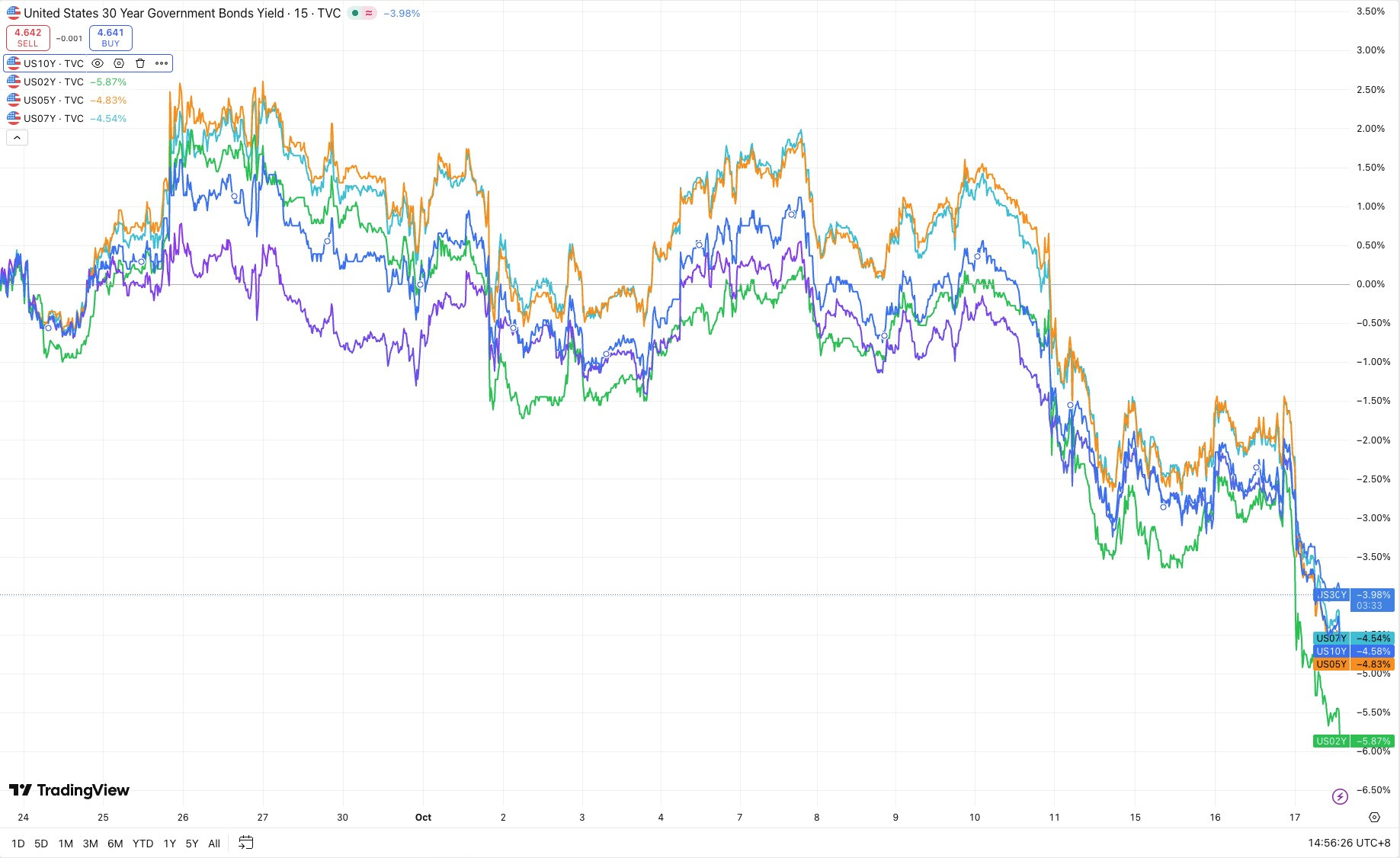
The flight to safety was unmistakable. U.S. Treasury yields tumbled across the curve, with the 10-year yield slipping below the symbolic 4% threshold to 3.976%, its lowest since April, and the 2-year yield hitting its weakest level since 2022.
Meanwhile, gold extended its monster rally, soaring to another all-time high of $4,380 per ounce — the fourth consecutive record close. The precious metal has now surged more than 60% year-to-date, fueled by a perfect mix of geopolitical tensions, aggressive rate cut bets, central bank buying, and growing de-dollarization.
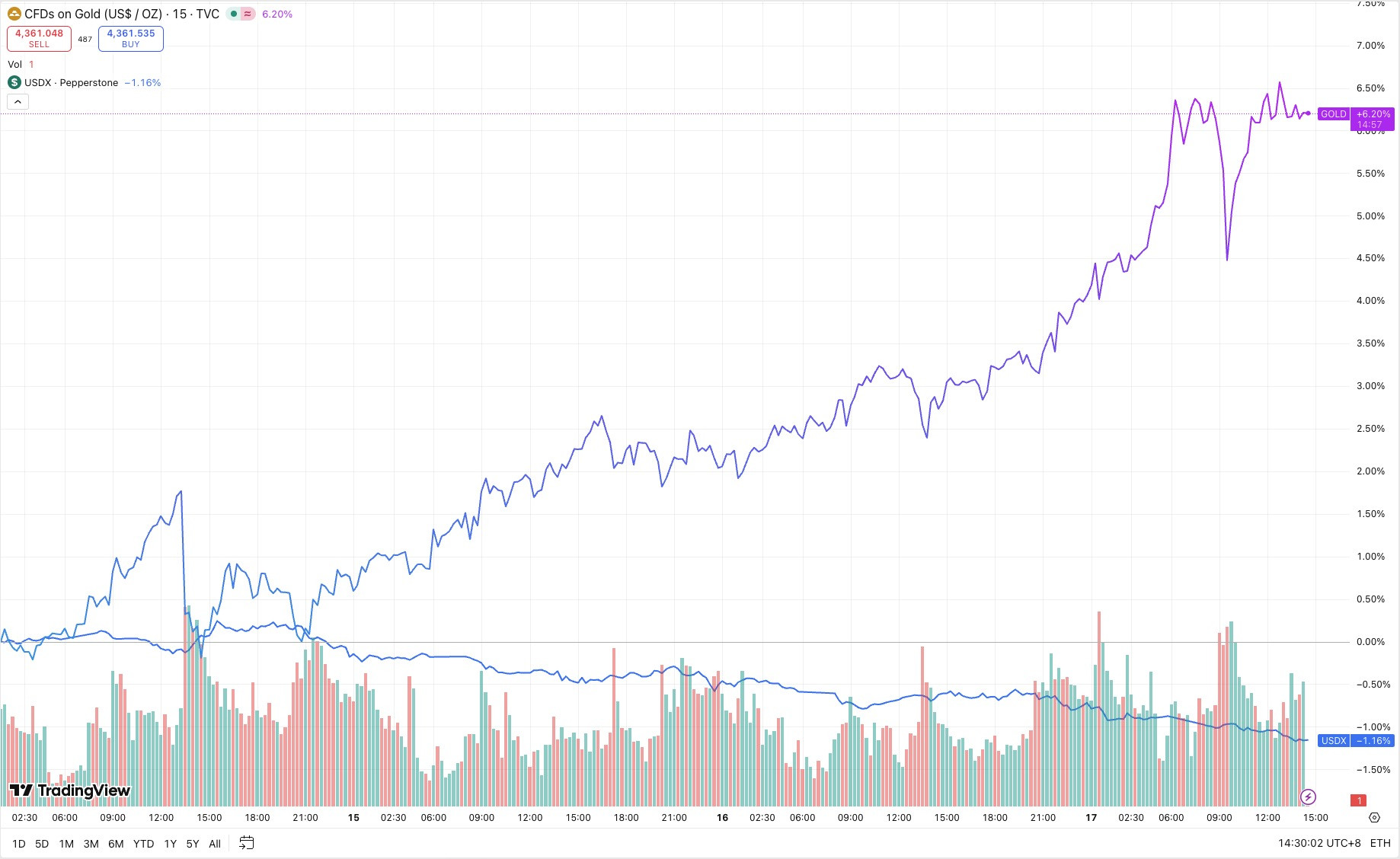
It’s the classic “fear trade”: sell banks, buy bonds and gold.
The Return of the Regional Bank Ghost
If all this feels familiar, that’s because it is. The bond market’s sudden rally recalls past episodes of regional banking stress.
-
In March 2023, the collapse of Silicon Valley Bank triggered a historic 100-basis-point plunge in 2-year Treasury yields.
-
In January 2024, a small New York bank’s collapse caused another brief panic, again driving yields sharply lower.
Now, once again, small and mid-sized lenders are flashing red lights. The key concern this time centers on non-deposit financial institutions (NDFIs) — a segment that includes riskier players like subprime auto lenders, specialty finance companies, and small business credit providers.
Zions’ problematic loans appear linked to this very space. The bank disclosed that its losses came from commercial real estate loans tied to borrowers who were also connected to other lenders. Many of these loans are now under legal dispute, with banks accusing several related entities of loan fraud and asset transfers.
Evercore ISI analyst John Pancari called Zions’ case “the latest in a string of credit issues involving NDFIs,” warning that investors are right to be cautious about such exposures.
Western Alliance’s situation looks similar. Its lawsuit against Cantor Group V LLC over a defaulted credit facility shows how quickly small pockets of fraud can ripple across the regional banking system.
Jamie Dimon’s “Cockroach Theory” Comes Alive
All this unfolded just days after Jamie Dimon sounded his warning bell. Speaking earlier in the week, the JPMorgan chief drew a colorful comparison: “When you see one cockroach, there are usually more.”
Dimon was referring to the recent bankruptcies of Tricolor Holdings (a subprime auto lender) and First Brands (an auto parts supplier). Both collapses raised eyebrows about the health of certain credit sectors — especially as banks have extended large volumes of loans to such borrowers in recent years.
His point was simple: these incidents might not be isolated. Once one loan blowup surfaces, others tend to follow.
For big banks like JPMorgan or Citigroup, that’s not a crisis — their balance sheets can absorb a few bad loans. But for smaller players like Zions or Western Alliance, a handful of defaults can cause serious capital and liquidity strain.
Wells Fargo’s banking analyst Mike Mayo summed it up perfectly: “If JPMorgan loses money on Tricolor, that’s no big deal. But for small banks, it could be a big problem.”
Contagion or Contained?
So, is this the beginning of another regional banking crisis? Probably not yet. Analysts generally agree the situation is more a confidence shock than a systemic event. But the optics are bad — and sentiment in the banking sector has clearly deteriorated.
Goldman Sachs President John Waldron recently warned that weakness in subprime and small-business lending might signal a “two-speed economy,” where lower-income consumers and smaller firms are already feeling real pain. If that trend deepens, defaults could rise, especially in areas like commercial real estate and auto loans — precisely where regional banks are most exposed.
The pattern is worrying: one small failure after another, each one “isolated” until it suddenly isn’t. As the saying goes — the first cockroach never comes alone.
Investors Shift Playbook
For investors, the message is becoming clearer: credit quality is back in focus. The easy-money era is over, and now every balance sheet is under scrutiny. Traders are piling into safe-haven trades, from Treasuries to gold and even defensive equity sectors like utilities and consumer staples.
The irony, of course, is that this surge in safe assets is pushing yields lower — which could, in turn, support valuations for growth stocks again. But make no mistake: the risk mood in markets has turned sharply cautious.
The Bigger Picture
Whether or not this turns into another 2023-style crisis, the underlying signal is that U.S. credit markets are showing strain. Years of high interest rates are catching up to borrowers, and smaller lenders — without the deep pockets of Wall Street’s giants — are the first to feel the pressure.
#Breaking Macro Events: Market Impact & Analysis#$Western Alliance Bancorporation(WAL)