
When Gold Becomes Everyone’s Favorite Hedge It’s Time to Be Cautious

Gold has once again captured the world’s attention. Prices keep breaking records, and investors everywhere are asking the same question: is this rally real, or just another short-lived surge?
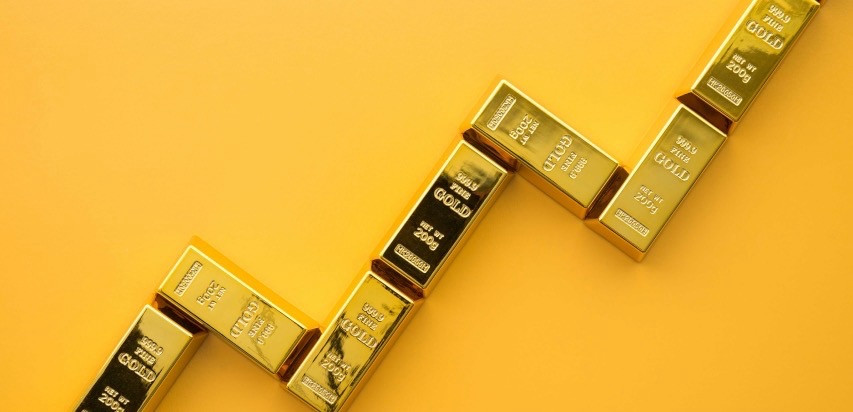
Over the past 50 years, gold has seen three major bull runs — in 1979, 2011, and now. The first two ended badly. Both times, investors made fortunes during the climb, only to watch those gains disappear. So, could this time really be different?
Why Gold Is Soaring Again
The current rally began after Russia invaded Ukraine. When the U.S. and Europe froze Russia’s foreign reserves, it sent a shock through the developing world. Many central banks suddenly realized that their dollar assets might not be as “safe” as they thought.
So they started buying gold — a reserve asset without a passport. This wave of de-dollarization was the first push behind gold’s latest rise.
Then came the U.S. debt problem.
America’s debt burden is now so massive that annual interest payments alone exceed one trillion dollars. That sparked a new fear: what if the Federal Reserve eventually chooses to “inflate away” the debt by letting prices rise?
When people start to doubt the dollar, they often turn to the oldest form of money humanity has ever trusted — gold.
What Makes This Time Feel Different
Unlike the last two bull runs, today’s world is shaped by deeper political and economic uncertainty.
The dollar’s global dominance is being questioned for the first time in decades. Countries are experimenting with other currencies for trade, and many are stockpiling gold as a backup in case geopolitical tensions escalate further.
At the same time, the U.S. Federal Reserve seems to be shifting its tone. When Chair Jerome Powell hinted at the Jackson Hole conference that the Fed might focus more on employment than on inflation, markets heard one thing — rate cuts are coming.
And when the Fed gets cautious, gold gets bold.
The Risk No One Wants to Talk About
Still, there’s one uncomfortable truth: this rally looks a lot like the start of a bubble.
In the past two years, gold prices have nearly doubled. That same pattern happened in both 1979 and 2010 — and in both cases, prices crashed soon after.
In the early 1980s, Fed Chair Paul Volcker crushed inflation by raising interest rates aggressively, sending gold down 50% within two years. It took more than two decades for gold to recover.
After 2011, it was déjà vu: inflation fears proved wrong, and gold slid for five straight years.
Now, even if today’s macro story feels stronger, one thing hasn’t changed — prices can only defy gravity for so long.
Goldman Sachs estimates gold now makes up 6% of global investment portfolios, up from 4% two years ago. That’s the highest since 1986. For perspective, during the 1980 bubble, that share hit 22%.
When too many investors start buying gold “just because it’s going up,” that’s when caution matters most.
So What Should Investors Do
Here’s the short answer: you can own gold — just not too much of it.
Gold still plays a valuable long-term role as a hedge against inflation, political shocks, and the erosion of dollar trust. But short-term, it might already have priced in too much optimism.
A practical approach might look like this:
• Keep gold to no more than 10% of your portfolio for diversification;
• Watch for central bank buying — that’s the real engine behind prices;
• Wait for a meaningful pullback before adding more, especially before the Fed’s first rate cut.
Buying gold isn’t about chasing profits — it’s about buying peace of mind.
The real risk isn’t price volatility, but emotional volatility.
The Bigger Picture
Every gold boom reflects a deeper sense of anxiety about the world. But history reminds us that there is no permanent safe haven.
Gold can soar — and it can fall just as fast.
What determines your returns isn’t the market’s emotion, but your calm within it.
So before you buy more gold, ask yourself one simple question:
Are you buying protection — or just buying the feeling of being safe?