
Oracle Plummets Nearly 7%! Wall Street Questions: The Vision Is Grand, But Where’s the Money?

The AI boom brought substantial stock gains for Oracle last month, but now, AI “fatigue” may be causing pain…
On Thursday, at Oracle’s AI World Conference in Las Vegas, the company significantly raised its long-term guidance targets. However, unlike a year ago when it first announced these goals or last month when it reported stunning earnings, investors seemed unmoved by Oracle’s grand vision this time—on Friday, Oracle’s stock plunged nearly 7%, marking its worst single-day performance since January and making it one of the biggest decliners in the S&P 500 that day…
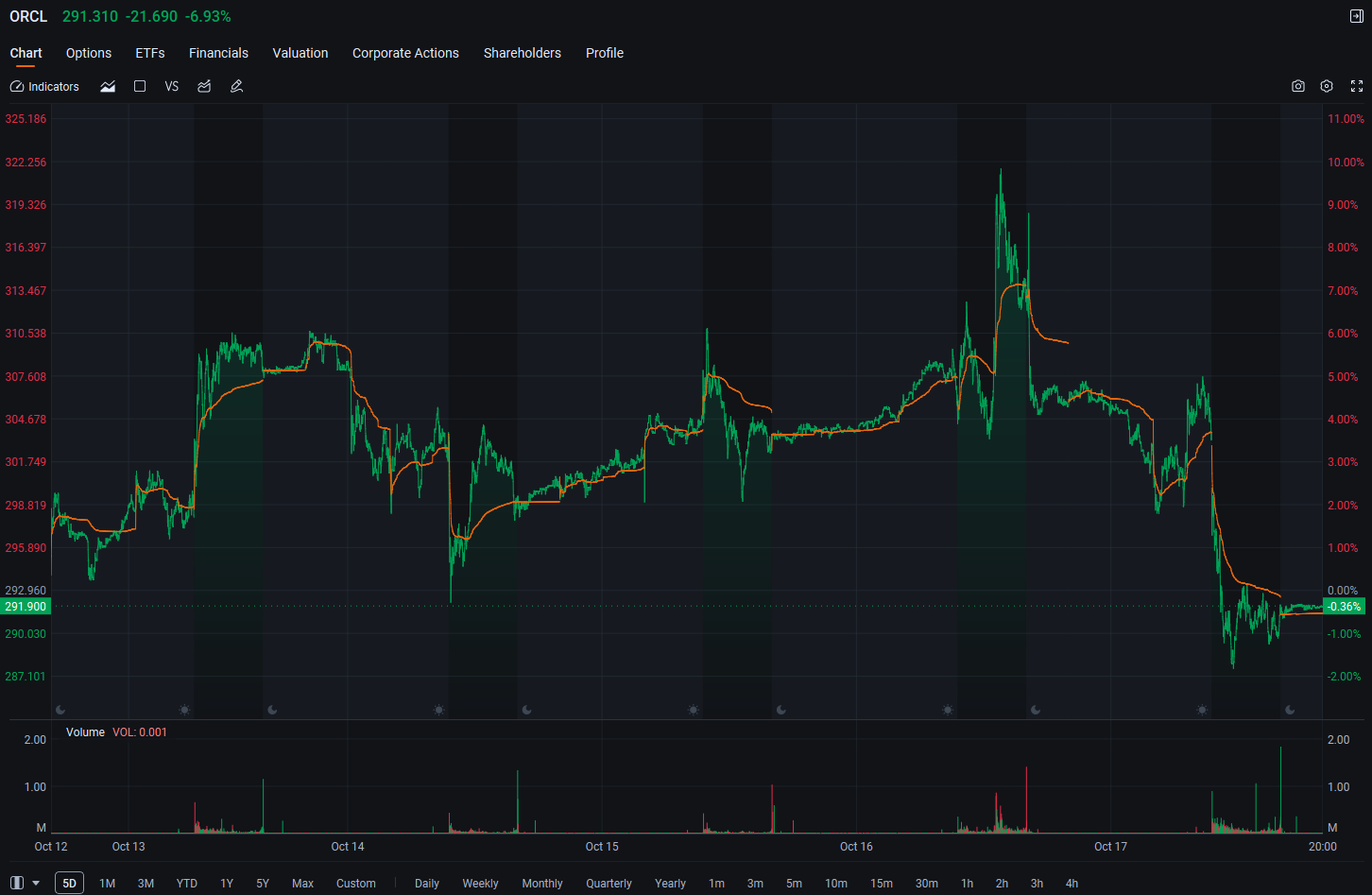
The stock’s movement suggests investors heard something they didn’t like during Thursday’s presentation—despite Oracle executives sharing 2030 fiscal year revenue and EPS targets of $225 billion and $21, respectively, both signaling significant growth for the rest of the decade.
At Thursday’s investor presentation, Oracle stated that its AI infrastructure business (leasing computing power from AI chips in Oracle data centers) would achieve gross margins of 30% to 40% by 2030. This was evidently in response to a report by The Information last week claiming Oracle’s GPU leasing business had a gross margin of only ~16% over the past five quarters, which had sparked market concerns about the profitability of its AI business.
The company also raised its 2030 fiscal year cloud infrastructure revenue forecast from an already ambitious $144 billion in its latest earnings to $166 billion, with total revenue projected at $225 billion, implying a compound annual growth rate (CAGR) of over 31%, and an adjusted EPS target of $21.
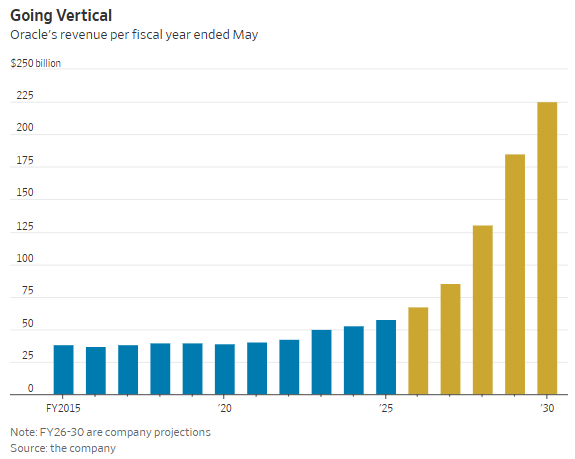
Oracle’s long-term goals imply a revenue CAGR of slightly over 30% for the next five years. According to S&P Global Market Intelligence, this 48-year-old company has not achieved such growth since the 1990s.
Undoubtedly, these numbers are impressive. However, on Friday, Wall Street analysts pointedly highlighted issues behind Oracle’s ambitious goals—for instance, Oracle failed to address how it will fund the massive network expansion needed to achieve such returns.
When Oracle unexpectedly issued $18 billion in investment-grade bonds in late September, its stock came under pressure.
The vision is grand, but where’s the money?
Deutsche Bank analysts noted that some investors likely wanted more details on the company’s capital expenditure plans.
Jefferies analyst Brent Thill said Oracle did not disclose its capex projections, leaving unanswered questions about the costs of meeting customer AI demand expectations.
Thill noted, “Capex often needs to align with cloud infrastructure revenue growth, raising concerns about Oracle’s financing plans to support this expansion.”
JPMorgan analyst Mark Murphy pointed out that while Oracle’s 2030 revenue target is striking, it suggests revenue growth from new or expanded contracts will slow by the end of the decade.
Murphy also cautioned investors against Oracle’s lofty expectations: “Overall, we sense investors are weighing the impressive financial guidance. There’s also a concern that this guidance sets an extremely high bar for the next five years, and software companies’ track record of executing 4-5-year guidance frameworks is not ideal.”
Regardless, supporting AI workloads first requires expensive chips from companies like Nvidia and AMD, along with complementary components to run them in data centers. In the latest fiscal year ending May, Oracle’s capex exceeded its operating cash flow for the first time since 1990.
This may just be the beginning. According to Visible Alpha’s consensus estimates, Wall Street expects Oracle to post negative free cash flow for the next three fiscal years, with cumulative cash burn nearing $29 billion by the end of FY2028.
In a report following Thursday’s conference, Stifel analyst Brad Reback noted that even if “the shift to a capex-driven business model alters the current margin structure,” investors still need to confirm whether Oracle can achieve strong profit growth.
Some industry insiders suggest the AI sector may urgently need a cooldown—over the past month alone, OpenAI, Meta, Nvidia, AMD, Broadcom, and Arm Holdings have issued a dizzying array of announcements.
Many of these plans heavily depend on whether OpenAI can significantly scale its annual revenue from the current $13 billion.
Oracle’s ability to meet its ambitious revenue targets hinges not only on the growth of customers like OpenAI and Musk’s xAI but also on its own network expansion capacity—a far-from-easy and costly endeavor.
Morgan Stanley debt analysts predicted in a report last month that the software giant is likely to see “a significant increase in new bond issuance.” They noted that even September’s $18 billion bond issuance can only cover about a quarter of the company’s cash needs through 2028.
Undoubtedly, Oracle has a long history of strong performance—having weathered multiple tech boom-and-bust cycles, often emerging stronger. However, it has never sustained cash burn for four consecutive years. If the AI boom’s dazzling allure fades, Oracle’s grand vision of explosive growth alone may not be enough to sustain its stock price.$ORCL