
Government Shutdown Could Become the Longest Ever What Investors Should Watch

What was initially seen as a two- or three-week political standoff in Washington has now morphed into a crisis that could last well into November, potentially stretching to Thanksgiving. For investors, this is more than political drama—it signals growing economic uncertainty and market risk.
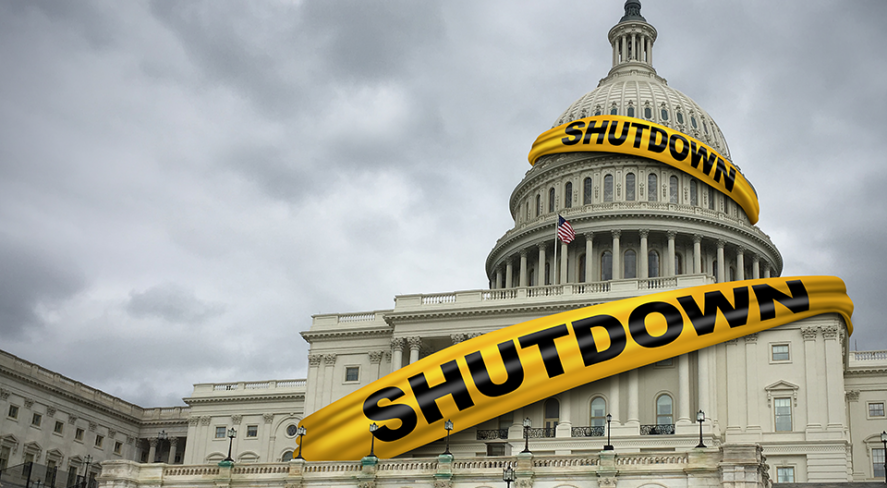
Why the Shutdown Is Happening
A quick primer: the U.S. federal government relies on annual budget approval from Congress. If Congress and the White House fail to agree, non-essential government departments shut down, and some federal employees go unpaid. Key sectors such as defense, airports, and social security continue operating, but many government services are paused.
The current impasse centers on Obamacare subsidies, formally known as the Affordable Care Act (ACA):
-
Democrats want to extend subsidies to prevent a sharp rise in insurance premiums for ordinary Americans.
-
Republicans oppose including these subsidies in funding legislation.
This standoff has created a deadlock, and as the November 1 open enrollment for health plans approaches, higher premiums will become more visible to the public—potentially adding pressure for a political resolution. However, the subsidies officially continue until December 31, giving both sides room to delay without an immediate crisis.
How Long Could the Shutdown Last
Prediction markets such as Kalshi have extended their forecast for the shutdown from two weeks to around 41 days, suggesting mounting concerns. If it continues, it could surpass the 35-day shutdown during Donald Trump’s first term—the longest in U.S. history.
Shutdowns usually end when one of several conditions is met:
-
Political compromise: the White House and Congress reach a deal.
-
External pressure: public outcry or media attention creates urgency.
-
Critical deadlines: such as military payrolls or ACA enrollment.
Right now, the White House has temporarily covered some military pay through budget reallocations, easing short-term pressure. Consequently, political incentives to negotiate are still limited, and analysts suggest the shutdown could continue until late November.
Economic Impact
Economists estimate that each week of the shutdown could reduce U.S. GDP growth by 0.1%–0.2%. While small compared with the 3.8% GDP growth in Q2, the true risk lies in secondary effects:
-
Reduced federal paychecks → lowers consumer spending.
-
Service disruptions → impacts airports, tourism, and national parks.
-
Investment hesitation → companies may delay capital expenditures or expansion.
-
Potential layoffs → over 4,100 layoff notices have been issued, with the White House projecting numbers could exceed 10,000.
Market surveys indicate that public concern focuses on economic impact (47%), ahead of travel disruptions (25%) and federal worker pay (15%). For investors, this suggests that market attention is already on the potential slowdown in consumption and broader economic activity.
Investor Perspective
From an investment standpoint, there are several key takeaways:
-
Short-term market impact is limited
Historically, U.S. government shutdowns have caused only modest market fluctuations because investors have built expectations into asset prices. -
Long-term concerns lie in institutional trust
Repeated shutdowns and budget deadlocks could erode confidence in U.S. fiscal management, increasing risk premiums for dollar assets and Treasuries. -
Policy uncertainty affects corporate decisions
A protracted shutdown heightens uncertainty around regulations, government contracts, and spending programs, leading firms to delay investment and hiring. -
Watch critical milestones
Investor attention should focus on military payrolls, ACA enrollment, and progress on budget legislation, as these are potential inflection points for risk assessment and portfolio adjustments.
Conclusion
This shutdown is less a sudden economic shock than a symptom of chronic institutional gridlock. Short-term GDP impact may be modest, but the erosion of consumer confidence, institutional trust, and investment certainty could be more lasting.
For investors, the key issue is not the shutdown itself, but the broader message it sends about political gridlock and systemic risk. As the market begins to price in a scenario where such dysfunction becomes routine, the question becomes: how much longer can U.S. assets maintain their traditional risk premiums.