
Amazon Servers Crash Again

“Amazon’s backend is down?”
With the peak season approaching, trouble brews. As sellers discuss October tax filings, Amazon’s system suddenly experienced a massive crash.
From the U.S. to European sites, from front-end product pages to backend interfaces, numerous sellers reported inability to access systems, frequent operation errors, and even abnormal account balance displays.
This isn’t the first time—Amazon’s servers already crashed once late last night.
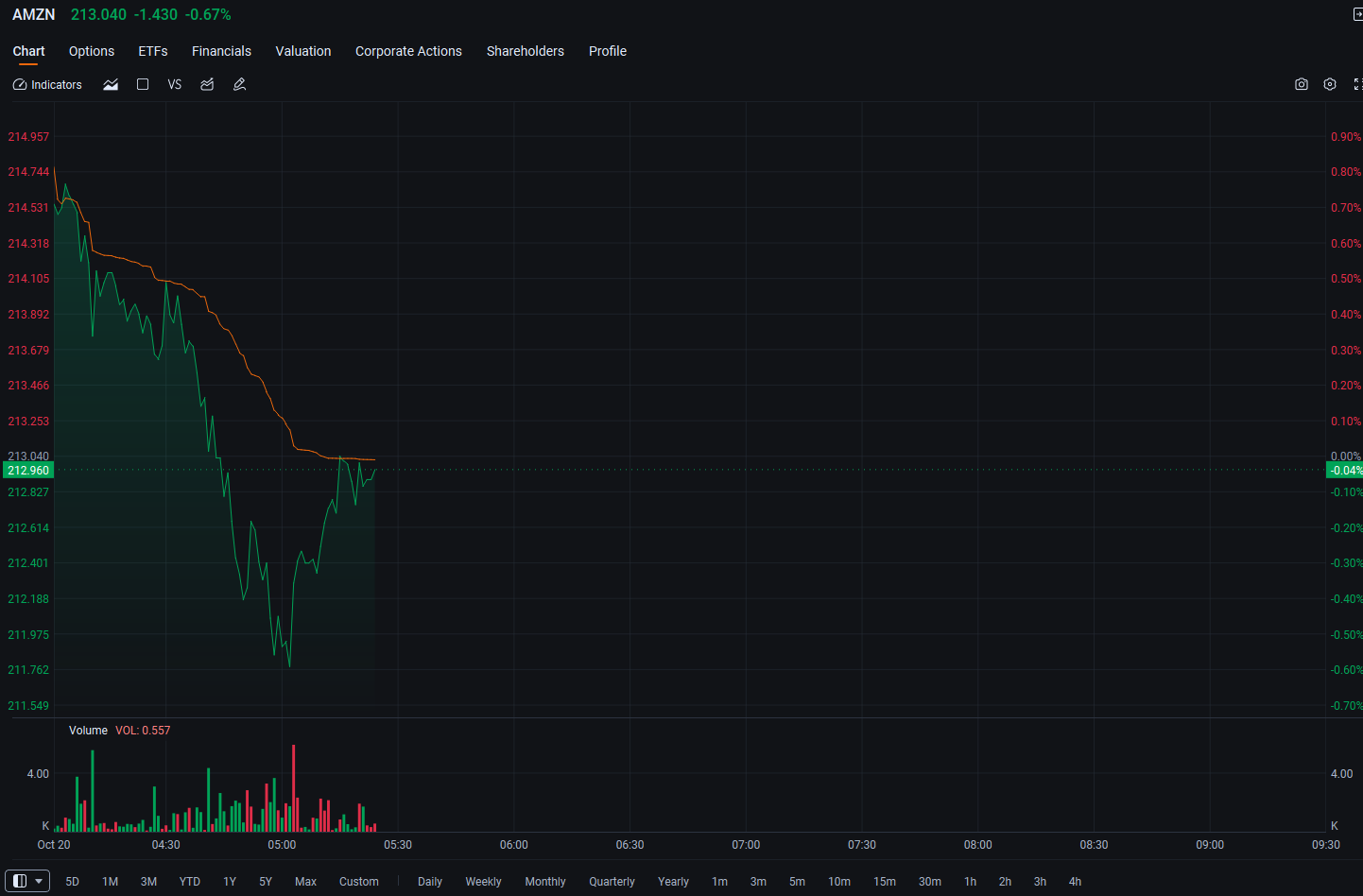
As of this report, Amazon’s backend has not fully recovered and stock price down slightly pre-makert.
Amazon System Meltdown
Multiple Amazon sellers reported abnormal backend interface displays.when sellers tried to manage ads, they received “internal error” messages stating, “Sorry, we encountered an error processing your request.” Interfaces that were working seconds earlier vanished after refreshing.
Another seller attempting to open a case also received an internal error message.
“My balance suddenly dropped by two-thirds, scared me to death.”
“It’s down, can’t open anything.”
“Same here.”
“I got the same issue, tried refreshing multiple times, nothing works. Calmly went downstairs for coffee.”
“I thought it was my network issue.”
Many sellers noted that Amazon’s U.S. site backend remained inaccessible. The issue initially hit the U.S. site, then spread to the European site, while other sites currently function normally.
Additionally, the seller login page appears to have experienced a widespread outage, preventing normal logins.
Tech Adjustments Before Peak Season?
According to outage tracking site DownDetector, on October 20, several of the world’s largest apps and websites, including Amazon, Snapchat, Roblox, Fortnite, Duolingo, and Canva, suddenly went down.
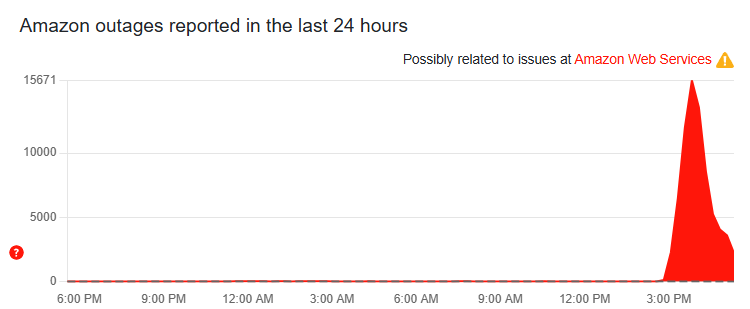
Reports suggest these issues are linked to a problem with Amazon Web Services (AWS), which provides the infrastructure for much of the modern internet. AWS’s service status page reported “elevated error rates” and delays.
As one of the world’s largest e-commerce platforms, Amazon boasts robust technical capabilities, but during peak seasons, frequent feature updates, policy changes, and multi-site operational pressures often lead to system bugs, testing its stability.
Notably, this crash coincides with a period of multiple policy adjustments on the U.S. site.
The U.S. site, Amazon’s largest, recently underwent several policy changes. According to Chu Hai Vision, Amazon announced that starting January 15, 2026, it will modestly adjust fees for its Fulfillment by Amazon (FBA) logistics service.
The average FBA fee per sold item will increase by $0.08, a rise of less than 0.5% of the average item price. Though Amazon claims the increase is limited, any fee adjustment adds pressure to sellers amid rising shipping, raw material, and advertising costs.
Moreover, Amazon’s ongoing investments in AI algorithms, ad systems, and logistics networks have increased system complexity, heightening outage risks. A single core service failure can trigger a chain reaction, causing multi-site, multi-function “paralysis.” Similar incidents have occurred before Prime Day and Black Friday.
As of this report, Amazon has not issued a detailed statement on the outage. Based on past experience, Amazon typically resolves most technical issues within hours to a day.
Is Amazon Still a Buy?
Amazon’s stock has a characteristic: it often oscillates between key round-number levels until a catalyst or momentum pushes it to the next range.
The scale of its e-commerce business, data resources for related segments (e.g., targeted ads, healthcare recommendations), and the flywheel effect of its ecosystem provide a strong case for Amazon’s long-term investment logic.
Additionally, its valuation remains reasonable—among the “Magnificent Seven” and even defensive tech stocks (e.g., Microsoft, Google), Amazon’s valuation growth is the smallest. Historically, pullbacks have been the best times to buy Amazon, especially after breaching key support levels.
In summary, at the right price, Amazon can be a core portfolio holding. Its current price is very close to an ideal range, but without catalysts or momentum, a yield-oriented strategy is safer for conservative traders than fully trusting a “buy” rating.
Once a catalyst emerges, investors can shift to a buy strategy. Currently, analysts maintain a “hold” rating on Amazon.$AMZN