
Solar Stocks Have Quietly Doubled Who Has Profited and Where Opportunities Remain

If you’ve been focused on tech, AI, or the broader U.S. stock market this year, you might have missed the quiet surge in U.S.-listed solar stocks. Since the start of 2025, SolarEdge has risen 172 percent and component maker Nextracker is up 138 percent. Even with these gains, the sector’s valuations remain relatively low after years of decline, making it an area worth paying attention to for long-term investors.
Here’s a closer look at what’s driving this rebound and what it means for the market.
Global Factors Prices Are Stabilizing
For several years, intense price competition among Chinese solar companies drove module and component prices down sharply. This created chaos for global supply chains and squeezed profit margins. This year, production cuts have helped stabilize prices, which matters a lot for U.S. companies.
A more predictable price environment allows solar developers to plan projects and secure components without fearing sudden disruptions from foreign competition. This is a key part of why solar stocks have quietly rallied.
U.S. Policies Make Solar More Attractive
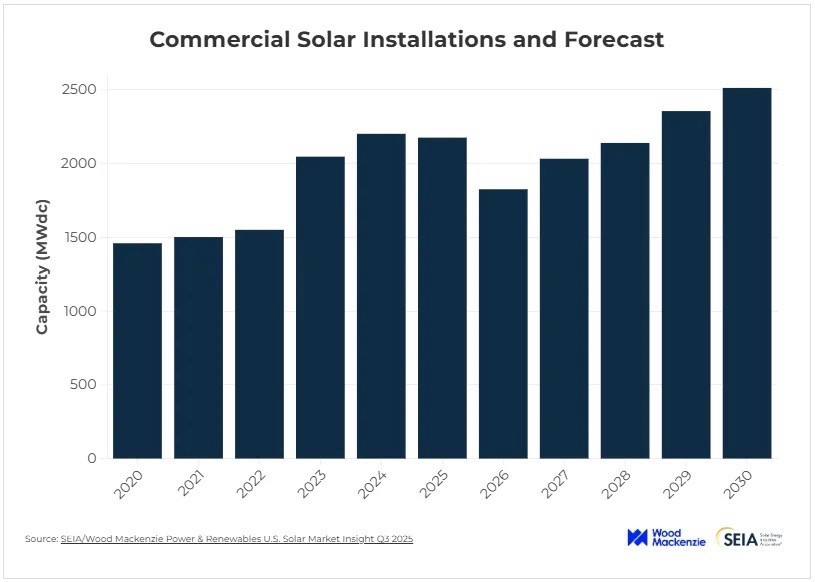
Government policies have also played a significant role. Residential solar tax credits that were originally scheduled to run through 2034 now expire at the end of 2025, ending the 30 percent subsidy. Commercial projects placed in service before the end of 2027 can still benefit, which provides continued incentives for larger installations.
At the same time, years of tariffs and subsidies are encouraging U.S. companies to bring production back onshore. Localized supply chains reduce dependency on overseas suppliers and make the solar sector more resilient, supporting long-term growth.
Demand Patterns Residential Declines Are Offset by Commercial Growth
According to the Solar Energy Industries Association, residential installations dipped in the first half of 2025 due to policy shifts, but commercial demand remained strong. Large-scale corporate and utility customers continue to drive orders, which has helped keep the sector’s momentum going.
Company Differences Matter
Not all solar companies are the same. Some stand out with technology or business models that create long-term advantages.
First Solar focuses on cadmium telluride thin-film panels, which perform well in low-light conditions and integrate easily into buildings. This gives them an edge over traditional monocrystalline silicon panels.
Sunrun has carved out a strong residential market share through its virtual power plant model. Its energy storage business is also growing, with 70 percent of new customers opting for storage. In 2025, Sunrun became profitable, marking an important milestone for the U.S. solar sector.
Sunrun’s virtual power plant links rooftop solar panels, home batteries, and smart devices to create a single, large-scale system. In California, more than 100,000 homes have been networked together to provide 360 megawatts to the grid, roughly half of San Francisco’s electricity demand. During peak hours, customer batteries automatically supply the grid, reducing strain and lowering energy costs. In one project, households received a $750 incentive and a free smart thermostat for participating.
Understanding the Solar Value Chain
The solar industry spans multiple segments.
Manufacturing remains competitive, especially with Chinese silicon PV producers, but First Solar’s cadmium telluride panels provide differentiation.
Systems integration and storage favor companies with customer access, such as Tesla.
Component production, like inverters and smart tracking systems, remains competitive. Tracking systems, which adjust panels to follow the sun, maximize energy output, and companies like Nextracker and Array Technologies are leading in this area.
Solar plant operators benefit from lower panel prices, building large-scale portfolios. U.S. utilities like NextEra Energy and Berkshire Hathaway’s BHE Renewables are key players. Lower module costs actually improve the economics for these downstream operators.
Government support for domestic manufacturing also emphasizes supply chain localization, making rare earth availability a strategic priority for the U.S. solar sector.
What This Means for Investors
The current environment offers several takeaways for investors:
1. Long-term growth prospects are clearer U.S. policies, commercial demand, and stable supply chains make future growth more predictable.
2. Focus on differentiated companies Firms with technology advantages like First Solar or innovative business models like Sunrun are likely to outperform.
3. Opportunities exist across the value chain Component makers, storage providers, and solar operators can all benefit, but technological edge and cost efficiency are key.
Overall, valuations remain relatively low, suggesting that patient investors can still find attractive opportunities in the sector.
Personal Insight
I see solar as a steady, long-term growth opportunity rather than a short-term hype like AI. Policy support and rising commercial demand create a reliable foundation, and companies with technology or model differentiation stand to benefit the most. The key is identifying firms with sustainable advantages rather than chasing recent stock price moves.