
China’s Rare Earth Policy Could Backfire and What Options the U.S. Holds

China’s recent move to tighten controls on rare earth exports has grabbed global attention. While analysts now suggest the impact may not be as severe as initially feared, the policy still carries risk and highlights the leverage the U.S. retains in ongoing trade and tech tensions.
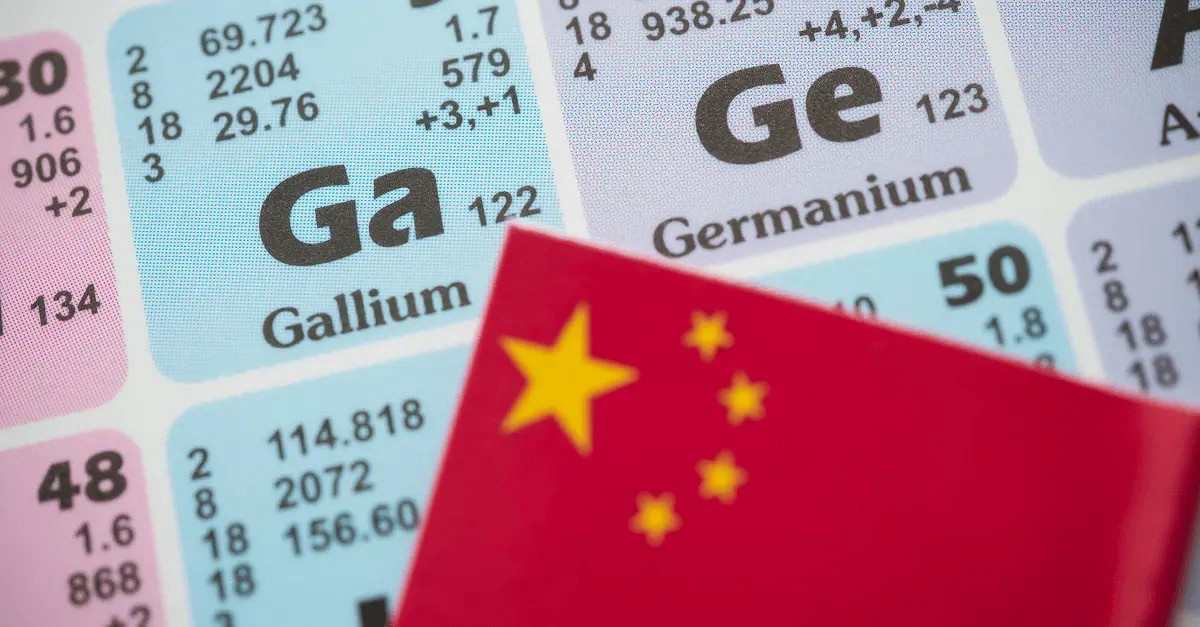
The Risks Behind China’s Policy Shift
Julian Evans-Pritchard and Leah Fahy from Capital Economics describe China’s policy move as a calculated gamble that could backfire. If mishandled, it may fail to achieve its goals and instead trigger stronger U.S. countermeasures.
Potential U.S. responses include:
1. Control over the aviation supply chain The U.S. could limit exports of key components or entire aircraft, affecting Chinese manufacturers dependent on foreign parts.
2. Dependence on Windows Roughly 90 percent of Chinese PCs run Microsoft Windows. If the U.S. pressures Microsoft to halt sales or updates, security vulnerabilities could go unpatched, undermining the global competitiveness of Chinese devices.
3. Financial and payment system leverage The U.S. controls the dollar and the SWIFT payment network. It could freeze dollar-denominated assets or restrict access to global payments, further isolating Chinese firms from Western markets and technology.
Evans-Pritchard and Fahy warn that China could find itself more cut off from Western markets and technology than it is today.
U.S. Signals and Trump’s Approach
Despite rising tensions, U.S. officials have signaled confidence. Vice President JD Vance suggested the U.S. holds the stronger position and expects Beijing to act reasonably. Trump himself told Fox News he does not want to “destroy China” and hopes for a fair deal with President Xi Jinping, emphasizing he has no intention of using arbitrary measures against China.
For investors, this indicates that even amid policy shifts, there is some buffer and room for negotiation, which could limit extreme market shocks.
Technology Markets Provide a Reality Check
The tech sector already shows the costs of these tensions. NVIDIA CEO Jensen Huang revealed that the company’s market share in China has fallen from 95 percent to zero. He warned that fully cutting off U.S. access to China’s tech market would harm both sides, as China remains the world’s second-largest computing market with a vibrant ecosystem.
China is also adapting. Alibaba recently rolled out a new computing pooling system that reduces reliance on NVIDIA GPUs for AI workloads, signaling a strategic move toward self-sufficiency and reduced exposure to foreign tech.
What Investors Should Consider
From an investment perspective, the current U.S.-China tech and trade tensions reveal several key points:
1. High policy uncertainty remains Rare earth export restrictions and potential U.S. countermeasures could create volatility.
2. Tech self-reliance is critical Initiatives like Alibaba’s GPU alternatives show that Chinese firms are actively seeking independent solutions.
3. Market impact will be uneven Companies heavily dependent on foreign tech face higher risks, while those with strong self-sufficiency or alternative strategies are better positioned to weather disruption.
Overall, the U.S.-China dynamic is a long-term and complex issue. Investors should watch policy developments, technological alternatives, and supply chain strategies rather than react to headlines alone.
Personal Insight
In my view, China’s rare earth export tightening is largely a short-term maneuver, while the U.S. still holds key leverage points. The real story for investors is which firms can achieve technological independence and find alternative pathways. These companies are likely to maintain competitiveness and offer more resilient long-term investment opportunities, even amid ongoing geopolitical friction.