
The Rare Earths Battle Escalates Between the US Australia and China

Rare earths are back at the center of a major geopolitical and market story. As President Trump prepares to meet Australian Prime Minister Anthony Albanese, investors are betting on new mineral partnerships and government support, pushing rare earth stocks higher.
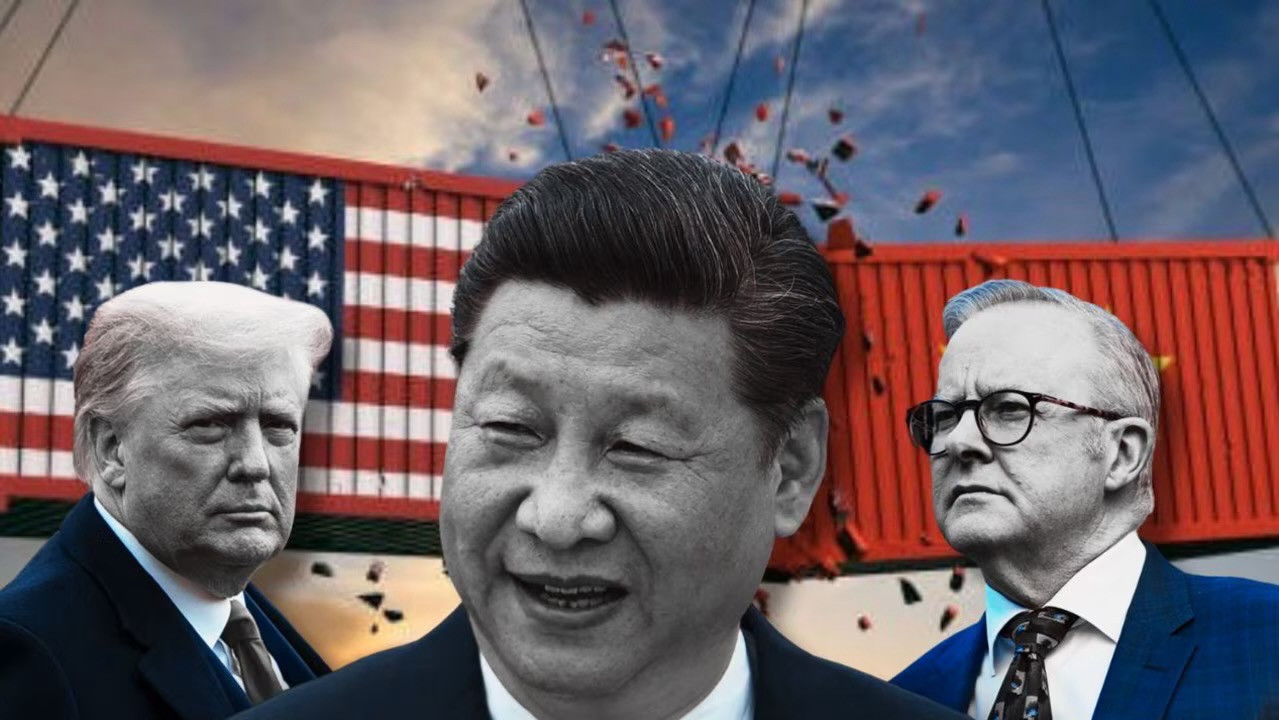
But looking beyond the headlines, the real picture is more nuanced. The United States and Australia are aiming to challenge China’s dominance in the supply chain, but fully decoupling is far from achievable and will come at higher costs over a long period.
A Supply Chain Challenge Targeting China
The idea of reducing dependence on Chinese rare earths has been around for years, first under Biden and now further reinforced under Trump. Washington’s rhetoric has shifted from “reduce reliance” to “eliminate strategic vulnerability.” Australia is the natural partner in this strategy, given geographic proximity, resource endowment, and diplomatic alignment.
Yet one crucial reality remains: rare earths are not just a mining problem—they are an industrial system problem. The challenge is not extracting ore, but replicating China’s integrated chain of mining, refining, manufacturing, and downstream production for magnets and high-tech applications.
What the US and Australia Are Trying to Achieve
The upcoming US-Australia meeting signals three clear strategic goals.
First, government-backed support to de-risk the market. Programs like the Pentagon’s agreements with MP Materials, which guarantee minimum prices and secure orders, act as a strategic insurance policy.
Second, capital and technological support for downstream manufacturing, especially magnets. Without magnets, rare earths cannot become usable products, and this is where China’s industrial dominance is strongest.
Third, diversifying supply through allied countries. The strategy is to source raw materials from Australia, handle processing in the US, and distribute geopolitical risk across allied nations.
From a strategic perspective, these steps are logical and will continue to expand.
The Limits of Decoupling
Here’s where the gap between ambition and reality becomes clear: full decoupling from China is not realistic.
China controls roughly 85 percent of the global rare earth refining and magnet production capacity. While the US and Australia can provide ore, they cannot yet replicate the critical industrial know-how.
Supply chain construction takes 7 to 15 years. Market forces will not pause for political timelines. Labor, environmental, and capital costs in the US are much higher than in China, often two to five times more. Finally, global demand for rare earths is still concentrated around China-based manufacturing clusters. Even if ore is produced elsewhere, much of it may ultimately still flow back through Chinese processing or finished goods networks.
Put simply, the US and Australia are challenging China’s industrial reality, not just its mines.
The Likely Outcome
The ultimate scenario will not be “removing China” from the equation, but rather creating a less efficient, higher-cost, but politically safer, multi-polar supply chain.
The US seeks security, Australia wants to monetize resources, and China maintains efficiency and scale. This three-way dynamic is likely to fragment the global rare earth supply chain into a new normal, where political considerations drive market decisions and costs are elevated.
Investment Implications
For investors, the real question is not who “wins” the race. It is that rare earths have permanently become part of the strategic landscape. Volatility and political influence are here to stay, and security premiums will be built into the market.
In practical terms:
• The performance of US and Australian rare earth producers will be increasingly policy-driven rather than purely market-driven.
• Chinese producers retain a competitive edge through integrated industrial efficiency.
• Long-term value is more closely tied to downstream magnet and materials technology than raw ore production.
Conclusion
The US and Australia can coordinate, provide policy support, and attempt to encircle China in rare earths. But they face a systemic, decades-old industrial structure that cannot be rewritten overnight. Decoupling from China is not on the table. Instead, the market is entering an era of geopolitically fragmented supply chains. This is the trend international investors need to understand and price into their strategies.