
Buffett Sold Too Soon as Apple Surged to Record Highs

Apple just closed at an all-time high of $262.24 (AAPL.US), briefly touching $264.38 intraday. While markets are celebrating, there is a quieter narrative spreading across Wall Street. Warren Buffett — the ultimate long-term investor — may have prematurely walked away from the greatest compounding story of his career, leaving an estimated $50 billion in unrealized gains on the table for Berkshire Hathaway (BRK.A.US).
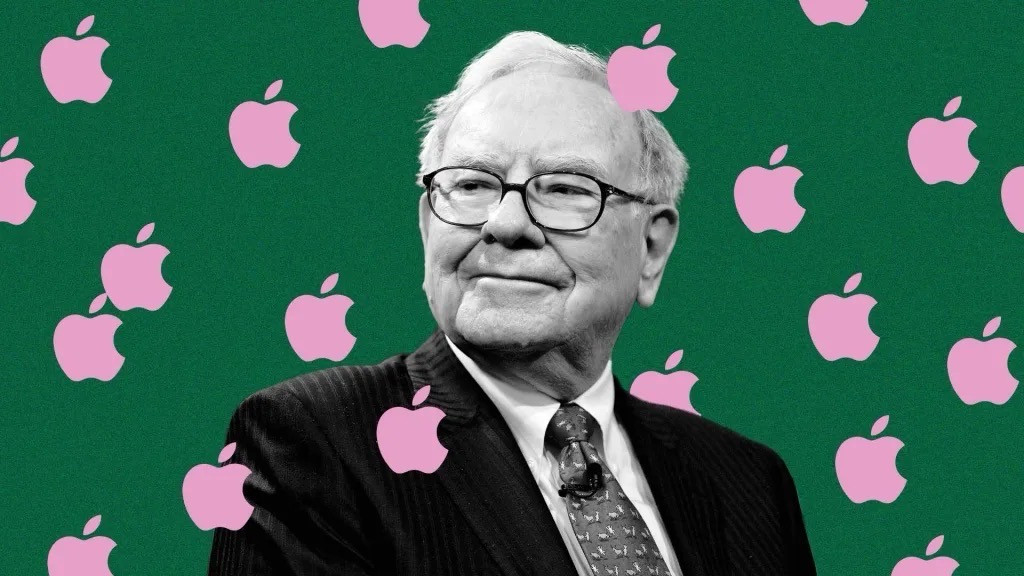
His decision to trim Apple in 2024 and continue selling this year has also triggered nearly $20 billion in tax payments, making the trade even more expensive on a net basis. Apple is now hitting historic highs. Berkshire is sitting on record cash. But the most powerful wealth engine Buffett ever owned is no longer working for him at full capacity.
The Best Bet in Decades — But the Exit Fell Short
From 2016 to 2018, Buffett made one of the most brilliant investment decisions in modern market history: buying close to 1 billion shares of Apple at an average cost of about $35. It was a clean, simple thesis — Apple had pricing power, sticky users, and dominant ecosystem economics. The stock compounded. Berkshire’s narrative changed. And Apple became Buffett’s crown jewel.
But over the last 18 months, that story reversed. Berkshire reduced its Apple position from 906 million shares at the end of 2023 to just 280 million shares by mid-2025, with the heaviest selling happening in 2024. Berkshire’s estimated average sale price was around $185, and with Apple now about $80 higher, the opportunity cost has swollen into tens of billions.
Buffett still made huge profits — more than $90 billion before taxes — but investing is not only about being right. It is also about maximizing the impact of being right. On that metric, the exit blunted the victory.
Why Buffett Sold — Sensible Reasons, Suboptimal Outcome
Buffett gave one explanation publicly: uncertainty around potential tax hikes. Observers point to two more: Apple had grown to more than 40% of Berkshire’s equity portfolio, and Berkshire wanted balance sheet flexibility heading into Buffett’s CEO retirement in 2025. All three reasons are logical. None of them change the result. Berkshire reduced its highest-quality compounder in exchange for the safety of cash — just before Apple re-accelerated into an AI-driven narrative and an iPhone replacement cycle.
He Did It Again with Bank of America
Apple wasn’t the only early exit. Berkshire also sold roughly 400 million shares of Bank of America (BAC.US) in the past year at prices in the low $40s, versus about $52 today — another multi-billion-dollar gap. Meanwhile, Berkshire Class A shares are up around 9% in 2025, noticeably trailing the S&P 500’s 16%. Had Berkshire simply held its full Apple stake, both performance and sentiment might look very different.
This Is Not About Regret — It Is About Regime Shift
The deeper issue is not whether Buffett “made a mistake.” It is whether the market’s rules have changed faster than Buffett’s framework. Today’s market is dominated by mega-caps, network effects, and non-linear compounding. In that environment:
• Great businesses compound faster than traditional value models assume
• Concentration risk can be rewarded, not punished
• Selling too early is more dangerous than holding through volatility
Buffett didn’t misjudge Apple’s fundamentals. He misjudged the consequences of stepping off a compounding machine too soon.
The Lesson for Investors
There are moments in market history where not selling is the real act of discipline. We are in one of those moments now. The dominant winners — especially in tech — are widening their lead. Apple remains one of them.
Buffett will always be a legendary allocator. But Apple has now delivered a reminder to every long-term investor:
In the age of exponential compounding, the biggest risk is not volatility — it is premature exit.