
Replicating the Intel Model? Trump Administration Reportedly in Talks to Take Stakes in Quantum Computing Companies

According to sources, several U.S. quantum computing companies are in discussions with the U.S. Department of Commerce to replicate the “Intel model”—exchanging equity for federal funding. This move signals the Trump administration’s expanding intervention in critical economic sectors.
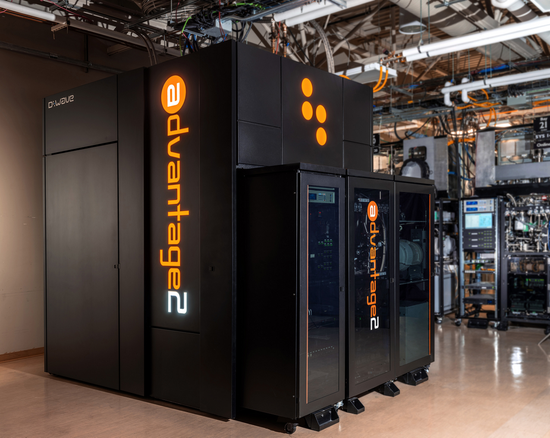
The quantum computing companies reportedly involved include IonQ, Rigetti Computing, D-Wave Quantum, Quantum Computing Inc., and Atom Computing. These firms are negotiating to make the U.S. government a shareholder in exchange for funding through specialized technology company support agreements.
Such talks are the latest example of the U.S. government’s push to take stakes in companies. President Trump and Commerce Secretary Lutnick have previously stated that, given taxpayer funds provide financial support and credibility, the government should share in the companies’ value appreciation.
Replicating the Intel Model
In August, the U.S. government agreed to convert nearly $9 billion in prior funding into an ~10% equity stake in chip giant Intel, making it one of Intel’s largest shareholders.
In recent months, the U.S. Department of Energy has struck similar deals with a few U.S. rare earth producers. A notable recent case is Lithium Americas, with reports last month indicating the government is exploring a loan and equity stake to accelerate operations at the Thacker Pass lithium mine in Nevada.
Sources say the quantum computing companies are discussing funding of at least $10 million per company from Washington. Other tech firms are expected to compete for these funds as well.
The funding would come from the Office of Chips Research, restructured by Lutnick from the Biden administration’s 2022 CHIPS Act funding mechanism. He recently reclaimed billions of dollars from Biden-era tech research programs.
The cooperation agreements with quantum companies are not yet finalized and may be adjusted.
Commerce Department funding application documents indicate that, beyond equity investments, deals could include warrants, intellectual property licenses, patent royalties, or profit-sharing terms.
Sources reveal that Paul Dabbar, a former quantum computing executive and Energy Department official now serving as Deputy Commerce Secretary, is leading the financing talks with industry. Commerce officials clarified that Bohr Quantum Technology, co-founded by Dabbar and where he served as CEO for four years, is not among the funding candidates.
Betting Big on Quantum Computing
Industry insiders say funding and equity stakes in quantum computing firms would mark one of the Trump administration’s first major signals of support for the sector.
Quantum computing is widely seen as a critical next-generation technology, capable of performing computations in moments that would take today’s computers years. Experts say such breakthroughs will accelerate the development of new drugs, materials, and chemicals while boosting efficiency across economic sectors.
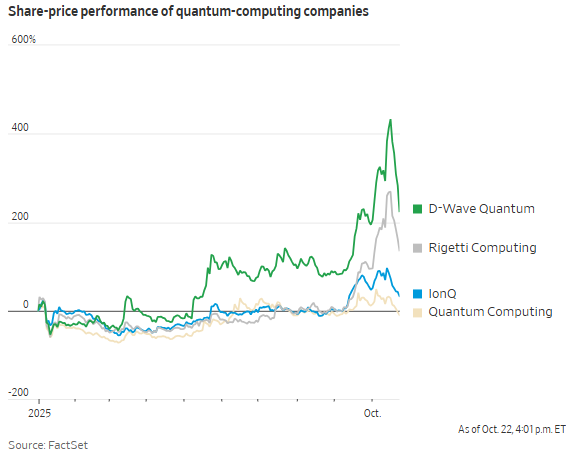
Despite recent pullbacks, quantum computing stocks have surged overall in 2025, with companies like Rigetti Computing and D-Wave Quantum at least doubling in value year-to-date.
From U.S. tech giants like IBM and Microsoft to Chinese firms, investments in quantum computing are intensifying. Google announced Wednesday that its quantum computer runs 13,000 times faster than classical supercomputers, potentially speeding up drug development and materials science.
Yuping Huang, CEO of Quantum Computing Inc., called the prospect of the Trump administration holding stakes in quantum computing firms “exciting.”
Leaders of other companies mentioned in the reports also expressed positive sentiments. A Rigetti spokesperson said the company is continuously exploring funding opportunities with the government. Allison Schwartz, D-Wave’s head of government relations, said the company hopes selling shares can address government challenges and ultimately deliver investment returns.$QUBT