
Intel Q3 Earnings Preview: Billion-Dollar Bets Meet Harsh Reality

Shearing sheep
October 23, 2025
GoGPT Summarizes Articles
Intel ($INTC) is back in the spotlight this week as it prepares to release its third-quarter results on Thursday after the market closes. Once the undisputed leader of the semiconductor world, the company now finds itself fighting for relevance amid intense competition, rising capital costs, and mounting investor skepticism.
The results will give investors the first real glimpse of whether CEO Lip-Bu Tan’s turnaround plan — centered on cost-cutting, foundry expansion, and a pivot toward AI partnerships — is gaining traction or simply papering over deeper problems.
Earnings Expectations: Flat Growth, Fragile Margins
Wall Street expects Intel to post revenue of $13.1 billion, down slightly from $13.28 billion in the same quarter last year, and earnings per share (EPS) of just $0.01, marking a modest improvement from last year’s $0.46 loss
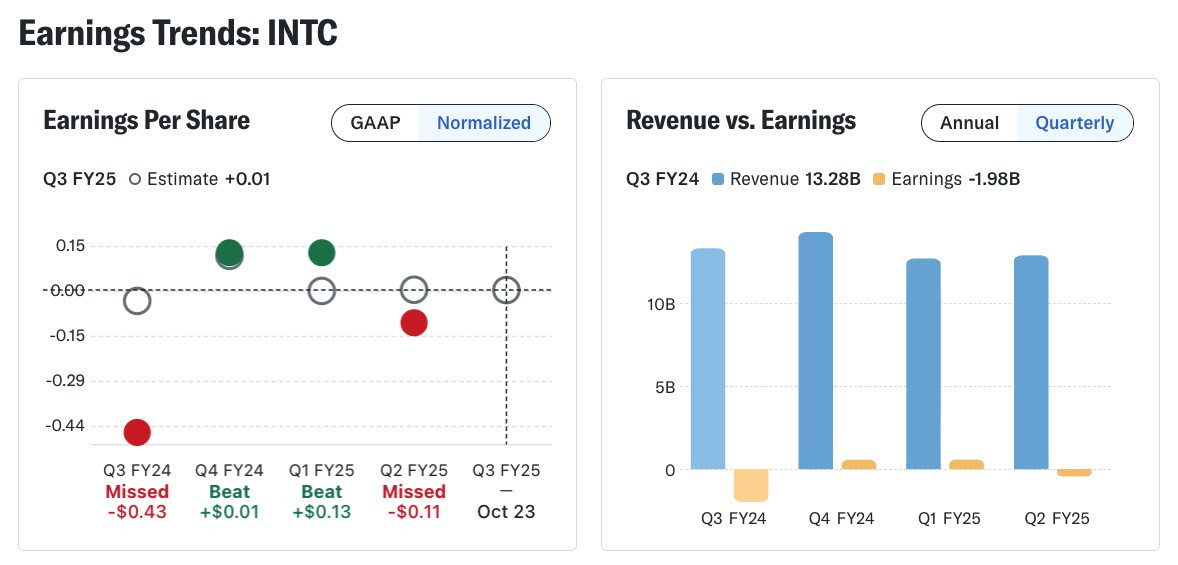
The company’s guidance suggests a revenue range of $12.6 to $13.6 billion, with a potential breakeven or small loss. Intel has exceeded revenue expectations for four straight quarters, but missed EPS estimates last quarter as cost pressures lingered.
Prediction markets, however, show some optimism — 76% of Polymarket traders believe Intel will beat EPS estimates this time, while betting markets on Kalshi highlight keywords like “Nvidia” (93%), “Data Center” (92%), and “Intel Foundry” (91%) as likely to dominate the earnings call narrative.
Still, it’s worth remembering that optimism around Intel’s story often fades once the hard numbers hit the page.
Analyst Sentiment: A Valuation Story That’s Hard to Believe
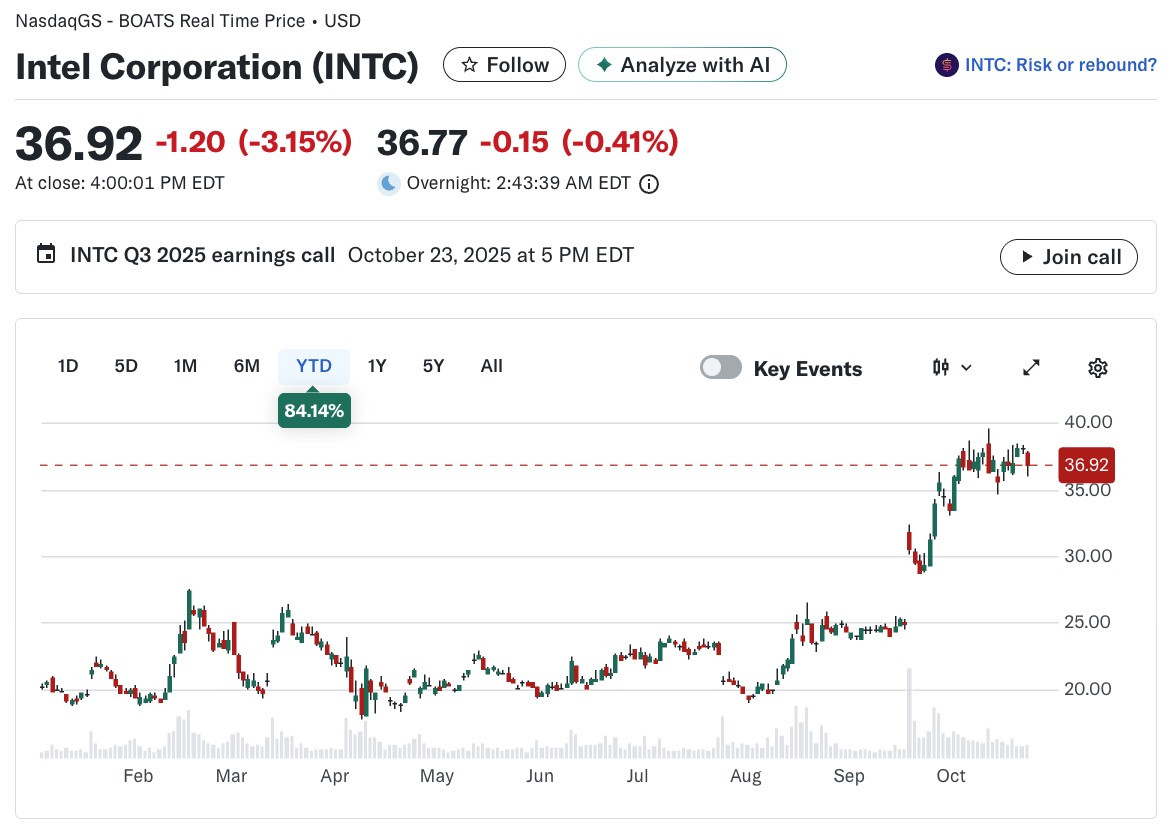
The recent 80%-plus rally in Intel’s stock price this year has raised eyebrows on Wall Street. Much of the rise is tied not to operational breakthroughs, but to headline-grabbing investments — including a $5 billion stake from Nvidia, $2 billion from SoftBank, and even an $11.1 billion investment from the U.S. government, which now owns roughly 10% of the company.
While these deals have boosted liquidity and confidence, analysts remain skeptical about their long-term impact.
Wedbush’s Matt Bryson captured the mood best: “We struggle to justify the company’s recent surge in valuation… these deals have bolstered the balance sheet and created investor optimism, but they haven’t really changed the fundamental narrative.”
Bryson maintained a Neutral rating but raised his price target from $19 to $20, noting that Intel’s results and guidance “should exceed consensus forecasts given a better industry backdrop.”
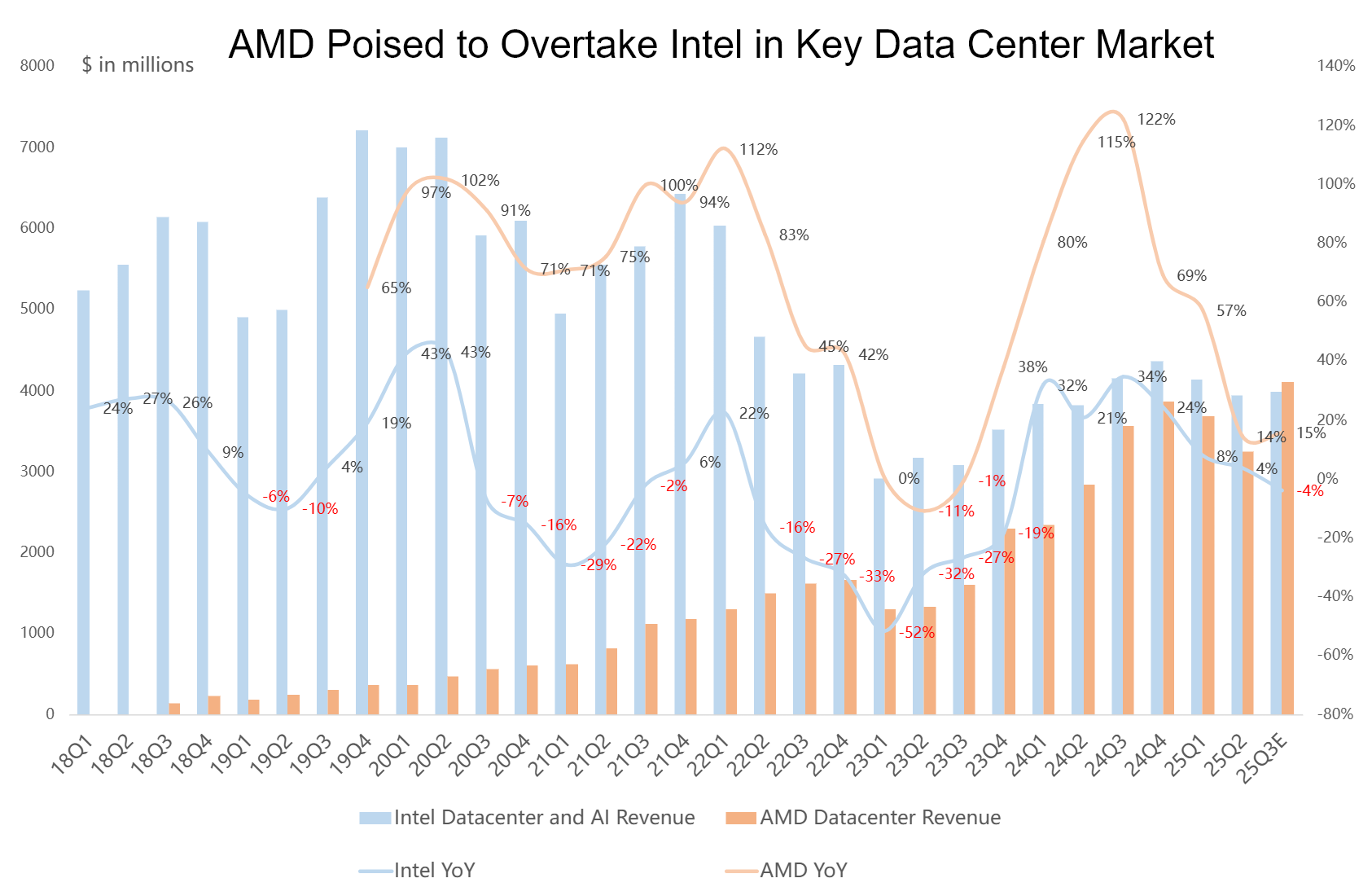
Bank of America’s Vivek Arya, meanwhile, went the other way — downgrading Intel to Underperform ahead of earnings with a $34 price target. He cited market share losses to AMD and Arm Holdings, and limited AI integration despite the Nvidia partnership.
HSBC’s Frank Lee also sounded a cautious note, warning that while near-term deals may support the stock, execution failures in Intel’s foundry business remain the company’s biggest problem.
A Company in Transition — Again
Intel’s transformation efforts are now in their third act. After years of underperformance under former CEO Pat Gelsinger, new chief Lip-Bu Tan has sought to slim down the company, reduce bureaucracy, and redirect resources toward high-margin businesses.
Intel has already cut roughly 30% of its workforce since 2024, reducing management layers by half. The company is also scaling back capital-intensive projects — notably the 18A process, which Gelsinger once bet billions on, in favor of a more measured push into the 14A manufacturing node.
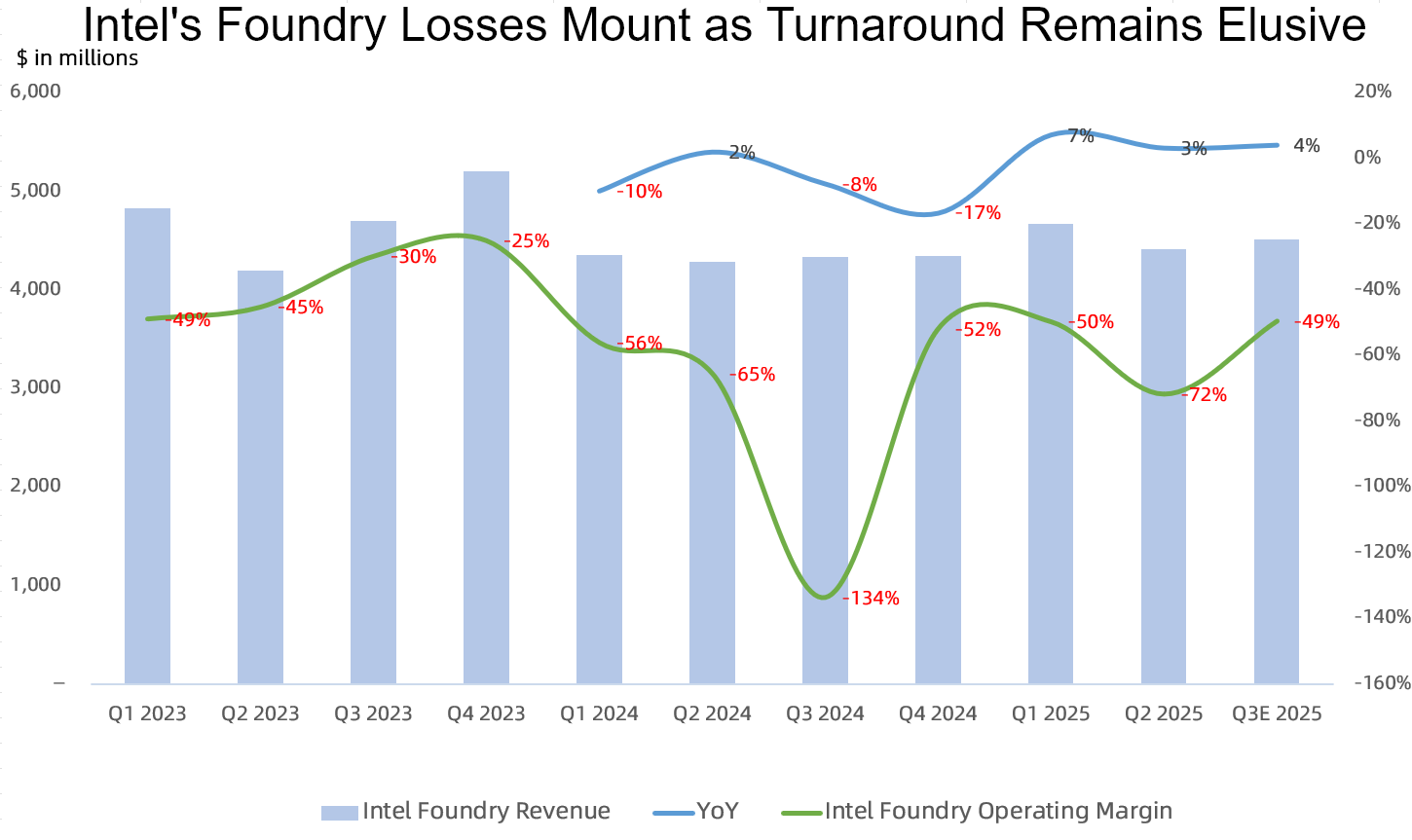
But Tan’s biggest challenge is execution. Intel’s foundry ambitions, critical to its long-term survival, continue to face skepticism. Analysts question whether the company can meet deadlines, secure major external customers, and reach the scale necessary to compete with TSMC and Samsung.
HSBC’s Lee summed it up bluntly: “The foundry segment remains the biggest drag on financials with consistent execution failures. Intel has raised doubts about the viability of its 14A node amidst a lack of external customers.”
AI Ambitions and the Nvidia Connection
If Intel has a shot at redemption, it’s through AI. The company recently unveiled Crescent Island, a data-center GPU aimed at competing in the booming AI chip market, and confirmed a deepened collaboration with Nvidia to co-develop future custom data-center and PC chips.
Nvidia’s $5 billion equity stake gives Intel a strong validation boost, especially as investors hunt for the next AI-related success story. Intel’s upcoming Panther Lake and Lunar Lake architectures are also positioned as key milestones, promising improved power efficiency and AI performance when they begin shipping later this year.
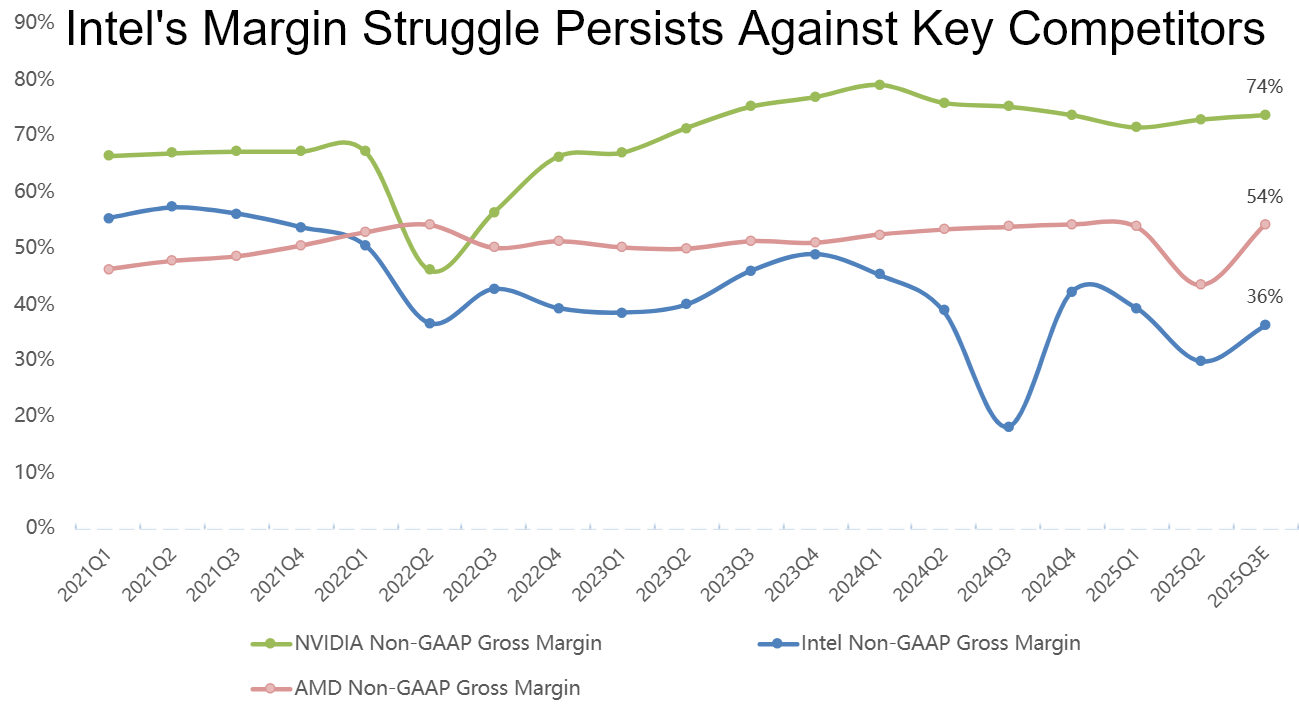
Still, Intel’s AI narrative faces a credibility gap. Unlike Nvidia or AMD, which already have proven products driving AI demand, Intel’s offerings remain largely theoretical — and the company’s margins continue to suffer as it builds out infrastructure without immediate returns.
Stock and Valuation: Hope Priced In
Intel’s stock has surged over 82% year-to-date, vastly outperforming both the S&P 500 (+15%) and most of its semiconductor peers. Shares recently traded around $37, near the upper end of their 52-week range between $17.66 and $39.65.
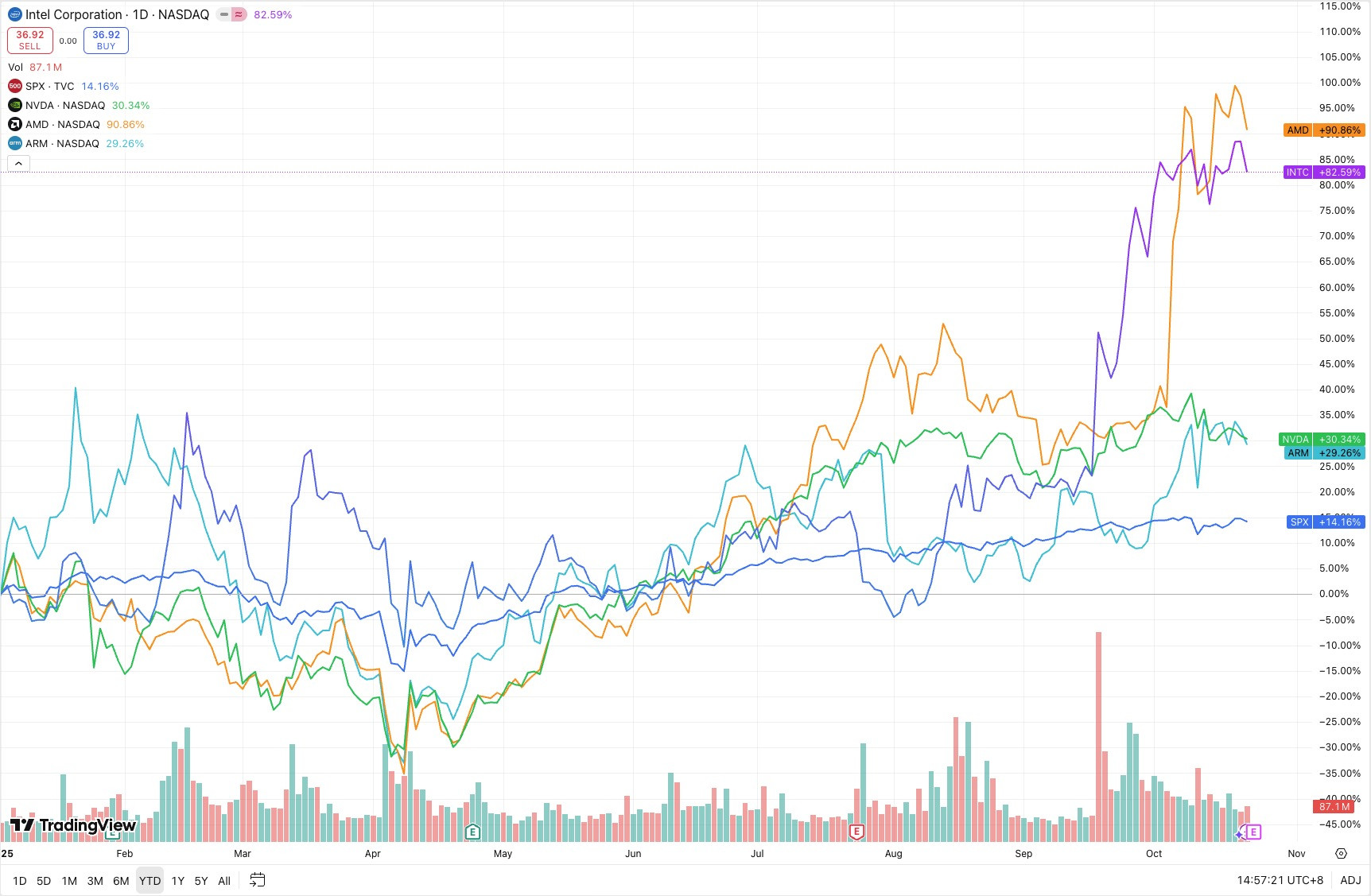
That rally has been powered more by hope than hard numbers. Intel’s multiple now trades well above historical averages — and for a company still reporting razor-thin margins and stagnant revenue, that’s a risky setup heading into earnings.
What to Watch on Thursday
Investors will focus on several key areas during Intel’s Q3 call:
-
Gross Margin Trajectory – Management guided for around 36% in Q3, but investors will want clarity on when margins could recover toward the 50%+ levels seen in the past.
-
Foundry Updates – Any new customer announcements or progress on 14A could move the stock.
-
AI and Product Roadmap – More details on Crescent Island, Panther Lake, and Lunar Lake will help gauge how credible Intel’s AI ambitions really are.
-
Capital Discipline – After years of heavy spending, Tan’s approach to capital allocation and fab expansion will be closely scrutinized.
Bottom Line
Intel’s upcoming report is less about beating or missing estimates — and more about restoring credibility. The company’s recent government backing and strategic partnerships have bought it time, but they haven’t yet changed the fundamentals.
The market has already priced in a successful turnaround. Now, Intel must show that it can deliver one.
Whether Thursday’s earnings confirm that optimism or expose more cracks in the story will likely define Intel’s next chapter.
#Q3 Earnings Season: Key Insights and Market Movers#$Intel Corp(INTC)